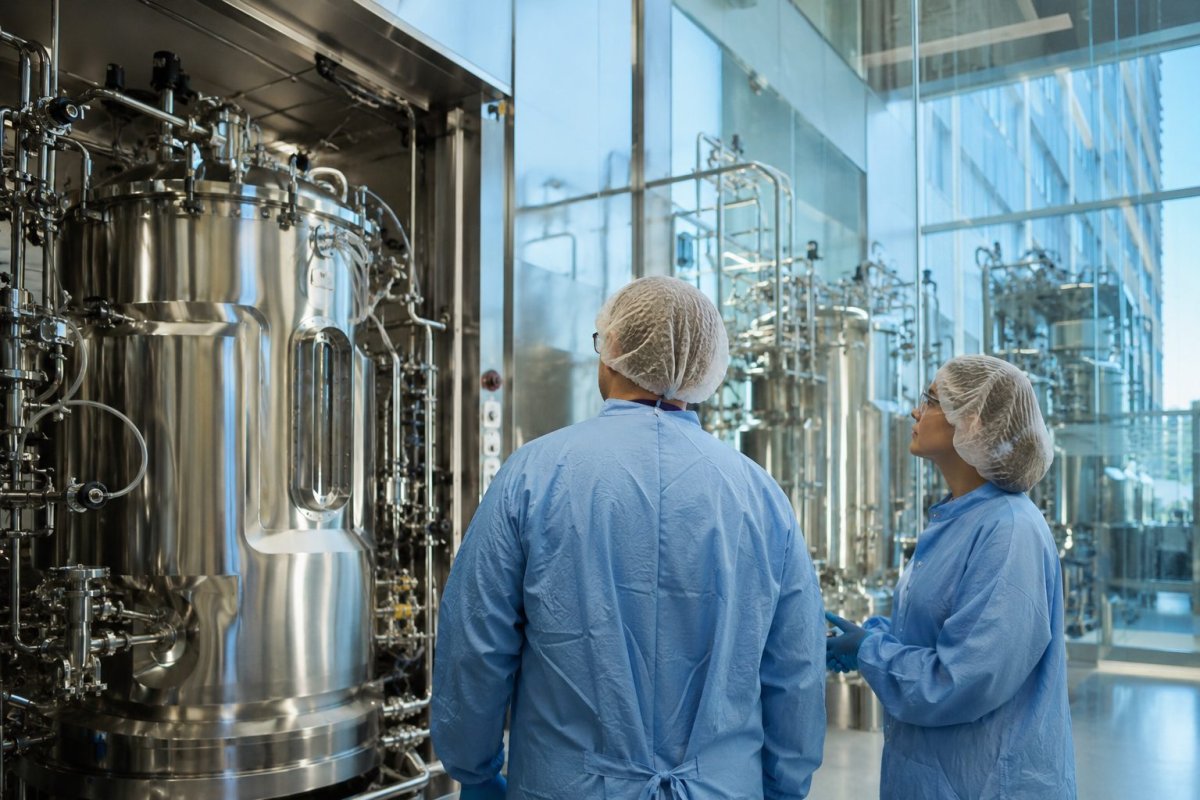
Bristol Myers Squibb (NYSE: BMY) has selected Houston as the site for a new, state-of-the-art drug-manufacturing campus, with a planned investment of approximately $2.3 billion. The 600,000-square-foot facility is designed to support the production of small molecules, biologics, and antibody-drug conjugates (ADCs), marking a significant expansion of the company's U.S. manufacturing footprint.
The project is expected to create nearly 500 skilled permanent jobs and around 2,000 construction and related roles during the build-out phase, which is slated to run from 2027 through 2030. This investment represents 5.75% of Bristol Myers' five-year, $40 billion commitment to U.S. manufacturing and supply-chain resilience, a figure the company announced earlier as part of its long-term growth strategy.
Chief Executive Christopher Boerner framed the Houston campus as a strategic asset, stating, "This investment reflects our confidence in America's continued leadership in biopharmaceutical innovation." The facility's modular design will allow Bristol Myers to add or reconfigure capacity as its pipeline evolves, offering flexibility over immediate output. The company has not yet disclosed which specific medicines will be produced first or a production start date.
The capital intensity of the project is notably high, with an announced cost of roughly $3,833 per square foot and about $4.6 million per initial skilled job. Analysts view these figures as indicative of a technology- and supply-chain-focused initiative rather than a simple hiring plan. The Houston site will be located in Generation Park, a 4,300-acre master-planned development that offers robust transport links, utilities, and room for future expansion, according to Karin Shanahan, Bristol Myers' supply-chain chief.
Investor reaction on Monday was muted, with shares closing up about 0.2% at $64.84. The modest move suggests the market treats the Houston campus as a long-dated capacity option rather than a near-term earnings catalyst. Wall Street's consensus rating on BMY is a Moderate Buy, with an average 12-month price target of $66.06, implying just over 2% upside from the reference price of $64.75. Targets range from $40 to $75, indicating significant uncertainty about execution.
The project is part of a broader reshoring trend among pharmaceutical giants, who have announced roughly $500 billion in U.S. investments to expand capacity, mitigate supply-chain risks, and respond to tariff pressures. Notable commitments include Johnson & Johnson's $55 billion over four years, Roche's $50 billion over five years, AstraZeneca's $50 billion by 2030, and Eli Lilly's at least $27 billion over five years. Bristol Myers' $40 billion pledge is among the largest, though the company's Houston project is smaller than Lilly's $6.5 billion commitment in the same city, which targets over 600 permanent jobs and 4,000 construction roles.
Together, the two Houston projects represent $8.8 billion in planned investment, aiming for more than 1,100 permanent jobs and roughly 6,000 construction-related roles. Bristol Myers is spending 35% as much as Lilly, but its facility spans a broader range of manufacturing modalities, including small molecules, biologics, and ADCs, offering greater production flexibility.
The state of Texas has approved a $4.89 million grant from the Texas Enterprise Fund to support the project, though that amount covers only about 0.21% of the total cost. Construction is expected to continue through 2030, leaving ample time for potential delays, inflation, or pipeline shifts. Bristol Myers has cautioned that it may not realize the expected benefits, and the next key milestones will be a detailed build schedule and the assignment of initial programs to the Houston site.
For investors, the $2.3 billion campus represents a calculated bet on the company's future product portfolio. As the biopharmaceutical industry navigates patent cliffs and competitive pressures, flexible manufacturing capacity could prove valuable—but only if Bristol Myers can successfully bring new therapies to market and maintain cost discipline. Until then, the project remains a long-dated option, priced at roughly $3,833 per square foot.