Gold prices advanced on Monday, climbing 0.9% to approximately $4,379 per troy ounce, as investors weighed the persistent 5% yield on U.S. 10-year Treasuries against continued official sector demand. The precious metal's rise comes amid a delicate balance: high bond yields typically increase the opportunity cost of holding non-yielding assets like gold, yet central bank purchases and geopolitical uncertainty continue to underpin the market.
Market Snapshot
The move in gold was selective rather than part of a broad commodity rally. Copper edged up 0.4%, while both Brent and WTI crude futures declined, with Brent at $104.87 per barrel and WTI at $100.30. Bitcoin also slipped 0.8% to around $81,063, reflecting a risk-off tone in some corners of the market.
The 5% Yield Hurdle
The 5% Treasury yield remains a formidable obstacle for gold. Since gold pays no income, it must appreciate by at least 5% annually just to match the nominal return from Treasuries. However, inflation and currency fluctuations can alter the real comparison, and many investors are looking beyond short-term yields to longer-term drivers such as reserve diversification and hedging against policy shocks.
Central Bank Buying Slows but Continues
Official demand provides a key offset to the yield headwind. According to the World Gold Council, central banks bought a net 23 tonnes in July, bringing reported purchases to about 130 tonnes through the first seven months of 2026. This year-to-date total is roughly 19% below the 160 tonnes recorded in the same period last year, indicating that while the bid remains present, it has slowed and become more concentrated.
In July, China and Poland together purchased 28 tonnes, while Russia and Turkey sold a combined seven tonnes. This concentration means future demand hinges on a relatively small group of reserve managers, a factor that could add volatility if any of these buyers pause.
Analyst Forecasts Diverge
Wall Street's outlook for gold varies widely. J.P. Morgan Private Bank sees a strategic allocation range of $4,350 to $4,650 by end-2026, while Goldman Sachs Research targets $4,900. UBS CIO and Citi strategists both project $5,000, with UBS looking to the first half of 2027 and Citi to end-2027. J.P. Morgan Global Research is the most bullish, forecasting $6,000 by the fourth quarter of 2026.
Monday's spot price already exceeds the low end of J.P. Morgan's range but remains 11.9% below Goldman's year-end target. This wide dispersion underscores the uncertainty surrounding gold's trajectory.
Goldman's View
Goldman analysts Lina Thomas and Daan Struyven wrote in their August forecast that they expect elevated central bank gold accumulation to persist as a multi-year trend, driven by continued reserve diversification. They estimate central banks will average 50 tonnes of monthly purchases during 2026, a figure that includes broader estimates beyond reported activity. July's 23-tonne reported figure should not be viewed as contradictory to this outlook.
Bearish Risks and Physical Market
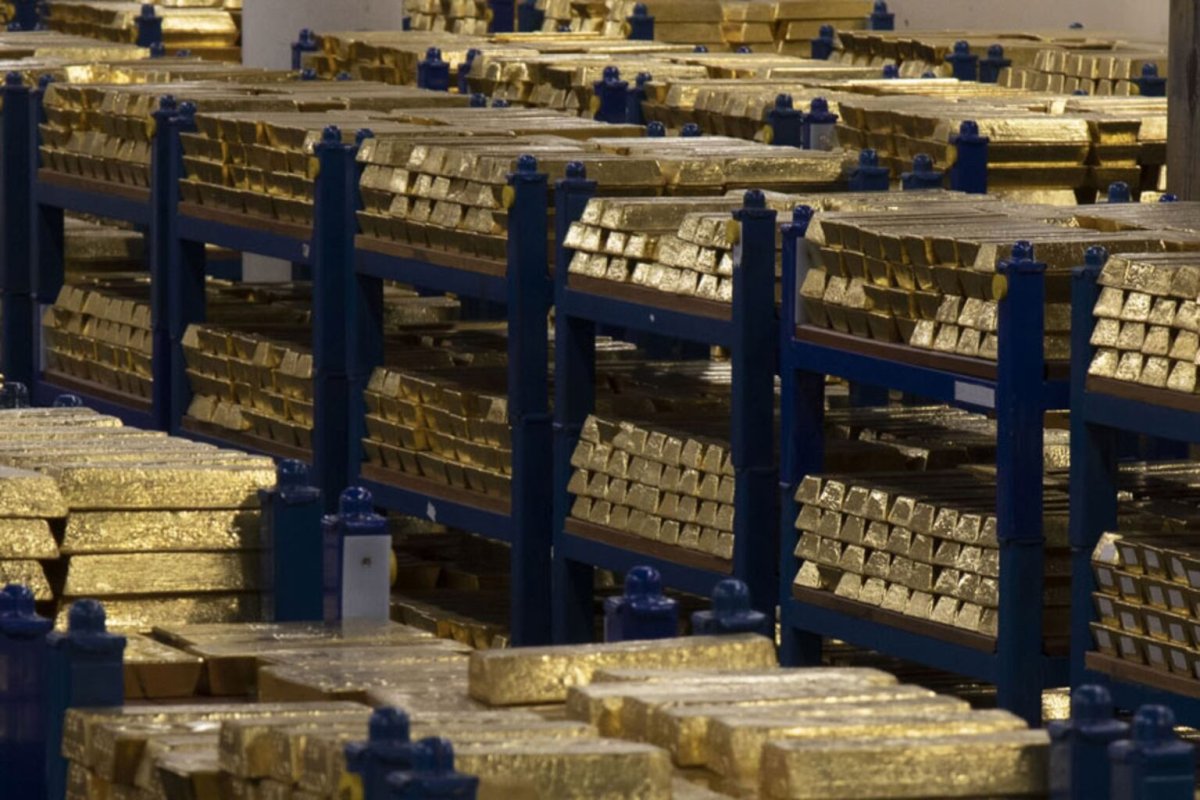
The strongest bearish argument remains cash yield. UBS notes that higher real yields increase gold's opportunity cost, and persistent 5% Treasury yields could also bolster the U.S. dollar, potentially weakening investment demand. Physical trading, however, is less dramatic than price charts suggest. The Bank of England, for instance, stores about 400,000 gold bars for governments and financial institutions, and most trades simply change ownership records without moving the bars.
Key risks include renewed rate increases that could lift real yields and reverse Monday's gain, as well as the concentrated nature of official buying, which leaves the market exposed if major buyers like China or Poland decide to pause.
Looking Ahead
The next significant test comes on September 30, when the U.S. releases August personal income and PCE inflation data. This report will indicate whether 5% yields remain gold's primary obstacle or transform into a hedge against rising inflation. As the market navigates these crosscurrents, gold's resilience will depend on the interplay between yield dynamics and official sector demand.