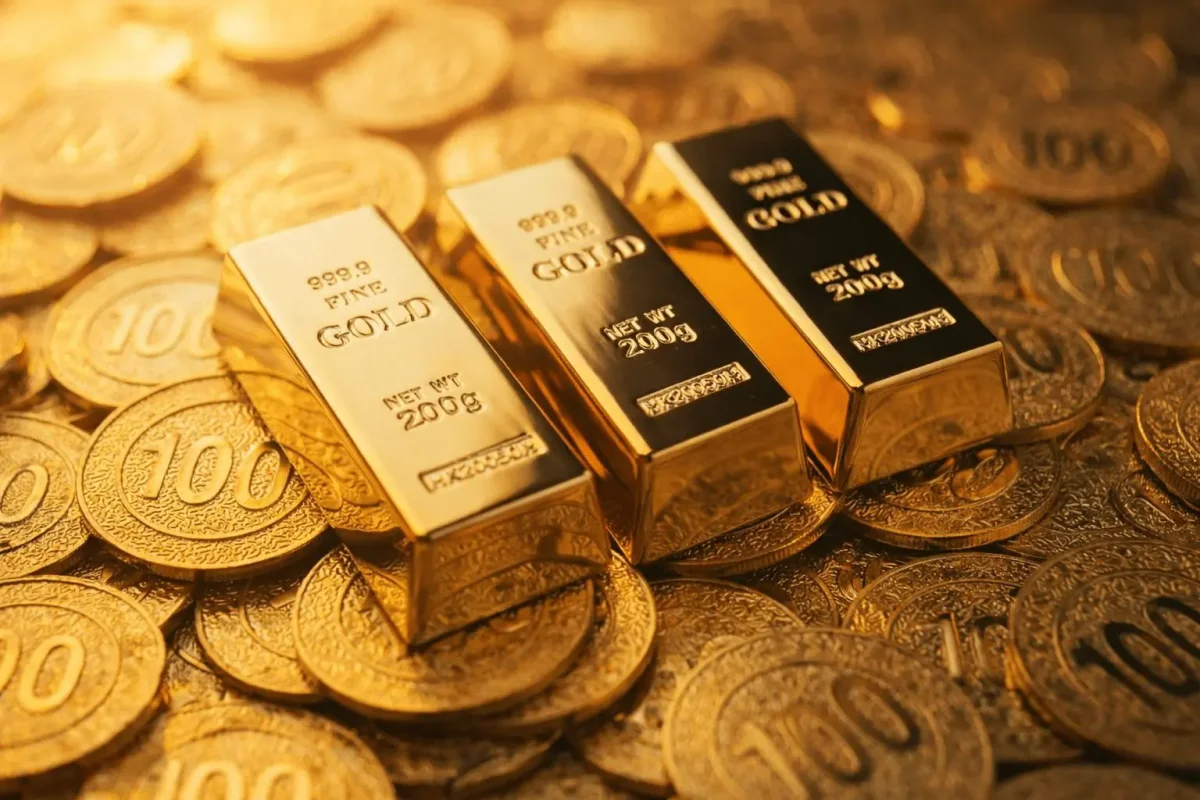
Gold prices extended their decline on Friday, March 20, 2026, with the precious metal shedding 1.8% to settle at $4,566.26 per ounce. The move put bullion on track for its third straight weekly loss, a trend defying typical safe-haven demand amid escalating geopolitical tensions.
The catalyst for the drop was news that the United States plans to deploy thousands of additional military personnel to the Middle East. While such developments often spur flight-to-safety buying in gold, the market reaction was counterintuitive. The announcement instead fueled a rally in the U.S. dollar and a sharp rise in Treasury yields, creating a hostile environment for non-yielding assets like gold.
Interest Rates and Inflation Fears Dominate Trader Focus
Market participants appeared to look beyond the immediate conflict, focusing instead on the macroeconomic implications. The primary concern is that a prolonged regional crisis, particularly Iran's blockade of the Strait of Hormuz, could sustain high energy prices. This, in turn, risks rekindling inflationary pressures, potentially forcing central banks to maintain or even tighten monetary policy.
The Federal Reserve held interest rates steady earlier in the week but notably flagged an increased inflation outlook. By Friday, the yield on the benchmark 10-year U.S. Treasury note had climbed to 4.372%, while the 2-year yield rose to 3.928%. Major financial institutions warned that persistent price pressures might also compel the Bank of England and the European Central Bank to consider further rate hikes.
Precious Metals Complex Under Pressure
The weakness was not isolated to gold. The entire precious metals sector faced significant selling pressure. Spot silver plummeted 4.6%, platinum fell 1.3%, and palladium dropped 2.4%. All three metals were poised to close the week in negative territory.
Daniel Ghali, a commodity strategist at TD Securities, noted that gold's traditional role as a hedge against currency debasement is fading in the current environment. He highlighted that short-term risks remain skewed to the downside for the metal.
Independent metals trader Tai Wong described the market as tackling a "usual wall of worry" heading into the weekend. He observed that metals have been "especially wobbly" following a rate scare earlier in the week and cautioned that while some consolidation is expected, the path forward will be "a bumpy ride."
Physical Demand Fails to Offset Losses
Even increased physical buying in key Asian markets was insufficient to counter the broad-based sell-off. In India, dealers reduced their discounts to as little as $75 per ounce, down from $83 the prior week, as festival-related purchasing picked up. In China, premiums softened to a range of $10 to $22, compared to $20 to $30 the previous week.
Bernard Sin of MKS PAMP pointed to a cooling in near-term physical demand but maintained that the fundamental drivers of long-term resilience for the metal remain intact.
The trade could see a reversal if concerns over oil supply abate. Brent crude futures settled at $108.65 a barrel on Thursday after spiking to an intraday high of $119.13. Analysts like John Kilduff at Again Capital suggested that any hint of additional supply or a resolution to shipping disruptions in the Strait of Hormuz could temporarily ease the surge in energy prices. Such a development would likely take pressure off inflation expectations, bond yields, and the dollar, potentially offering relief to gold.
Since the outbreak of the U.S.-Israeli war with Iran on February 28, gold has fallen more than 10%. This decline underscores a market narrative where traders are prioritizing fears of oil-driven inflation and tighter global monetary policy over the direct geopolitical risk, leaving the traditional safe-haven asset struggling to find consistent support.