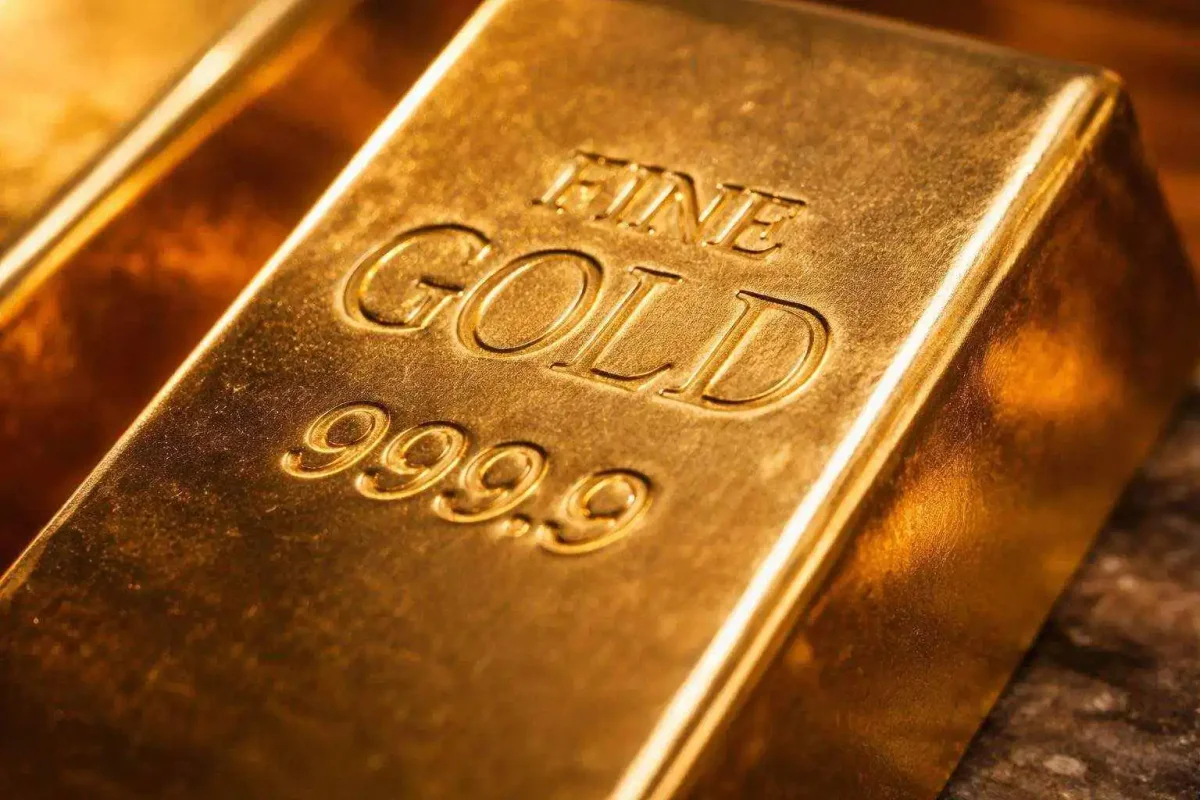
Gold prices held steady near the $5,000 per ounce threshold during Tuesday's trading session in New York, as investors weighed escalating geopolitical tensions against anticipation of the Federal Reserve's imminent interest rate decision. Spot gold traded at $5,004.71 per ounce by mid-afternoon, while April futures contracts settled at $5,008.20, demonstrating minimal movement from the previous session.
Market Dynamics and Precious Metals Divergence
While gold maintained its position, other precious metals displayed mixed performance. Silver declined by 1.5%, contrasting with gains in both platinum and palladium. This divergence highlights the unique position of gold as both a traditional safe-haven asset and a financial instrument increasingly sensitive to interest rate expectations.
The commodity complex saw significant movement in energy markets, with Brent crude oil climbing 1.52% to $101.73 per barrel. This surge in oil prices, driven by ongoing Middle East tensions, has complicated the inflation outlook and consequently influenced expectations for monetary policy.
Shifting Rate Expectations and Inflation Concerns
Market participants have substantially reduced their expectations for Federal Reserve interest rate cuts in recent days. Traders now price in only about 27 basis points of easing by year-end, a sharp decline from over 50 basis points projected just days earlier. The spike in oil prices has raised concerns that persistent inflationary pressures could keep borrowing costs elevated for longer than previously anticipated.
Monday's trading session revealed these pressures clearly, with spot gold dropping 0.5% to $4,993.42, reaching its lowest level since February 19. Analysts noted that traders focused on the risk that higher energy costs would sustain inflation, potentially delaying central bank rate cuts. "With higher oil prices comes higher inflation," observed Bob Haberkorn of RJO Futures, adding that this environment makes central banks less eager to implement easing measures.
Analyst Perspectives on Gold's Trajectory
Market sentiment stabilized somewhat on Tuesday, though uncertainty persisted. Jim Wyckoff, senior analyst at Kitco Metals, described the current environment as "a balancing act" between safe-haven buyers concerned about geopolitical risks and investors worried about inflation's impact on monetary policy. Wyckoff expressed skepticism about immediate new record highs for gold, suggesting that "the bulls have just run out of gas" and that any fresh peaks "may come later, but not be anytime soon."
Rhona O'Connell, head of market analysis at StoneX, noted that gold has been "effectively marking time" throughout February and March, trading predominantly within a range of $4,900 to $5,400 per ounce. She suggested the metal might need "a breather" unless the conflict in the Gulf region experiences further escalation.
Investment Flows Show Divergent Signals
Current market activity reveals some concerning trends for gold bulls. Holdings in the SPDR Gold Trust, a major physically-backed gold ETF, declined to their lowest level in nearly nine weeks. Similarly, the iShares Gold Trust reached its smallest size since early December. Trading volume for Comex gold futures has decreased by approximately 25% compared to pre-conflict levels, indicating diminished market conviction despite elevated price levels.
However, longer-term investment trends remain supportive. According to the World Gold Council, global physically-backed gold ETFs experienced inflows for a ninth consecutive month in February, attracting an additional $5.3 billion. Total holdings reached a record 4,171 tonnes, driven primarily by geopolitical concerns and shifting macroeconomic trends.
Long-Term Outlook and Price Projections
Despite recent consolidation, analysts maintain a constructive long-term view of gold. A Reuters poll conducted in February projected an average 2026 price of $4,746.50 per ounce, which would represent an all-time high for the survey. Geopolitical strains and continued central bank demand were cited as primary drivers for this outlook. Gold reached record levels in late January before experiencing a pullback.
As New York trading concluded, gold remained steady near $5,005 per ounce, with silver trading around $79.57 according to Kitco's spot prices. Market participants appear to be maintaining existing positions while awaiting the Federal Reserve's policy decision, which will clarify whether surging oil prices and persistent inflation concerns will alter gold's directional momentum in the coming weeks.