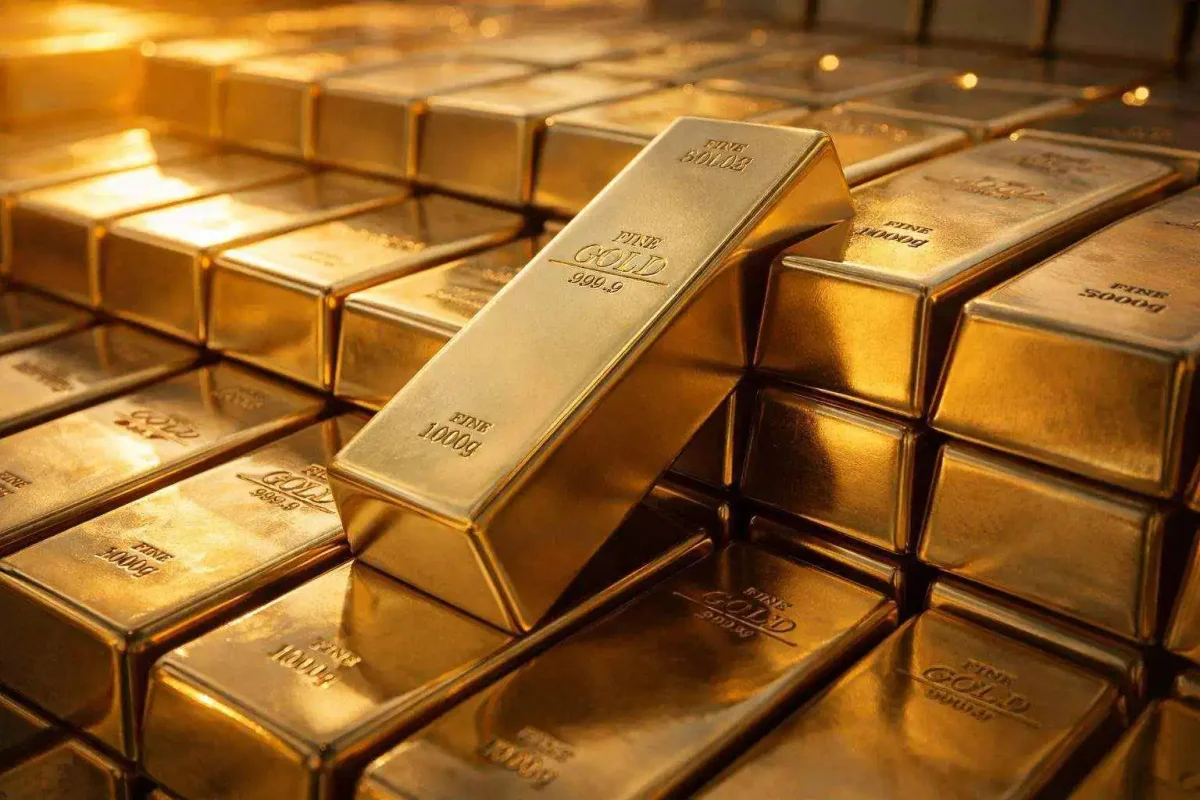
Gold prices held firm near historic levels during early trading on Wednesday, as market participants sought refuge in the precious metal ahead of the release of critical U.S. inflation data. The spot price for immediate delivery was last observed at $5,198.29 per ounce, marking a modest increase of 0.1% as of 0641 GMT. In contrast, U.S. gold futures for April delivery declined by 0.7% to $5,206.40, retracing some of the gains from the prior session's rally.
Inflation Data and Oil Dynamics in Focus
The bullion market is currently caught between two powerful, opposing forces. Persistent demand for safe-haven assets, driven by escalating geopolitical risks, is providing a floor for prices. Conversely, a sharp pullback in crude oil is alleviating some concerns about persistent inflationary pressures, which could reduce gold's appeal as an inflation hedge. Oil markets retreated after reports indicated the International Energy Agency (IEA) proposed a record release of strategic petroleum reserves.
All eyes are now on the U.S. Consumer Price Index (CPI) report for February, scheduled for release at 8:30 a.m. Eastern Time. This will be followed later in the week by the Federal Reserve's preferred inflation gauge, the Personal Consumption Expenditures (PCE) index. These data points are crucial for shaping expectations around the pace and timing of future interest rate adjustments by the U.S. central bank.
Geopolitical Tensions Amplify Safe-Haven Appeal
Geopolitical instability continues to be a primary driver for gold. Recent intensification of airstrikes by U.S. and Israeli forces on Iran has led to the closure of the Strait of Hormuz, a critical maritime chokepoint responsible for the transit of approximately one-fifth of the world's seaborne oil and liquefied natural gas. This development has sharply refocused investor attention on gold's traditional role as a store of value during times of uncertainty.
Nikos Kavalis, Managing Director at Metals Focus, noted that this backdrop has brought gold's "safe-haven attributes" back into the spotlight, leading his firm to maintain a constructive outlook on prices at current levels. Kavalis further projected that gold could surpass the $6,000 per ounce threshold sometime in late 2026 or early 2027.
Market Mechanics and Analyst Views
Gold surged nearly 2% on Tuesday, buoyed by a weaker U.S. dollar and the retreat in oil prices from a multi-year peak. Since gold is denominated in dollars, a softer greenback makes the metal less expensive for holders of other currencies, stimulating demand. Bart Melek, Global Head of Commodity Strategy at TD Securities, suggested that oil's decline has prompted some investors to reconsider the "debasement trade"—a strategy betting on expansive monetary policy and currency weakness to bolster hard assets like gold.
The precious metals complex experienced a mixed session. Spot silver fell 0.8% to $87.74 per ounce, while platinum declined 0.6% to $2,188.27. Palladium bucked the trend, posting a 0.5% gain to $1,663.39.
Potential Headwinds from Monetary Policy
The current supportive setup for gold is not without risks. A stronger-than-anticipated CPI reading could trigger a surge in Treasury yields and the U.S. dollar. This would undermine the argument for imminent Federal Reserve rate cuts and could dampen demand for non-yielding assets like bullion. According to the CME FedWatch Tool, which tracks fed funds futures, traders widely expect the Fed to hold rates steady at its meeting next week. However, markets are currently pricing in at least two quarter-point rate reductions before the end of the year.
Gold's rally has propelled prices more than 20% higher year-to-date, setting a series of consecutive record highs as investors react to ongoing geopolitical turmoil and economic anxiety. While the momentum could persist, analysts caution that prices may face pressure if inflationary pressures prove more stubborn than expected, or if tensions in the Middle East and oil markets subside more rapidly than traders currently anticipate.