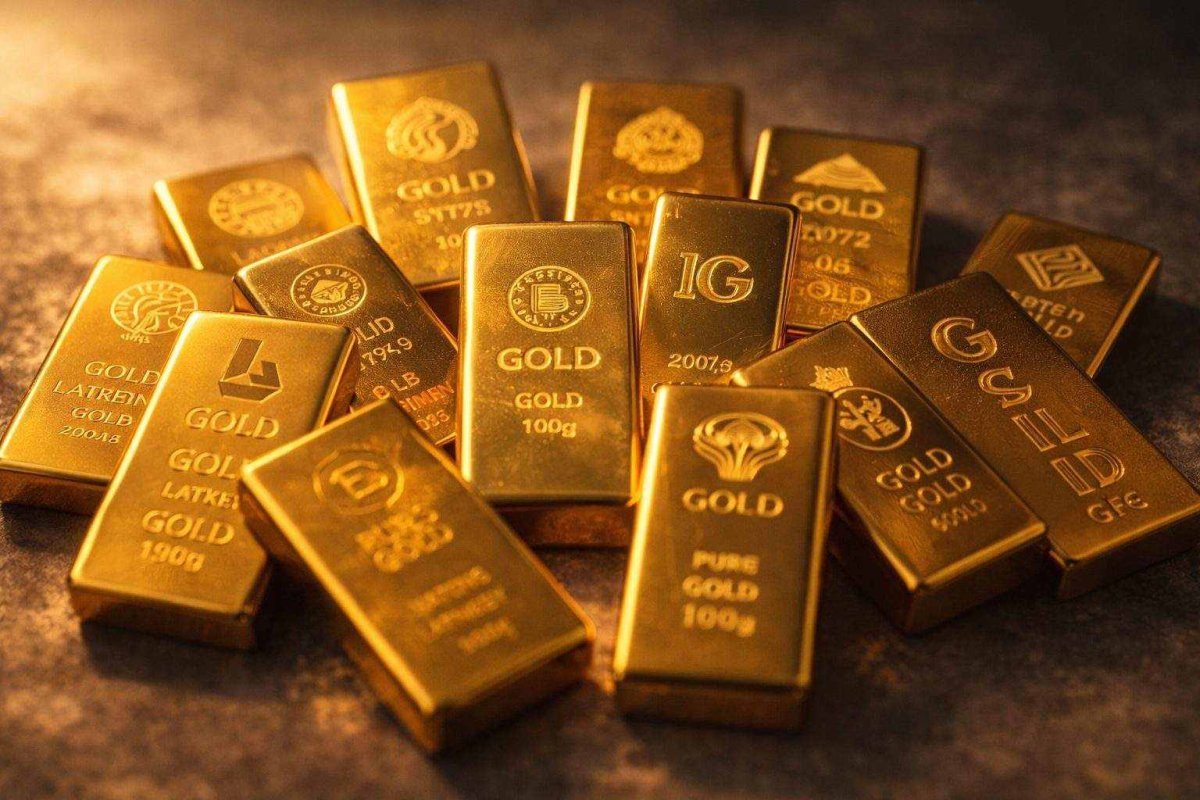
Gold prices moved lower on Wednesday, giving back a portion of the previous session's sharp gains. Spot bullion settled at $5,165.93 per ounce, a decline of 0.5%. The most actively traded April futures contract for U.S. gold fell more steeply, dropping 1.3% to $5,174.40. The reversal followed a nearly 2% surge on Tuesday that had pushed prices to $5,231.79, highlighting the volatile and sentiment-driven nature of the current market.
Dollar Strength and Rate Expectations Weigh
The primary headwind for the precious metal was a resurgent U.S. dollar, which makes gold more expensive for holders of other currencies. Underpinning the greenback's strength were shifting expectations regarding the Federal Reserve's monetary policy path. Traders are increasingly leaning toward the view that the central bank will maintain its benchmark interest rate at elevated levels for a prolonged period. This dynamic is challenging for non-yielding assets like gold, which face greater opportunity costs when interest rates are high.
The latest U.S. inflation data, released Wednesday, did little to resolve the policy debate. The Consumer Price Index (CPI) for February showed a 0.3% increase from the prior month and a 2.4% annual rise. The core CPI, which excludes volatile food and energy components, climbed 0.2% monthly and 2.5% year-over-year, according to the Bureau of Labor Statistics. While the figures were largely in line with forecasts, they arrived amidst a backdrop of rising energy costs linked to geopolitical unrest.
Geopolitical 'Push-and-Pull' Defines Market
Analysts describe the gold market as caught in a significant tug-of-war. On one side, safe-haven demand is being fueled by persistent geopolitical tensions, particularly in the Middle East. Military actions against merchant vessels near the critical Strait of Hormuz—a passage for roughly one-fifth of global oil shipments—have escalated risks. An Iranian military official recently warned that oil prices could reach $200 per barrel, though prices have since retreated below the $100 mark. Fourteen vessels have reportedly been struck since hostilities intensified.
On the other side, the specter of stubbornly high inflation, potentially exacerbated by energy shocks, is reinforcing expectations that the Federal Reserve cannot afford to ease policy prematurely. This is capping gold's upside potential. "The metal is in a push-and-pull scenario," noted one senior metals strategist, explaining that war jitters attract buyers while rate fears limit rallies.
Broader Precious Metals Complex Declines
The sell-off extended across the precious metals spectrum. Silver experienced the most severe pressure, with spot prices plunging 4.1% to $84.82 an ounce. Platinum shed 1.1% to settle at $2,175.60, while palladium eased 1.5% to $1,630.84. The broad-based weakness underscores the dominant influence of macroeconomic factors, namely dollar movements and interest rate outlooks, over the sector.
In response to the oil supply threats, the International Energy Agency (IEA) has proposed a significant coordinated release of strategic petroleum reserves. Sources indicate the plan could involve over 100 million barrels in the initial month, with a potential total reaching 400 million barrels. However, oil markets pared losses following the news, suggesting traders viewed the measure as insufficient to fully offset the disruption risks emanating from the Middle East.
Focus Shifts to the Federal Reserve
All market attention now turns to the Federal Open Market Committee's (FOMC) scheduled meeting on March 17-18. The central bank's updated economic projections and policy statement will be scrutinized for clues on the timing and pace of any future rate cuts. Comments from Fed officials will be key in determining whether the recent moderation in inflation is seen as durable enough to warrant policy easing later this year.
Despite Wednesday's decline, gold remains firmly above the psychologically important $5,000 level, though it has not challenged the late-January peak of $5,594.82. The market finds itself in a familiar equilibrium: geopolitical instability provides a solid price floor, while the lingering threat of inflation—and the higher-for-longer interest rates it may necessitate—continues to act as a ceiling on rallies. This sets the stage for continued volatility as traders navigate between these competing fundamental forces.