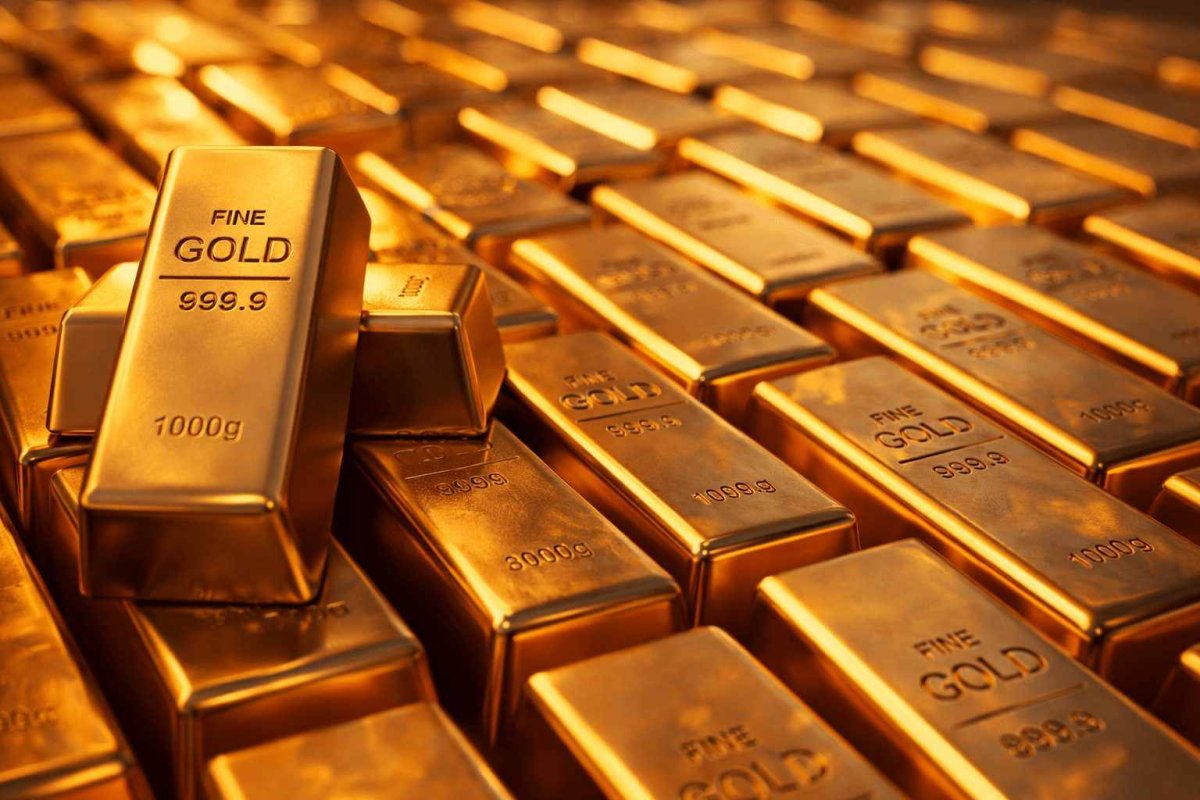
Gold prices reversed course on Thursday, surrendering a significant portion of the previous session's strong gains. The shift in sentiment was driven by a resurgent U.S. dollar and a sharp spike in crude oil prices, following renewed geopolitical concerns in the Middle East.
Spot gold declined by 2% to $4,660.95 per ounce as of late morning trading in New York. U.S. gold futures, which represent contracts for future delivery, experienced a steeper drop of 2.6%, settling at $4,686.80. This pullback marked a stark contrast to Wednesday's trading, where the precious metal had rallied 2.5% to reach $4,784.22—its highest level since March 19—on hopes for a potential de-escalation of tensions.
The primary catalysts for Thursday's decline were a notable strengthening in the U.S. dollar index, which advanced 0.35% to 99.92, and a surge in Brent crude oil, which jumped approximately 5.4% to $106.66 per barrel. These moves followed statements from U.S. leadership signaling a continuation of military strikes against Iran, redirecting market attention toward persistent inflationary pressures and the potential for sustained higher interest rates.
Market Dynamics and Analyst Commentary
David Meger, Director of Metals Trading at High Ridge Futures, noted that the market's focus remained squarely on geopolitical developments, with little expectation for immediate relief from the ongoing energy supply crunch or for imminent interest rate cuts from the Federal Reserve. The rapid shift highlights gold's dual nature as both a safe-haven asset and a non-yielding instrument that becomes less attractive when rising energy costs bolster inflation expectations.
Analysts pointed to the delicate balance influencing gold's trajectory. "Peace could be a 'double-edged sword' for gold," remarked IG market analyst Tony Sycamore. While a reduction in geopolitical risk could diminish the premium built into gold prices, a concurrent drop in oil prices and cooling inflation might revive expectations for Fed rate cuts later in 2026, potentially offering new support for bullion.
Just a day earlier, some traders, like Bob Haberkorn of RJO Futures, had seen potential for gold to challenge the $5,000 level if de-escalation fostered hopes for monetary policy easing. The swift reversal underscores the market's sensitivity to headlines and macroeconomic data.
Broader Precious Metals and Physical Market Activity
The sell-off extended to other precious metals, though performance was mixed. Spot silver slumped 3.9% to $72.19 an ounce. In contrast, platinum managed a modest gain of 0.5% to $1,974.35, and palladium advanced 2.1% to $1,503.57.
Activity in the physical market presented a divided picture. In India, lower prices attracted buyers, leading dealers to charge premiums for the first time in two months. However, in China, purchasers held back in anticipation of further price declines. Sentiment was further dampened by data showing Turkey's central bank gold reserves fell by 69.1 metric tons last week, bringing the two-week total reduction to over 118 tons.
Despite the weekly volatility, gold concluded the month of March with a substantial 11.8% decline, its most severe monthly drop since October 2008. Peter Grant, Vice President and Senior Metals Strategist at Zaner Metals, maintained a longer-term bullish outlook, citing continued accumulation by global central banks and ongoing efforts by some nations to diversify reserves away from the U.S. dollar.
Market participants now turn their attention to the upcoming U.S. non-farm payrolls report for March. A Reuters survey of economists forecasts an addition of 60,000 jobs. A stronger-than-expected figure could reinforce the narrative that interest rates will remain elevated for an extended period. Notably, the data's release on Good Friday coincides with a closure of U.S. equity markets, potentially amplifying its impact on currency and commodity trading.