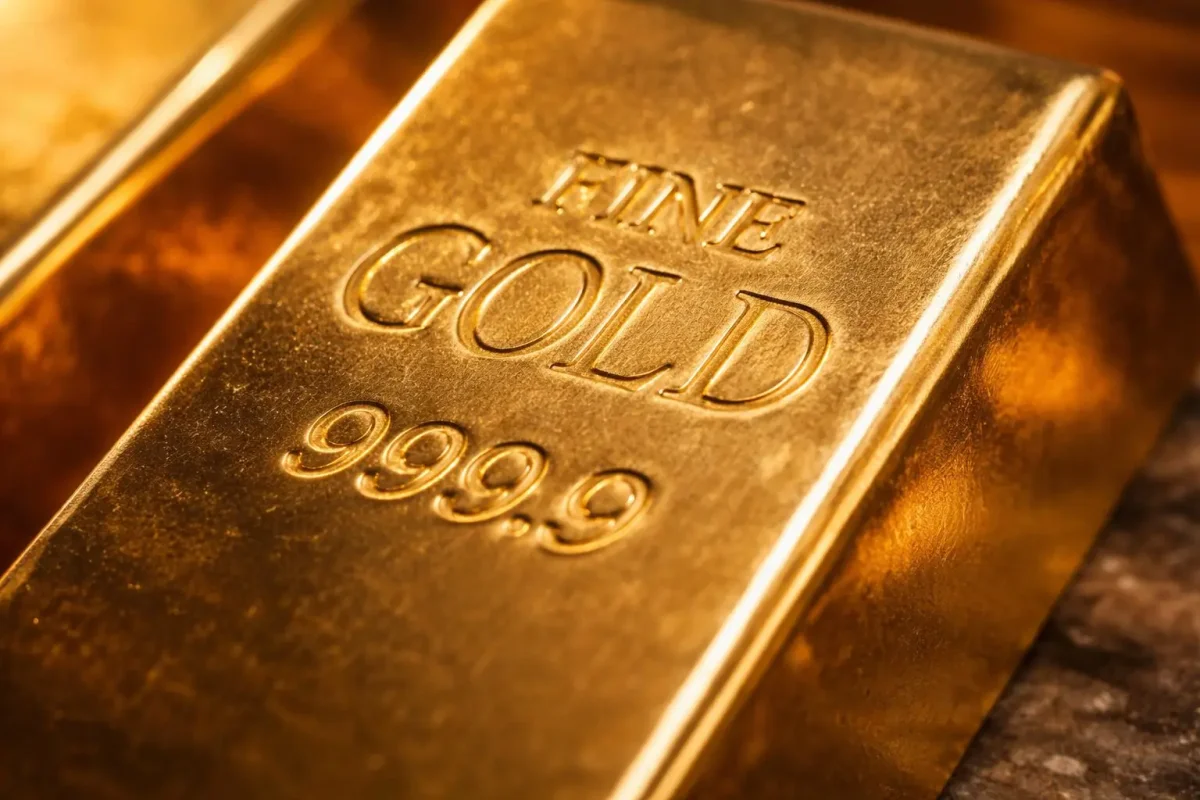
Gold prices extended their retreat on Friday, with spot bullion falling 0.6% to $5,046.69 per ounce by late morning trading in New York. The precious metal was poised to close the week lower for a second consecutive time, as a resurgent U.S. dollar and ongoing inflation worries linked to geopolitical tensions dampened its traditional appeal as a safe haven.
Market Drivers and Conflicting Forces
The recent downturn interrupts what had been a standout trade earlier in the year. Despite the weekly pullback, gold remains significantly higher for 2026, building on a substantial rally throughout the previous year. Analysts describe the current environment as a tug-of-war. On one side, haven demand stemming from the conflict in Iran provides underlying support. On the other, the metal faces headwinds from a firmer dollar, elevated U.S. Treasury yields, and market expectations that the Federal Reserve will maintain higher interest rates for longer. These factors increase the opportunity cost of holding non-yielding assets like gold.
U.S. Economic Data Fuels Caution
Fresh economic indicators released Friday reinforced the cautious mood. U.S. consumer spending and the core Personal Consumption Expenditures (PCE) price index, the Fed's preferred inflation gauge, both rose 0.4% in January. Year-over-year, core PCE inflation held at 3.1%. Concurrently, fourth-quarter GDP growth was revised down to an annualized rate of 0.7%. This combination of persistent price pressures and moderating economic activity presents a complex backdrop for monetary policy. Following the data, traders in interest-rate futures marginally brought forward their projections for the first Fed rate cut, now pricing it for September instead of October.
The energy complex remains a critical wild card for inflation and gold's narrative. Goldman Sachs analysts forecast that Brent crude could sustain levels above $100 per barrel in March, warning that prolonged disruptions in the Strait of Hormuz—a vital oil transit route—could keep prices elevated. Escalatory rhetoric from global leaders continues to keep energy markets and broader inflation expectations on edge, with each development sending ripples through financial markets.
Physical Market Disruptions
Supply chain issues in the physical bullion market are compounding the pressure. A key logistical hub, Dubai, has seen only a limited restart of flights to major gold refining and consumption centers like Switzerland, Hong Kong, and India. As of Thursday, air traffic was reportedly still operating at just 37% of normal levels. The resulting scarcity of transport capacity has driven up insurance and shipping costs, which in turn has tempered demand from price-sensitive buyers in India, a major gold-consuming nation.
Longer-Term Outlook and Supporting Factors
Despite the near-term challenges, several factors continue to underpin gold's longer-term bull case. Ongoing central bank purchases provide a steady source of demand. Furthermore, exchange-traded funds (ETFs) that hold physical gold have been experiencing consistent inflows from investors. Market observers note that while the strong dollar and high yields are clear negative factors, the geopolitical conflict is concurrently pulling some haven capital into the metal, creating a complex push-pull dynamic.
The inflationary ripple effects are evident beyond commodity markets. The University of Michigan's preliminary reading for U.S. consumer sentiment in early March slipped to 55.5, down from 56.6 in February. Survey directors noted that any earlier optimism evaporated following the military action in Iran, with gasoline prices soaring more than 21% since the conflict began. This squeeze on household budgets complicates the economic picture and influences gold's role as an inflation hedge in the current rate environment.
The path forward for gold prices remains highly uncertain and data-dependent. Analysts suggest that a retreat in oil prices from hypothetical triple-digit highs could help gold retain its appeal as an inflation buffer without completely eliminating the possibility of future Fed easing. Should crude decline further and the dollar weaken, gold could find a firmer footing. Conversely, a renewed surge in energy prices or a further climb in bond yields could deepen the current corrective phase for bullion, extending this week's losses.