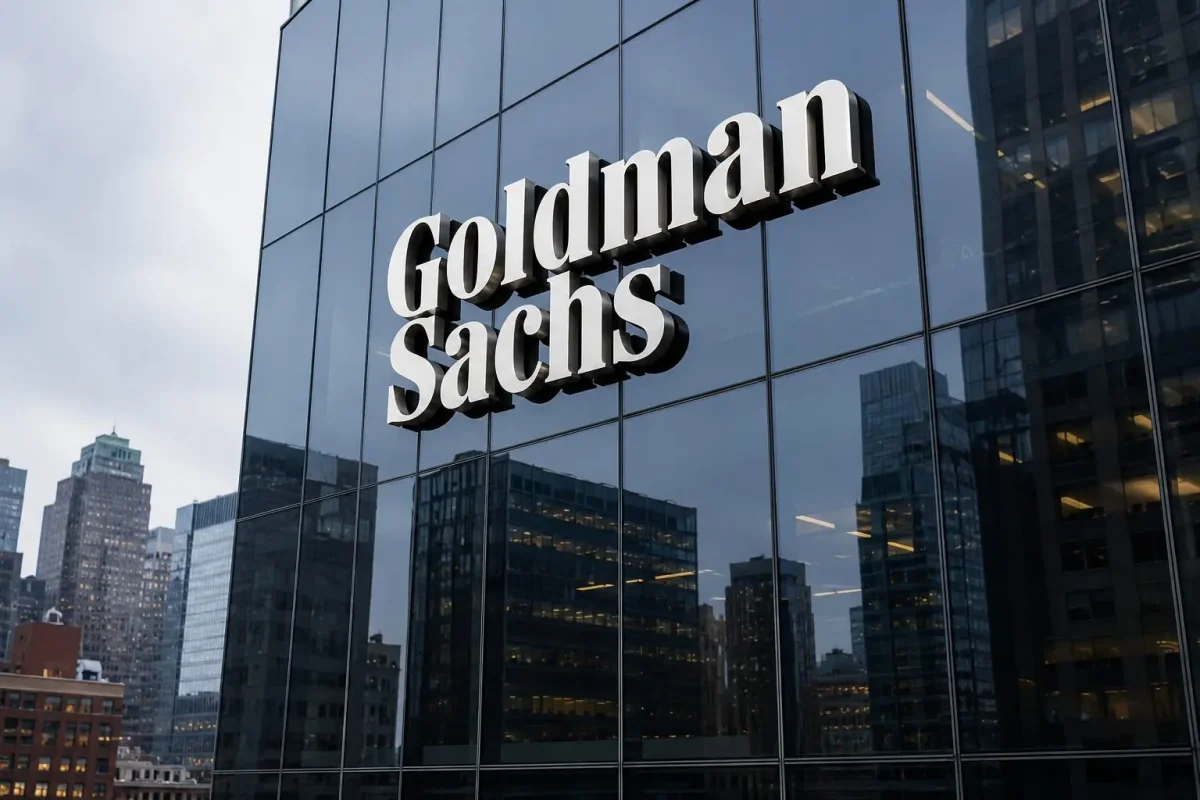
Goldman Sachs (NYSE:GS) delivered a record-breaking second quarter, reporting net earnings of $6.63 billion, a 78% surge from the prior year. Earnings per share came in at $20.98, far exceeding the analyst consensus of $14.48. The strong results pushed trailing twelve-month EPS to $64.79, causing the trailing price-to-earnings (P/E) ratio to drop to approximately 16.8x in premarket trading, down from 19.1x at Monday's close. Despite this improvement in earnings valuation, the stock's price-to-tangible-book ratio rose to 3.23x, up from 3.11x, as tangible book value per share increased only modestly to $336.61 from $336.28.
Revenue Growth Driven by Equities and Investment Banking
Total revenue for the quarter reached $20.34 billion, a 39% increase year-over-year. Equities trading was the standout performer, generating $7.42 billion, up $3.12 billion, and accounting for 54% of the total revenue growth. Investment banking fees climbed 55% to $3.40 billion, fueled by a doubling of equity underwriting fees to $985 million, including the listing of SpaceX (NASDAQ:SPCX). Fixed income, currencies, and commodities trading added $4.59 billion, up $1.11 billion, while asset and wealth management revenue rose 20% to a record $4.60 billion. Platform Solutions revenue declined 8% to $340 million.
Capital Returns and Valuation Dynamics
Goldman returned $5.36 billion to common shareholders, representing 84% of common earnings. This included $4 billion in share buybacks at an average price of $984.57 per share, or 2.93 times quarter-end tangible book value. While buybacks boost EPS, they limit growth in tangible book value per share, which rose just 0.1% from March. The company's return on common equity hit 23.5%, with return on tangible equity at 25.5%, well above the 15% full-year target seen in 2025.
Market Context and Sector Trends
The strong quarter was not unique to Goldman. JPMorgan Chase (NYSE:JPM) reported equities trading up 86%, and Bank of America (NYSE:BAC) saw a 70% increase, suggesting a broader sector trend driven by heightened market volatility and client activity. However, this raises questions about sustainability, as a spike in volatility may be temporary. Goldman's investment banking backlog grew compared with March and the end of 2025, but the pipeline is subject to risks from geopolitical tensions, tariffs, and market conditions.
Chief Executive Commentary
CEO David Solomon noted that momentum picked up across Goldman's businesses and cited a continuing "flywheel of activity." He emphasized the firm's diversified revenue streams, though Global Banking and Markets still drove 76% of group revenue and about 88% of pre-tax profit. Asset and Wealth Management saw record management fees of $3.36 billion and assets under supervision reaching $4.04 trillion, indicating ongoing diversification efforts.
Outlook and Analyst Perspectives
While the blowout quarter has alleviated concerns about Goldman's 19x trailing P/E, the current valuation at 3.23x tangible book value remains a point of debate. A Seeking Alpha note downgraded the stock to Sell, citing overvaluation. The key question is whether Goldman can sustain these elevated earnings levels. If returns slip to the 15% range seen in 2025 and the stock continues to trade above three times tangible book, the valuation could become harder to justify. For now, investors are betting on repeat performance.