Grab Holdings (NASDAQ: GRAB) saw its shares tumble to a fresh 52-week low of $3.46 during Friday's trading session in New York, before recovering slightly to close at $3.55, down 0.6%. The decline came even after the Southeast Asian super-app reported first-quarter results that surpassed analyst expectations, highlighting a growing disconnect between the company's fundamental performance and investor sentiment.
The company's first-quarter revenue surged 24% year-over-year to $955 million, while net profit reached $120 million, a dramatic improvement from $10 million in the same period last year. On-demand gross merchandise value climbed 24% to $6.1 billion, driven by strong performance in both mobility and delivery segments. CEO Anthony Tan called it a "strong start to 2026," and CFO Peter Oey reiterated that Grab remains "firmly on track" to hit its full-year revenue target of $4.04 billion to $4.10 billion, with adjusted EBITDA expected between $700 million and $720 million.
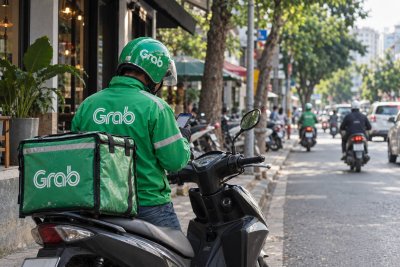
However, a regulatory bombshell from Indonesia has overshadowed these positive numbers. On May 1, President Prabowo Subianto announced a sweeping change that caps ride-hailing commissions at 8%, down sharply from the current 20%. The new rules also require operators to provide accident and health insurance for drivers. This directly impacts Grab and its local rival GoTo, as Indonesia is a key market for both companies.
During the earnings call, Grab executives sought to downplay the potential impact. COO Alex Hungate noted that two-wheel rides account for less than 6% of the company's overall mobility volume. CFO Peter Oey acknowledged that the fare structure for two-wheelers and the overall business model in Indonesia will need to be reset, calling the change "definitely not a small change." He added that Grab has "enough levers" to mitigate the impact, including potential fare adjustments, surge pricing modifications, and zoning changes. The company is currently in discussions with Indonesian ministries to clarify the decree's implementation.
DBS analyst Sachin Mittal described the commission cap as "structurally negative" for margins but believes it is unlikely to "fully derail" the sector. DBS maintains its buy rating on Grab with a target price of $5.93. However, the note cautioned that in a worst-case scenario where the rule extends to four-wheel drivers and operators cannot pass on costs, group revenue could fall by approximately 5% and adjusted EBITDA by 14%.
Executing offsetting measures, however, is not straightforward. Raising consumer prices could dampen trip growth, while reducing subsidies might drive users to competitors. If Indonesia expands the cap to cover cars as well as motorbikes, the financial impact would be significantly larger. The regulatory uncertainty also adds complexity to ongoing market speculation about potential consolidation between Grab and GoTo, intertwining driver welfare, competition, and political considerations.
Beyond the regulatory headwinds, Grab is pursuing expansion as a growth lever. In March, the company struck a $600 million cash deal to acquire Delivery Hero's Foodpanda Taiwan operation, marking its first expansion beyond Southeast Asia. The acquisition is expected to close in the second half of 2026, pending regulatory approval, and is projected to boost adjusted EBITDA by at least $60 million by 2028.
For now, the market's verdict is clear: while Grab continues to deliver strong financials—profit, cash flow, and a growing footprint—investors are increasingly focused on whether the company can navigate the challenging regulatory landscape in Indonesia. The key question remains whether regulators, competitors, and cost-conscious consumers will allow Grab to sustain its profitability and growth trajectory.