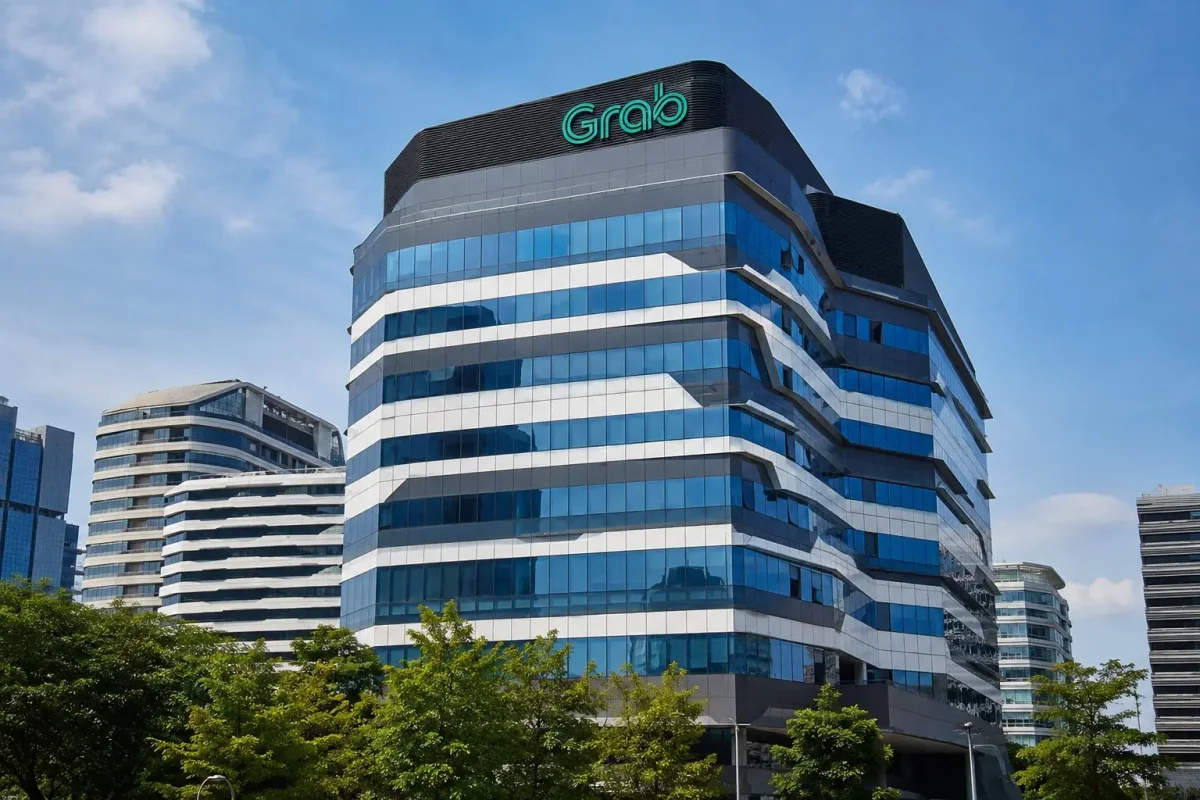
Grab Holdings (GRAB) closed Friday at $3.51, down 1.4% from the prior session, as U.S. markets prepared for the Memorial Day holiday. The stock ended the week roughly 1.1% lower, trailing the broader market. The Nasdaq Composite added 0.2% on Friday and logged a 0.5% weekly gain, while the S&P 500 and Dow Jones Industrial Average both finished higher, marking their eighth consecutive weekly advance.
The trading week was cut short by the Memorial Day closure on Monday, with Grab's next regular session set for Tuesday. The pause comes as the Southeast Asian superapp redirects investor attention toward its banking ambitions rather than its core ride-hailing and delivery businesses.
Superbank Consolidation
On May 20, Grab announced plans to consolidate PT Super Bank Indonesia Tbk onto its balance sheet. The move follows an agreement by Singtel Alpha Investments to transfer its Superbank stake to GXS Bank, the digital banking joint venture between Grab and Singtel. After the transaction, Grab's total holding in Superbank will exceed 50%, and Superbank's financial results will be reported within Grab's Financial Services segment.
Superbank has grown to over 6 million customers and processes more than 1 million transactions daily. The digital lender posted its first full-year profit in 2025, with asset growth of 72% year-over-year and net interest income—the difference between interest earned on loans and interest paid on deposits—jumping 84% in April.
Grab President and COO Alex Hungate highlighted Superbank's structural advantages: leveraging Grab and OVO to lower distribution costs and tying credit underwriting to Grab's transaction data. GXS Bank CEO Pei-Si Lai added that the goal is to make financial services more accessible across Southeast Asia.
Financial Performance and Outlook
Grab's first-quarter results provided a mixed picture. Revenue reached $955 million, up 24% year-over-year, while on-demand gross merchandise value—total transactions before deductions—also rose 24% to $6.1 billion. The company posted net income of $120 million for the quarter, and adjusted EBITDA, which excludes interest, taxes, depreciation, amortization, and certain other items, climbed 46% to $154 million.
CEO Anthony Tan described the quarter as a "strong start to 2026." CFO Peter Oey pointed to "growing operating leverage" and reaffirmed Grab's full-year targets: revenue between $4.04 billion and $4.10 billion, and adjusted EBITDA in the range of $700 million to $720 million.
Competitive Landscape and Risks
Grab is also pursuing geographic expansion. In March, it agreed to acquire Delivery Hero's Foodpanda Taiwan business for $600 million in cash, marking its first deal outside Southeast Asia. The transaction is expected to close in the second half of 2026, pending regulatory approval.
However, the pivot to banking brings potential headwinds. Grab's own filings cite risks related to integration, regulation, competition, and macroeconomic conditions. The first-quarter update showed higher driver-partner incentives amid rising fuel costs. If Superbank experiences credit losses, regulatory delays, or if Grab increases subsidies for mobility and delivery, the stock could continue to lag the Nasdaq.
With a shortened trading week, investors are now focused on the Superbank stake transfer, expected to close in May. Updated group guidance will be provided during Grab's second-quarter earnings call in August. Until then, the stock may track broader tech moves as the market awaits clearer signals on how banking will drive earnings growth and whether it introduces additional risk.