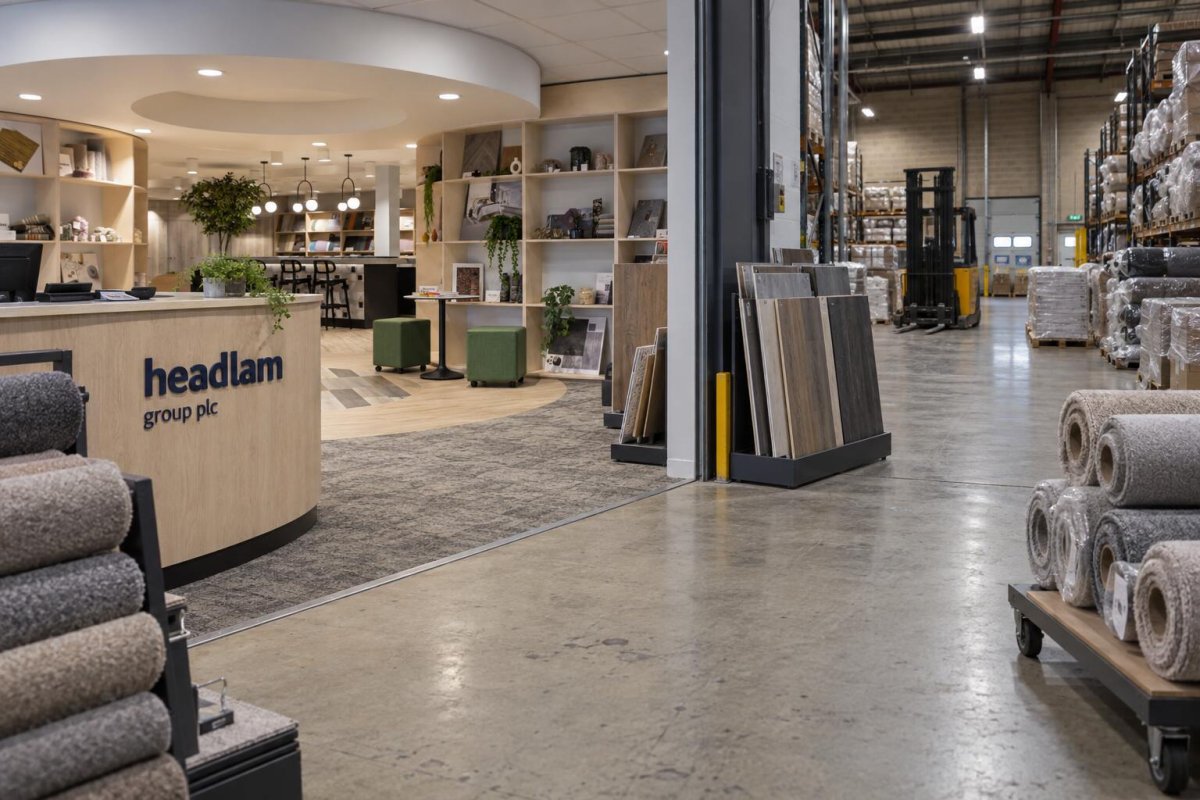
The administrators overseeing Headlam Group have taken the first decisive steps in the company's restructuring, closing 28 trade counters and making 154 employees redundant. The move transforms what was initially a balance-sheet crisis into a leaner operating reality, with the remaining 48 counters and all 17 distribution centres continuing to trade under the watch of Interpath.
Interpath's Wednesday update marks the first concrete measure of the immediate restructuring. The closures represent 37% of Headlam's 76-counter network, and the job losses account for at least 12% of the workforce, which the administrator has described as exceeding 1,300 employees. While the company is not being liquidated, the cuts signal a critical phase in negotiations with creditors and lenders over a potential Company Voluntary Arrangement (CVA) and refinanced debt.
What remains in operation
Joint administrators Will Wright, Chris Pole, and Ryan Grant were appointed on September 8 for both Headlam Group plc and its trading subsidiary HFD Limited. In a statement issued the following day, Interpath confirmed that 17 distribution branches and 48 trade counters remain open. Wright noted that customer and supplier feedback indicates continued demand for the business, though he acknowledged the pressure from cost inflation and fragile consumer confidence.
This ongoing trade forms the core of the bull case. Headlam retains national infrastructure, manufacturer relationships, and access to thousands of independent retailers and flooring contractors. Existing lenders have indicated support for the administration process, according to the company's regulatory announcement on September 8. Administration provides legal protection from creditor actions while the operating and financing plan is negotiated.
The cost, however, is now visible. Headlam is reducing local coverage just as service and product availability are central to its value proposition. Suppliers must continue to extend commercial support, customers must keep placing orders, and the remaining network must absorb business from closed counters without eroding service. Interpath explicitly made the proposed restructuring contingent on continued support from key stakeholders.
Why 10.5p is not a live valuation
Headlam's shares have been suspended since September 1 at 10.5p, a level that implies an £8.4 million market capitalisation on the last displayed quote. There is no bid or offer, and no executable market. The price is therefore a frozen historical marker, not evidence that investors can enter or exit at that valuation.
The company has stated its intention to seek restoration of the listing after a successful restructuring and transition to a reconstituted board. Every important word in that sentence is conditional. No CVA proposal, refinancing economics, new-money requirement, equity dilution, share cancellation, or restoration timetable has been published.
Creditors ahead of shareholders
UK insolvency rules put creditors ahead of shareholders when a company cannot pay its debts. A CVA requires approval from 75% by value of creditors who vote; shareholders also vote, but their interests do not move ahead of creditor claims. The government's financial-distress guidance is blunt: shareholders rank behind all creditors in the distribution waterfall. A business can emerge and preserve jobs while its old equity is diluted heavily or receives no recovery.
How the liquidity plan unravelled
Headlam entered 2026 with a turnaround plan and financing that appeared to provide time. Its 2025 results showed revenue of £498.7 million, EBITDA of negative £12.5 million, an £18.6 million underlying operating cash outflow, and net debt of £31.4 million. In January, it secured an £85 million asset-based lending facility. By September, the company said years of losses had exhausted liquidity under its facilities and prevented it from implementing the transformation inside the existing funding constraints.
Asset sales did not create spare cash for shareholders. Headlam sold and leased back its Bristol distribution centre for £3.15 million, 50% above its £2.1 million book value, but said the cash would repay debt after costs and fund an initial leaseback payment. The lease only runs through December 31. That transaction demonstrated saleable property value; it also demonstrated who had the immediate claim on the proceeds.
The next documents matter more than the suspended quote
The administrators now have to convert a credible operating business into a capital structure creditors will accept. Under the standard administration process, administrators generally have eight weeks to issue proposals to creditors. For Headlam investors, those proposals and any CVA circular should answer four questions: how much debt is compromised or refinanced, who supplies new money, what happens to existing shares, and how much cash the smaller network needs before it reaches break-even.
There is a plausible rescue case. The majority of sites remain open, lenders support the process, and administration creates time to shed uneconomic leases and overhead. Yet the 154 redundancies confirm that this is no longer a forecast exercise. Until Headlam publishes binding terms for the CVA and refinancing, the listed shares represent an uncertain residual claim behind creditors—not a tradeable 10.5p recovery bet.
