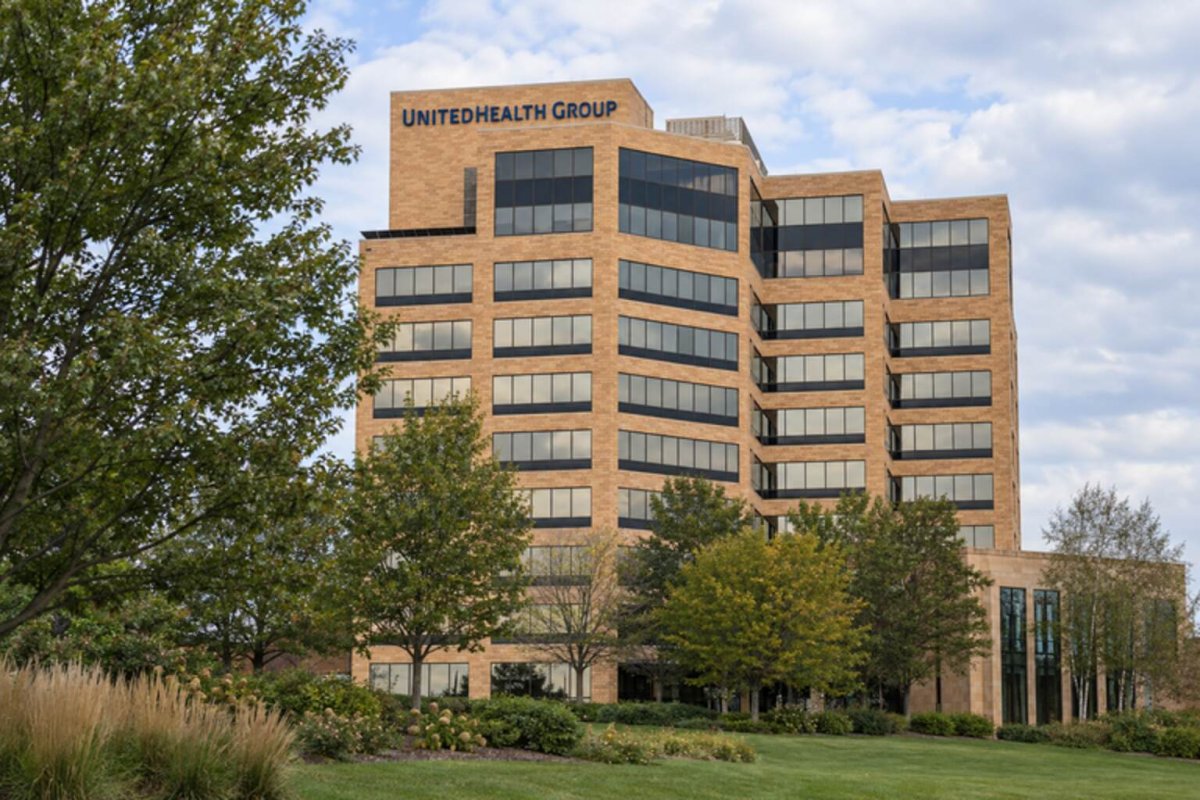
UnitedHealth Group (NYSE: UNH) experienced a 3.2% decline to $387.97 by mid-morning Wednesday, yet the stock remains far from bargain territory. The pullback comes amid a broader market selloff, with Brent crude surging past $100 and the Dow dropping roughly 0.8% shortly after the open, according to Associated Press data. No company-specific news drove the move, making the decline more a reflection of market sentiment than a verdict on UnitedHealth's fundamentals.
The more telling metric is the six-month performance. From a March 9 close of $285.17, UNH has climbed 36.1%, recovering much of the discount that had built up due to medical-cost pressures and concerns over Medicare Advantage funding. At Wednesday's price, the stock trades at approximately 19.6 times the midpoint of management's 2026 adjusted-earnings guidance of $19.50 to $20.00 per share. That multiple is not extreme for a dominant health insurer, but it is no longer a distressed valuation.
Earnings Quality Under Scrutiny
The second quarter provided evidence supporting the rebound. Revenue reached $112.0 billion, operating earnings hit $8.0 billion, and adjusted EPS came in at $6.38. The medical care ratio improved to 86.7% from 89.4% a year earlier. Full-year adjusted-EPS guidance was raised to $19.50–$20.00 from a floor of >$17.75. However, the quality of these improvements warrants attention. The company disclosed $860 million of favorable prior-period medical reserve development, which is not a repeatable growth engine. At nearly 20 times guided earnings, the market needs cost control to remain effective once that support fades.
Cash Flow Provides Substance
The strongest bull point is cash generation. UnitedHealth produced $11.1 billion of operating cash flow in the second quarter and guided to about $24 billion for 2026. Through mid-July, the company had repurchased $4.0 billion of stock and expects at least $5.0 billion for the year. The board also declared a $2.32 quarterly dividend, implying a 2.4% annualized yield at Wednesday's price. These capital returns can support per-share value even as consolidated revenue grows slowly.
Membership Losses: The Elephant in the Room
Second-quarter revenue was only 0.4% above the prior-year period. UnitedHealthcare served 48.5 million medical members, 1.6 million fewer than a year earlier. Medicare Advantage membership fell 9% to 7.565 million, with management noting a contraction of 965,000 seniors since year-end. Optum Health faced a similar trade-off, with revenue down 5% as it served roughly 700,000 fewer value-based-care patients, though operating earnings improved to $1.2 billion and margin reached 5.1%. Pricing, benefit redesign, and market exits are restoring profitability but shrinking the customer base for future growth.
Key Risks to the Recovery
The first test is the medical care ratio. Management's full-year target is 88.1%, plus or minus 25 basis points. A result above that range would suggest care utilization or provider pricing is outpacing premiums. The second is enrollment: further Medicare Advantage and value-based-care contraction could force UnitedHealth to rely solely on margin expansion rather than balanced growth.
Regulatory overhang remains a valuation discount, not a footnote. In its second-quarter 10-Q, UnitedHealth acknowledged responding to government subpoenas, information requests, and investigations, including reviews involving Medicare risk-adjustment coding. The company said the scope and outcome could not be assured. Medicare Advantage rates also remain below the company's estimate of forward medical-cost trends.
Verdict
After Wednesday's drop, UNH is less expensive than it was on Tuesday, but the stock is not priced for another operational stumble. A sustainable medical-cost ratio, stable membership, and clean cash conversion would make 19.6 times guidance defensible. If the next results show renewed cost pressure or deeper enrollment losses, the six-month rally leaves considerably more downside than it did in March.