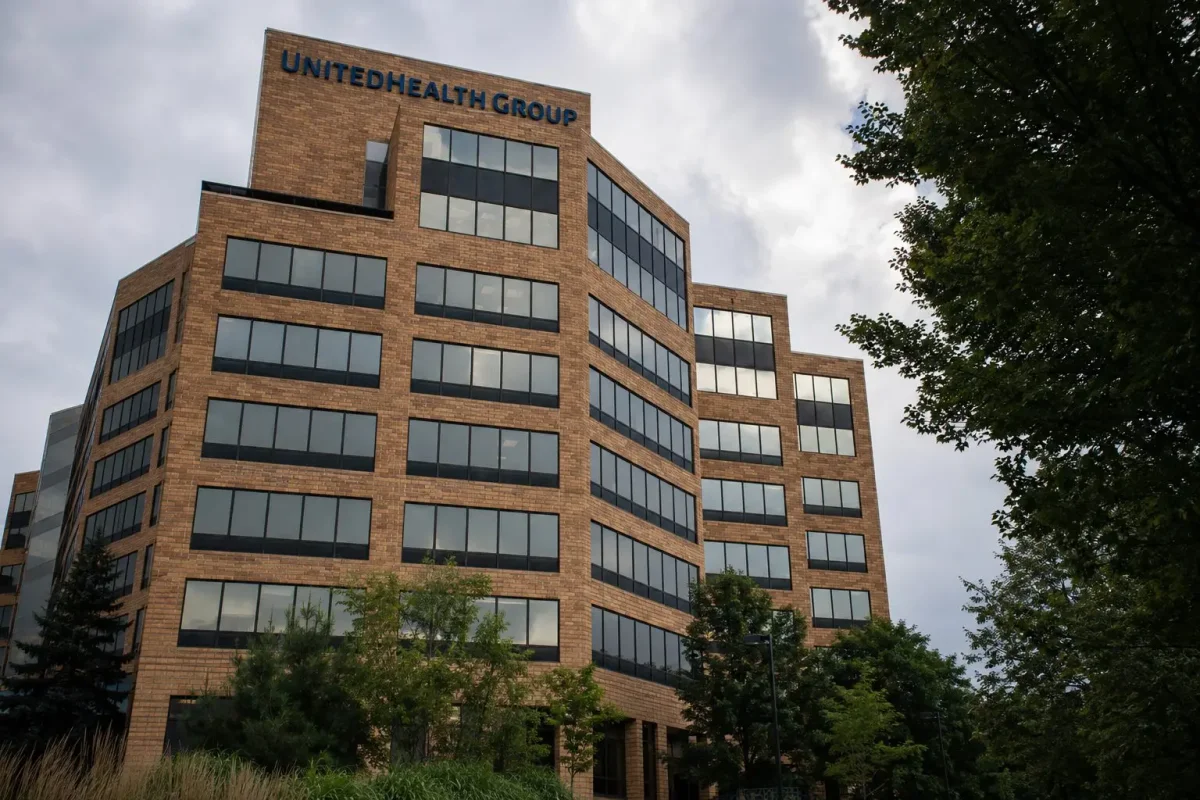
UnitedHealth Group (NYSE: UNH) saw its shares climb 1.1% to $411.53 in afternoon trading on Monday, as investors digested a stronger-than-expected profit performance from its Optum Health care delivery unit. The segment reported $2.486 billion in adjusted operating earnings for the first half of 2026, achieving 112% of its minimum full-year target, according to preliminary estimates.
The upbeat figure surpasses the $2.215 billion floor set for the year, but management's outlook suggests the momentum may not carry through the remainder of 2026. Chief Financial Officer Wayne DeVeydt projected a modest profit in the third quarter, followed by a likely small loss in the fourth quarter. This guidance underscores the seasonal nature of Optum Health's earnings, which are heavily weighted to the first half of the year.
Despite the profit beat, underlying operational metrics show contraction. Optum Health's revenue in the first half slipped 4% year-over-year to $47.6 billion, while the number of consumers served fell from 95 million to 93 million. DeVeydt cautioned that the results were "not a reflection of a trend bending," signaling that the company is not yet seeing a sustainable improvement in its core care delivery business.
Investor Focus Shifts to 2027
The market's attention is now turning toward 2027, as the current valuation hinges on the durability of Optum Health's earnings power. At $411.53, UnitedHealth shares trade at 20.8 times the midpoint of adjusted EPS guidance. The consensus price target from 27 analysts polled by MarketBeat stands at $455.92, implying roughly 11% upside. However, with recent analyst targets ranging from $380 to $529, there is significant dispersion in expectations.
JPMorgan Chase (NYSE: JPM) analyst Lisa Gill noted that investors are seeking a "path" to $20 per share in earnings, a level that would require sustained growth from Optum Health. The company's integrated model, combining UnitedHealthcare insurance services with Optum's care, data, and pharmacy divisions, remains a key differentiator, but the care delivery segment faces headwinds from declining revenue and membership.
Operational Improvements Offer Some Encouragement
There are signs of operational progress. Optum CEO Patrick Conway reported that transition support efforts have led to roughly a 10% reduction in hospitalizations in certain areas, while ambient AI adoption has reached 70% of on-staff providers. These initiatives could help stabilize margins over time.
UnitedHealth's balance sheet provides flexibility. The company generated $11.1 billion in operating cash flow during the quarter and spent $4 billion on share repurchases by mid-July, with a minimum of $5 billion in buybacks planned for the year. This capital return program underscores management's confidence in the business's long-term prospects.
Peer Performance Mixed
In the broader managed care sector, Monday's trading showed a mixed picture. Humana (NYSE: HUM) rose 0.7% to $387.82, while Elevance Health (NYSE: ELV) gained 0.9% to $397.69. Cigna Group (NYSE: CI) fell 1.2% to $279.06, and CVS Health (NYSE: CVS) slipped 0.3% to $95.37. UnitedHealth's trailing P/E of 31.0x is above several peers, reflecting its premium valuation.
Analyst Actions and Risks
Recent analyst activity has been mixed. JPMorgan raised its price target to $516 on July 21, while Morgan Stanley (NYSE: MS) lifted its target to $529 on July 17. UBS (NYSE: UBS) increased its target to $490 the same day. However, Robert W. Baird downgraded the stock to Neutral on July 16 with a $453 target, and HSBC (NYSE: HSBC) maintained a Hold with a $380 target on July 6.
Key risks include favorable reserve development of $860 million recorded in the quarter, which may not repeat. Medical cost estimates are subject to change, and management anticipates a small loss at Optum Health in the fourth quarter. Additionally, UnitedHealth cites ongoing Justice Department actions related to Medicare as a potential overhang.
For UnitedHealth, the immediate challenge is not just delivering another profit beat. Optum Health must stabilize its revenue and membership while maintaining margins, and provide clear evidence of a sustainable growth trajectory before 2027. Until then, investors are likely to remain cautious despite the strong first-half performance.