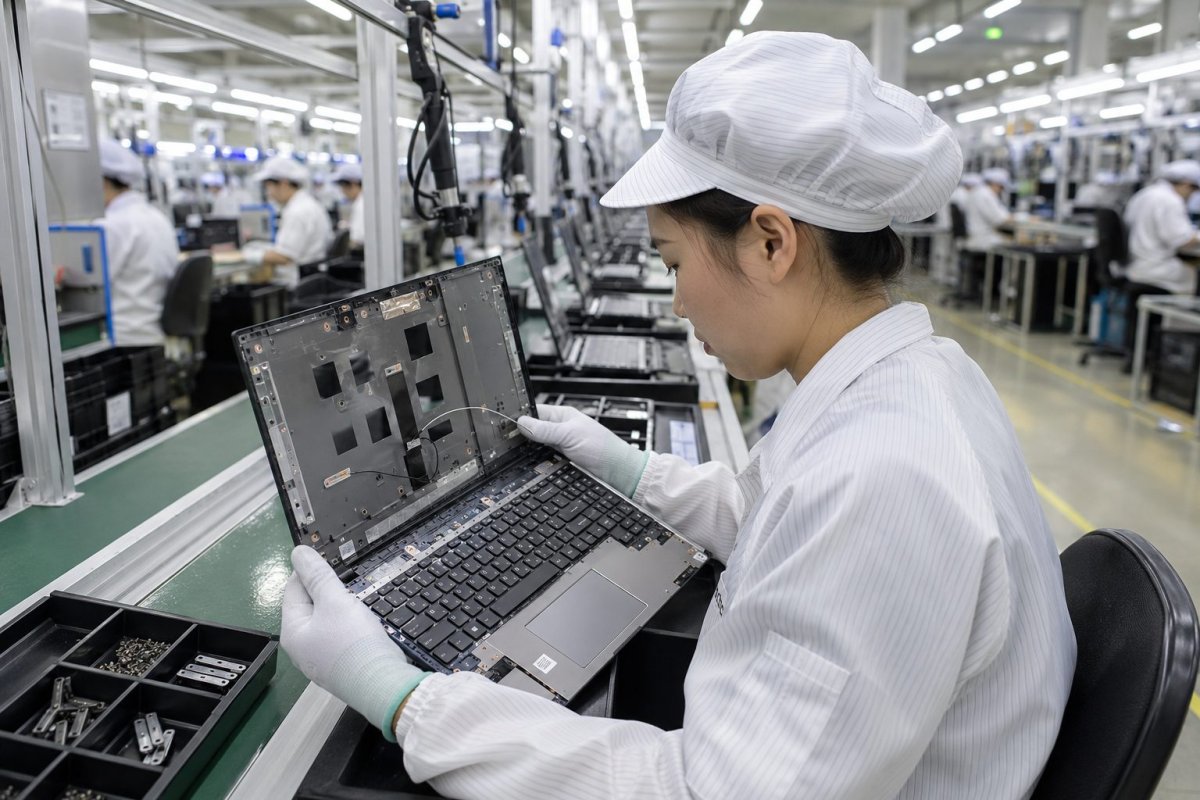
HP Inc. (NYSE: HPQ) experienced a sharp after-hours sell-off on Wednesday, with shares falling 9% as investors reacted to a 16% decline in PC unit shipments during the company's fiscal third quarter. The drop erased approximately $2.5 billion from the company's market capitalization, bringing the stock to $27.77 in extended trading.
The decline came despite the company reporting revenue of $15.68 billion, which surpassed analyst expectations by 8.6%. Adjusted earnings per share also came in at $0.83, beating the consensus estimate of $0.66 by 25.8%. However, the market's focus was squarely on the unit volume weakness, which overshadowed the positive revenue and earnings surprises.
Revenue Growth Driven by Pricing, Not Volume
While PC unit shipments fell sharply, Personal Systems revenue climbed 18% year-over-year to $11.77 billion. This discrepancy suggests that the company is generating significantly more revenue per unit, driven by improved pricing strategies and a higher-value product mix. The revenue per unit calculation indicates that Personal Systems now brings in roughly 40% more revenue per unit compared to the prior year.
Interim Chief Executive Bruce Broussard attributed the performance to strong demand for premium products, improved memory availability, and efficient order processing. The broader PC industry has been raising prices amid a global memory chip shortage, a trend that has benefited HP's revenue figures even as unit volumes decline.
Profitability Concerns Persist
Despite the revenue beat, the company's bottom line tells a different story. Net income fell 13.4% to $661 million, down from $763 million in the same period last year. This decline highlights the ongoing challenge of balancing revenue growth with profitability, particularly as the high-margin Printing segment continues to struggle.
Printing revenue slipped 2% to $3.91 billion, and this segment has traditionally been a key profit driver for HP. In the previous quarter, Printing delivered a segment margin of 18.3%, compared to just 5.2% for Personal Systems. The shift in revenue mix towards lower-margin PC sales is a key concern for investors, as it weighs on overall profitability.
Guidance Raised, But Tariff Benefits Are One-Time
Looking ahead, HP raised its full-year adjusted EPS guidance to a range of $3.19 to $3.29, up from the previous forecast of $2.90 to $3.10. The revised midpoint includes a $0.19 benefit from tariff refunds, which represents roughly 5.9% of the midpoint value. These refunds are considered one-time items, and their inclusion in guidance may not be sustainable in future periods.
The company also increased its free-cash-flow guidance by $200 million to a range of $3.0 billion to $3.2 billion. For the fourth quarter, HP expects adjusted EPS of $0.69 to $0.79, which at the midpoint is above the consensus estimate of $0.67. The guidance includes an anticipated $0.08 benefit from tariff refunds.
Market Reaction and Analyst Views
The after-hours decline reversed a 3.39% gain during the regular session, highlighting the market's negative reaction to the unit shipment data. Trading volume surged to 22.79 million shares, approximately 33% above the three-month average, indicating heightened investor interest and concern.
Analysts have set a one-year price target of $23.41, which sits 15.7% below the after-hours price. This suggests that current estimates may already factor in softer earnings quality or a more challenging hardware environment. The gap between the stock price and analyst targets reflects uncertainty about the sustainability of HP's pricing power and the ongoing decline in printing revenue.
Key Risks Ahead
Several risks could impact HP's performance in the coming quarters. Rising memory costs may pressure margins before corresponding price hikes can be implemented. Increased prices could also dampen unit sales further, creating a potential negative feedback loop. Additionally, the printing business continues to decline, and the tariff refunds are unlikely to recur, which could weigh on future earnings.
Investors will be closely watching HP's earnings call, scheduled for 5:30 p.m. EDT, for insights into unit outlook, memory-cost sensitivity, and the extent to which revenue growth was driven by sustainable mix improvements versus temporary factors.