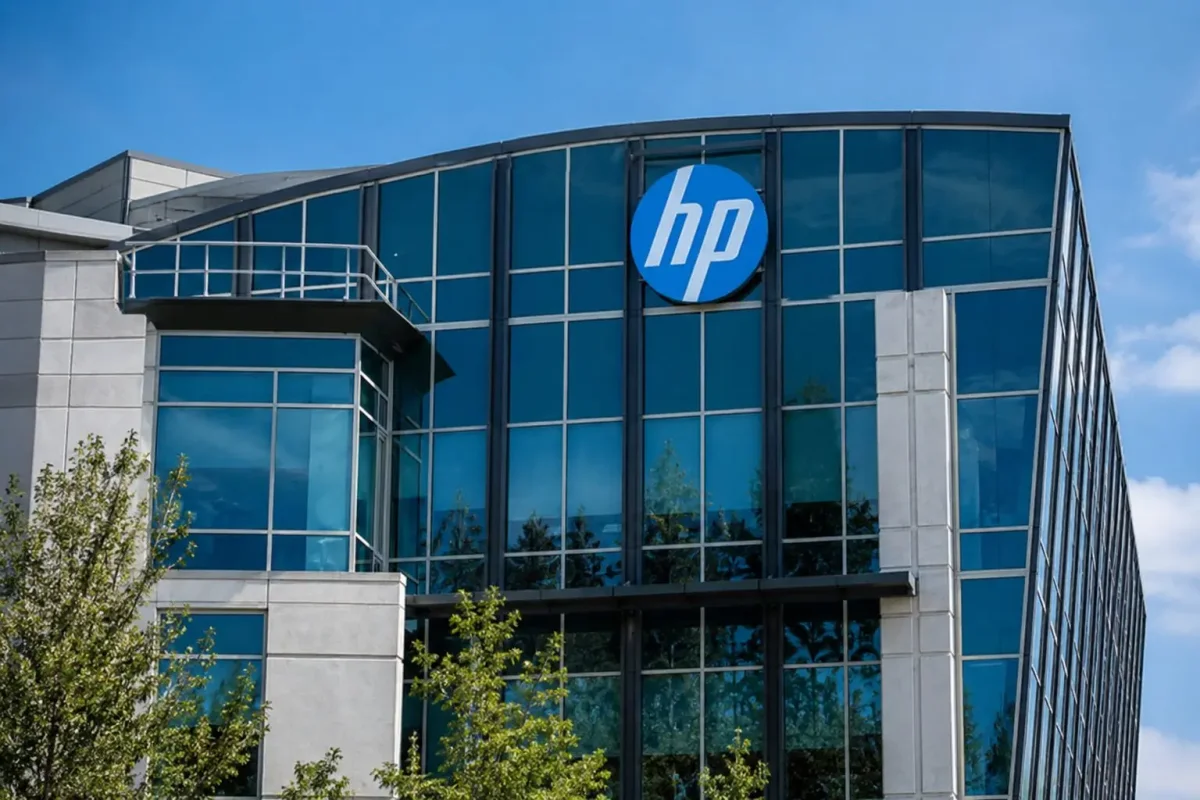
HP Inc. (HPQ) shares advanced in early New York trading on Friday, climbing to $26.98 after the company reported better-than-expected quarterly revenue and profit. The PC and printer maker continues to capitalize on the AI PC wave, but rising memory-chip costs and a cautious outlook for margins tempered investor enthusiasm.
AI PC Demand Drives Growth
HP's fiscal second-quarter net revenue increased 9% year-over-year to $14.4 billion, fueled by a 13% surge in its Personal Systems segment, which includes PCs. AI-capable PCs, which can process certain artificial intelligence tasks locally rather than relying on the cloud, accounted for 44% of HP's shipments in the quarter, up from over 35% in the prior quarter, according to Reuters. This shift reflects a broader corporate upgrade cycle as businesses transition to Windows 11 and seek devices optimized for AI workloads.
Non-GAAP diluted earnings per share came in at $0.86, beating analyst estimates. However, HP lowered its fiscal 2026 adjusted EPS forecast to a range of $2.90 to $3.10, down from a previous top end of $3.20. The company also guided third-quarter adjusted EPS between $0.61 and $0.71, with the midpoint slightly above the $0.64 consensus.
Margins Under Pressure from Memory Costs
While AI PC demand is a tailwind, rising memory-chip costs are squeezing margins. CFO Karen Parkhill told analysts that the company expects input costs to rise in the second half of the year and that Personal Systems margins will remain below their long-term range. She identified the fourth quarter as a potential low point for margins before an expected recovery heading into fiscal 2027.
HP's Personal Systems operating margin stood at 5.2% in the quarter, while its printing segment posted an 18.3% margin. Printing revenue was flat at $4.2 billion, contributing steady cash flow but little excitement for investors.
Supply Chain and Market Context
HP's head of Personal Systems, Ketan Patel, said the company has secured the necessary memory and storage for the fiscal year through long-term contracts and supplier agreements. Parkhill added that some commercial PC demand materialized earlier than expected, boosting revenue by approximately 2% to 3% in the quarter.
The broader hardware sector is also in focus. Dell Technologies (DELL) surged about 40% in premarket trading after raising its outlook on strong demand for Nvidia-based AI servers, underscoring investor appetite for hardware companies benefiting from data center spending. HP, Dell, and Lenovo all face similar memory-chip supply constraints, though they serve different market segments.
Outlook and Risks
HP's next challenge is maintaining pricing power and steering buyers toward higher-margin PCs without dampening demand. Patel noted that about 30% of existing machines still require a Windows 11 upgrade, providing a potential tailwind. However, if memory supplies remain tight and buyers resist higher prices, HP's growth trajectory could face headwinds.
The stock's outperformance relative to major tech indexes—the S&P 500 and Nasdaq-100 ETFs each gained less than 1%—reflects investor confidence in HP's AI PC strategy, but the margin pressures and lowered guidance suggest a cautious near-term outlook.