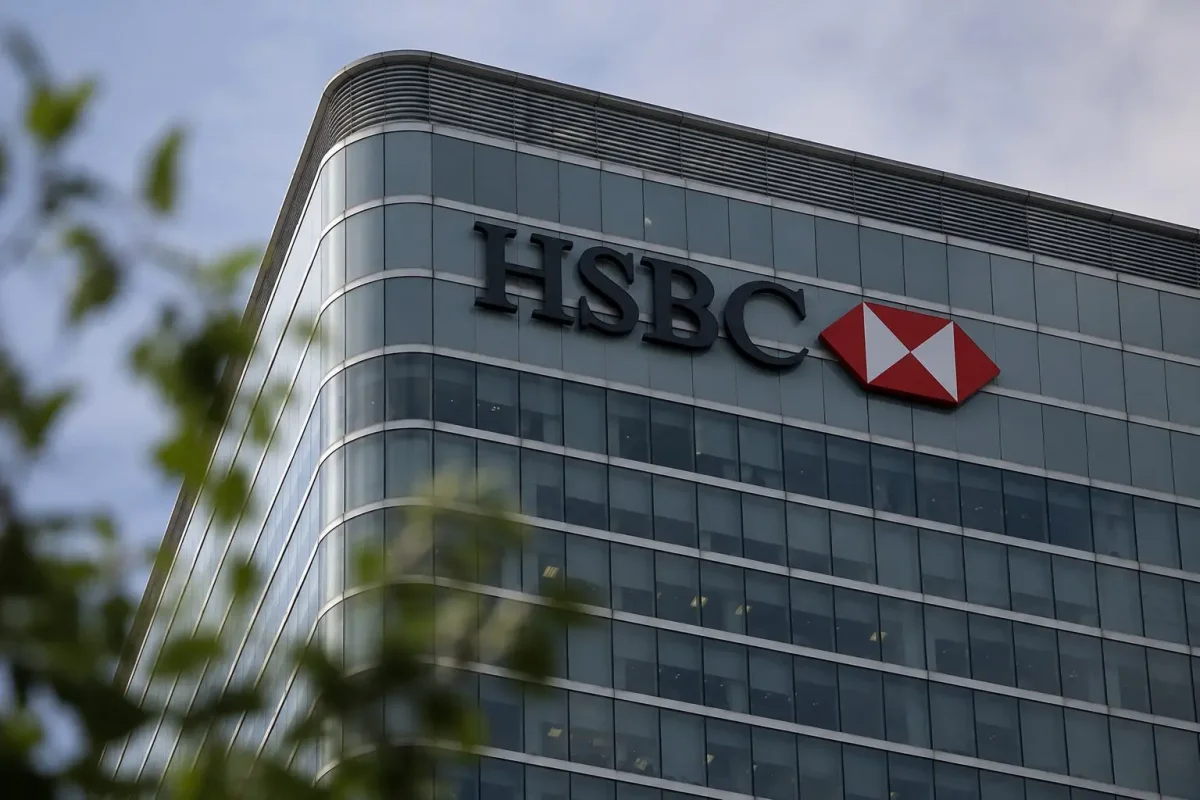
HSBC Holdings Plc (HKG:0005) is poised to significantly reduce its minimum trading threshold in Hong Kong, as the bank moves toward adopting a smaller board lot size. The move comes as the stock trades near its 52-week high, making the current 400-share lot—costing HK$61,520 at HK$153.80 per share—increasingly prohibitive for retail investors.
Under the Hong Kong Exchange's new guidelines, which require listed companies to choose from eight standardized lot sizes, HSBC's options are limited by price. A 1-share lot would fall below the HK$1,000 floor, while a 500-share lot would exceed the HK$50,000 ceiling. Thus, the only practical choices are 50 or 100 shares, reducing the minimum ticket by 87.5% to HK$7,690 or by 75% to HK$15,380, respectively.
The timing is critical: HSBC's Hong Kong shares closed 0.2% higher at HK$153.80 on Monday, with the Hang Seng Index up 0.16% to 24,213.72. The stock has rallied to within 0.5% of its 52-week peak, amplifying the cost barrier for smaller investors. A board lot is the standard block for exchange trades, so a smaller lot size would allow more retail participants to place clean orders.
Kenny Tang Sing-hing, chairman of the Hong Kong Institute of Financial Analysts and Professional Commentators, told the South China Morning Post that the change is expected to increase HSBC's turnover. Lowering the entry cost should make the stock affordable to a broader investor base, with brokers anticipating stronger local and international interest. However, Tang noted that while a smaller lot can improve liquidity and narrow bid-ask spreads, it does not create demand on its own.
HSBC's average daily volume of 16.04 million shares currently equates to about 40,100 lots. Under a 100-share lot, that would rise to 160,400 lots; under a 50-share lot, to 320,800 lots. This increase in order book granularity could enhance market depth and reduce spreads, but the fundamental drivers of HSBC's stock—interest rates, credit costs, and capital returns—remain unchanged.
Peer Standard Chartered Plc (HKG:2888) already trades in 50-share lots, with a minimum ticket of HK$11,000 at Monday's HK$220 price—less than one-fifth of HSBC's current entry cost. Standard Chartered shares fell 0.9% on the day. The contrast underscores the magnitude of HSBC's accessibility shift, even though both stocks are primarily influenced by macroeconomic factors.
Important risks accompany the liquidity case. The Financial Times reported that $3.5 billion of HSBC's $6.3 billion in stage-three Hong Kong commercial-property loans—credit-impaired and unlikely to be fully repaid—are held at its Hang Seng Bank unit. Private debt buyers may demand steep discounts, and a deeper property slump or heavily discounted loan sale could have far greater implications for earnings and capital than any boost in retail turnover. Additionally, the transition to the new lot size, part of Hong Kong's broader shift to a scripless share system beginning in November and spanning up to five years, may create friction for some holders.
Investors now await HSBC's official selection of lot size and implementation date. A 100-share unit would cut the cash hurdle to HK$15,380; 50 shares would lower it to HK$7,690. The true test will be whether turnover rises and spreads narrow after the change. Until then, the reform remains a plausible liquidity benefit—not an earnings catalyst.