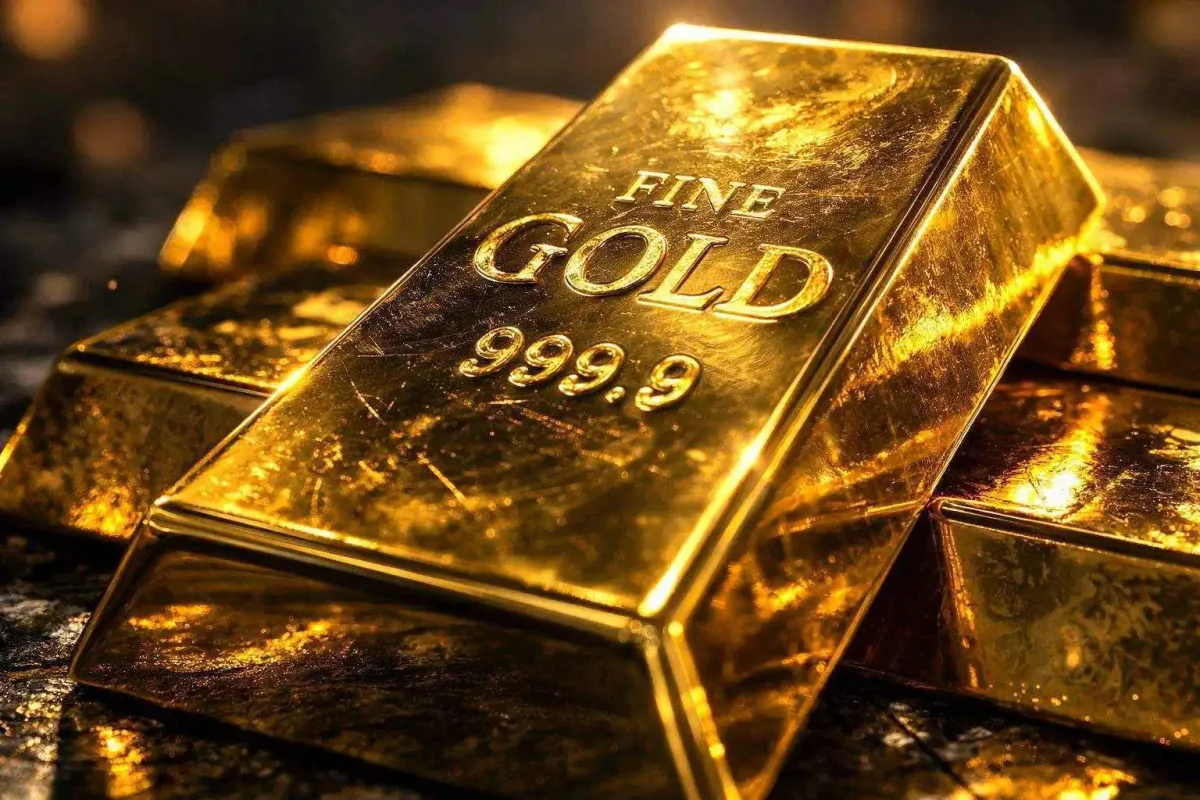
Gold prices staged a recovery on Thursday, climbing back above the $4,100 per ounce threshold, as a softer dollar provided support and ongoing geopolitical tensions kept investors cautious. The precious metal had slipped to its lowest level since July 1 earlier in the week, but found fresh buying interest as the greenback eased.
Spot gold was up 0.8% at $4,106.82 an ounce by 0901 GMT, while U.S. gold futures for August delivery also gained 0.8% to $4,116.40. The rebound came as the dollar index fell 0.2% to 100.91, making dollar-priced gold cheaper for holders of other currencies.
“Gold is trying to form a bottom today as dollar strength eases,” noted Nikos Tzabouras, senior market analyst at Jefferies-owned Tradu.com. However, the rally is not a classic safe-haven trade. While gold is often a go-to during uncertainty, the current environment is complicated by rising oil prices, which can fuel inflation and push bond yields higher—a headwind for non-yielding assets like bullion.
The complex dynamics were on full display Wednesday, when gold fell 0.9% even as crude oil surged over 5% after President Donald Trump declared the interim Iran nuclear deal “over.” David Meger, director of metals trading at High Ridge Futures, said “increased escalation” weighed on risk assets, “gold included.”
Monetary policy uncertainty is adding to the mix. Minutes from the Federal Reserve’s June 16-17 meeting revealed that some officials saw a strong case for raising rates, even as the central bank held its benchmark rate at 3.50%-3.75%. Nine of 18 policymakers projected rates would be slightly higher by year-end. LPL Financial chief economist Jeffrey Roach noted “some ambiguity in the minutes,” with future policy “heavily contingent” on developments in the Middle East.
Market pricing reflects an 87% probability of a U.S. rate hike this year, according to the CME FedWatch Tool. Brent crude hovered near $77 a barrel after a more than 5% jump. Kyle Rodda, senior financial market analyst at Capital.com, said Middle East tensions have “rattled global markets again” and that higher oil could “bring forward” a Fed rate increase.
HSBC revised its gold price forecasts downward, cutting its 2026 average outlook to $4,560 per ounce from $4,864, and its 2027 forecast to $4,925 from $5,000. The bank attributed recent selling to “changing perceptions of U.S. monetary policy” and dollar movements, adding that slowing central bank demand is a factor, though long-term diversification and potential ETF buying later this year could offer support.
Other precious metals also rose. Silver traded at $58.93, up 1.17%, and platinum gained 2.05% to $1,620.30. The broader metals complex moved higher, though gold remained closely tied to dollar and Fed dynamics.
The key risk scenario remains straightforward: if oil prices continue to climb, inflation expectations could rise, strengthening the dollar and pushing yields higher—all negative for gold. Conversely, a weaker-than-expected U.S. CPI print, due July 14, could reverse those trends and allow metals to recover. Kitco noted nearby gold support between $4,041 and $4,072.
For now, the market is steadier but not settled. Gold attracted buyers after reclaiming the $4,000 level, but its next move will likely depend more on whether the oil shock nudges the Fed toward another rate hike than on jewelry demand or mine supply.