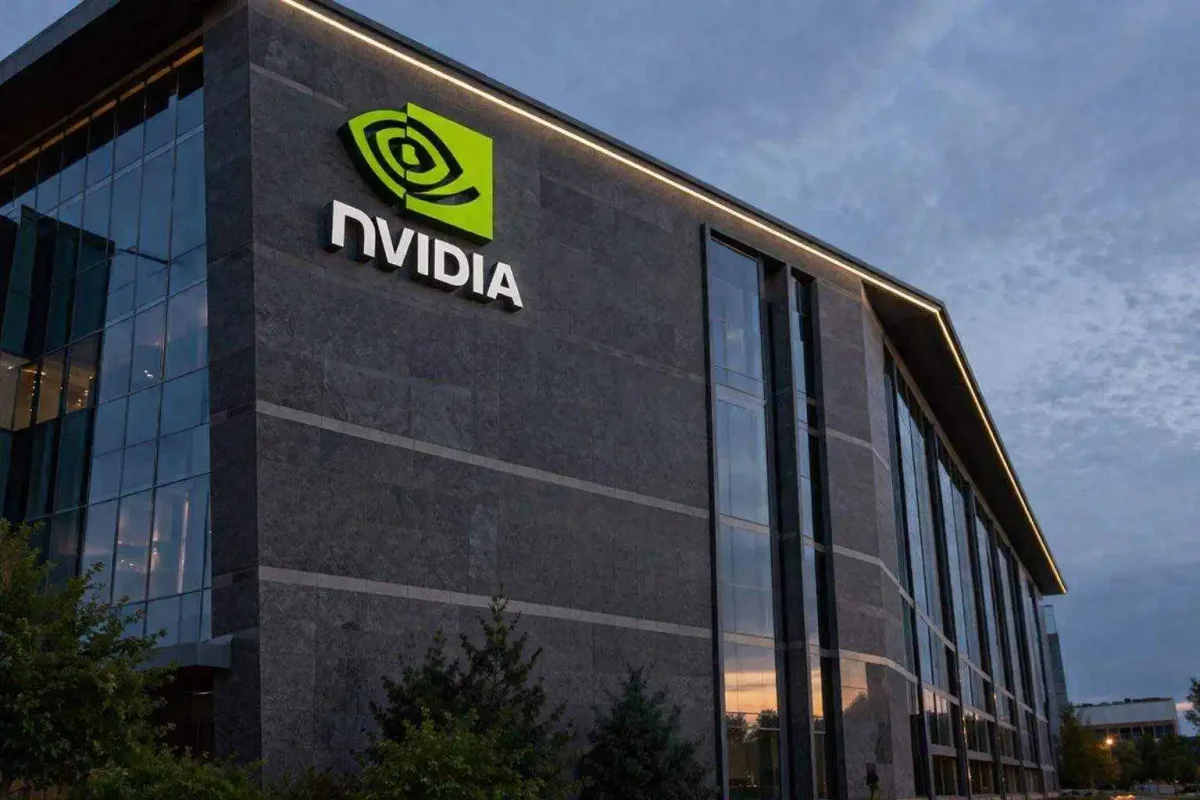
Nvidia Corp. (NVDA) shares ticked higher in premarket trading on Thursday, building on the strong gains from the previous session. The stock was trading at $205.30 at 7:38 a.m. EDT, up 0.6% from Wednesday's close of $204.12. That prior session saw the stock rise 3.65%, pushing the company's market capitalization to approximately $4.94 trillion, according to data from MarketWatch.
The modest premarket advance comes amid reports that China may allow a select group of leading artificial intelligence companies to purchase Nvidia's H200 chips. According to a report from The Information, cited by Reuters, the Chinese government is considering permitting Alibaba, ByteDance, and DeepSeek to acquire a limited number of the processors. The group could receive fewer than 200,000 chips, which is less than half of their original request. Nvidia, along with U.S. and Chinese officials, did not respond to requests for comment.
The H200 AI processor, which is used to train and run large language models, has seen sluggish sales in China due to U.S. export restrictions and a shift in orders toward domestic suppliers. The potential approval represents a minor opening rather than a full resumption of trade. In May, Reuters reported that the U.S. had approved about 10 Chinese companies—including Alibaba, Tencent, ByteDance, and JD.com—to purchase H200 chips, but no shipments had been made because the deals were caught between Washington's security rules and Beijing's technology policies.
On the demand side, there were fresh signals of robust AI spending. SpaceXAI announced on Wednesday that its Grok 4.5 model was trained using tens of thousands of Nvidia GB300 GPUs. Elon Musk posted on X that Grok 4.5 is "Opus-class" but runs with better speed and lower costs, according to Reuters. Bank of America analyst Vivek Arya told investors that the market is overly negative on Nvidia, overlooking what he called an "enhanced" buying opportunity. Arya noted that Nvidia shares are up only about 3% year-to-date through Monday, while the PHLX Semiconductor Index has gained more than 80%.
Broader market futures were stronger early Thursday, with Nasdaq 100 futures rising 0.63% by 5:27 a.m. ET, as oil prices retreated from two-week highs following renewed U.S.-Iran tensions. Mark Haefele, chief investment officer at UBS Global Wealth Management, said the path to a longer-term peace deal looks "bumpy," and market swings are likely when tensions flare.
Peer performance was mixed. Broadcom (AVGO) surged nearly 5% on Wednesday after Apple (AAPL) said it would buy over $30 billion in chips from the company over the next five years. Nvidia added 3.7% on the day. Advanced Micro Devices (AMD) remains a direct rival in the AI chip space, but a larger question is whether major customers like Meta Platforms (META) will reduce their reliance on external suppliers. Meta plans to begin manufacturing its own AI chip, codenamed Iris, in September, according to an internal memo seen by Reuters. The company is targeting a boost in computing power to 14 gigawatts next year and is partnering with Broadcom and Taiwan Semiconductor Manufacturing Co. (TSM) for the project. Meta still buys large quantities of GPUs from Nvidia and AMD.
Regulatory risks also loom. France's competition watchdog said Thursday that it is nearing the end of its investigation into Nvidia. General rapporteur Umberto Berkani told reporters, "We are nearing the end of the investigation." The probe focuses on alleged anti-competitive behavior. Shares could take a hit if regulators come down hard, if China approvals fall through, or if cloud customers slow AI orders.
China's AI push could pose a new competitive threat. Reuters reported this week that DeepSeek is working on its own AI inference chip. "Nvidia is at zero in China and staying there," said Richard Windsor of Radio Free Mobile. He added that DeepSeek likely cannot sell chips outside China without access to top-tier manufacturing.
Despite these headwinds, Nvidia remains a key driver of the U.S. equity market, fueled by AI bets, China dynamics, and the dominance of mega-cap tech stocks. With futures pointing higher, traders appear willing to pay up for Nvidia, even as lingering questions about geopolitics and competition persist.