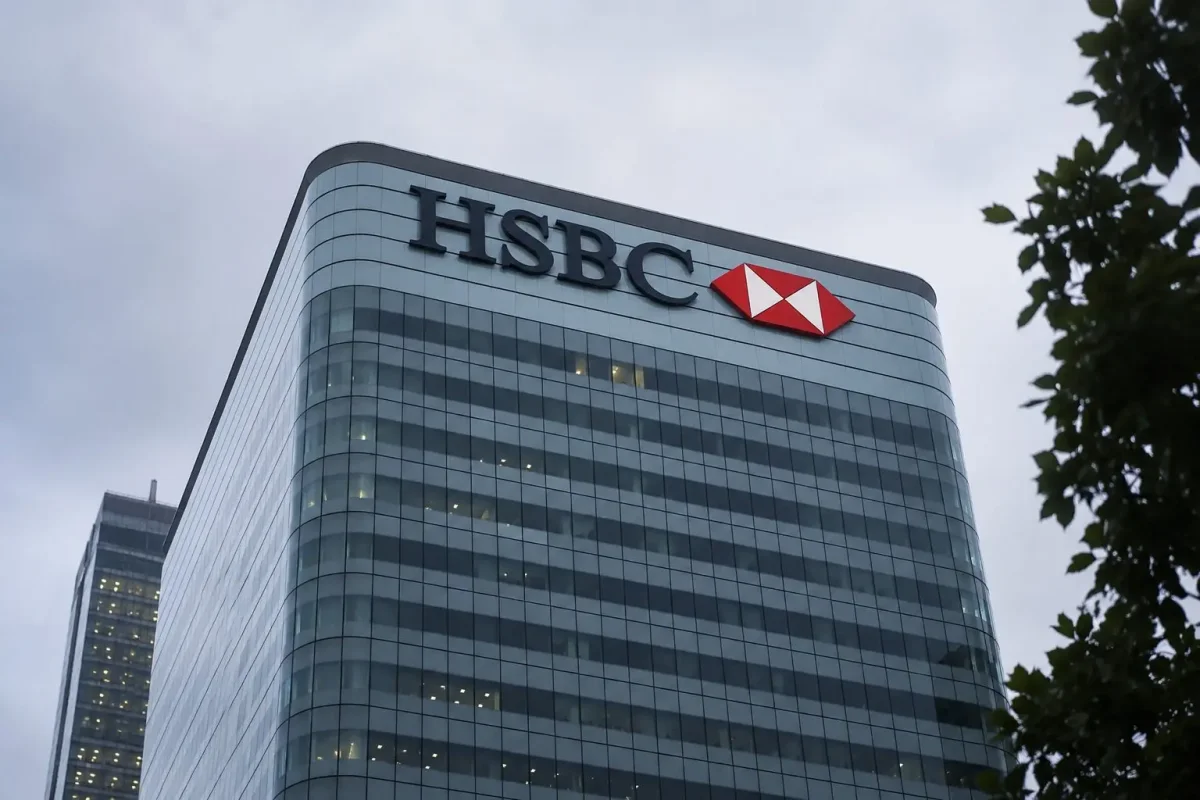
London, July 14, 2026 – HSBC Holdings Plc (LON:HSBA) shares declined 0.8% in delayed London trading on Tuesday, settling at 1,450.2 pence. The drop leaves the stock 8.8% below its July 6 high, yet the retreat has done little to create valuation headroom. The median 12-month analyst price target of 1,471.77 pence represents only about 1.5% upside from current levels.
That narrow gap carries heightened significance as the bank prepares to release its interim results on August 4. Investors are no longer pricing in a broad rerating; instead, the stock now depends on cleaner credit outcomes, faster wealth management growth, and concrete evidence that management can achieve its return targets without another large one-off charge. HSBC lists the half-year report as its next scheduled earnings event.
The broader market backdrop was unfavorable. European equities opened lower as Brent crude jumped to $86.04 a barrel following renewed U.S.-Iran hostilities. London's broad market was down about 0.6% in morning trade. Energy stocks gained, but banks and other risk-sensitive sectors weakened.
Delayed London quotes around the dateline showed the valuation gap: HSBC's price-to-earnings ratio of 15.95x is about 19% above Standard Chartered's 13.42x and 36% above Barclays' 11.75x. HSBC's dividend yield of 3.80% partly offsets that premium, but it does not leave much room for a merely in-line half-year report.
The premium rests on a demanding promise. HSBC raised its target for return on tangible equity (RoTE) to 17% or better through 2028. Chief Executive Georges Elhedery stated the group is becoming "a simple, more agile, focused bank built for a fast-changing world."
The first quarter complicated that narrative. HSBC posted $9.4 billion of pretax profit, below the $9.59 billion broker consensus, after a surprise $400 million loss tied to the collapse of mortgage lender Market Financial Solutions and higher provisions linked to the Middle East conflict. KBW analyst Ed Firth called the result "lacklustre," while Chief Financial Officer Pam Kaur said a review of the bank's highest-risk exposures found "we don't see anything comparable there." Citi analysts also noted that HSBC's 18% wealth-revenue growth trailed Standard Chartered's 32%.
Management has since pulled back from the riskiest end of private credit, refusing some renewals where returns did not justify the exposure and shifting attention to lower-risk funds, Reuters reported last week. The move reduces tail risk, but it may also slow fee and financing growth in a business HSBC had been trying to expand.
But the larger downside is not confined to private credit. The Financial Times reported on July 10 that HSBC was seeking buyers for troubled Hong Kong property loans inherited from Hang Seng Bank; about $3.5 billion of those loans sat within $6.3 billion of impaired Hong Kong commercial-property exposure. A prolonged oil shock could add a second squeeze — supporting lending margins through higher interest rates while weakening borrowers and deal activity across Asia and the Middle East.
For the shares to move decisively above the median target, the next report needs more than stable profit. Investors will want lower credit charges, evidence that wealth growth is closing the peer gap, and a credible path from restructuring costs to the promised return. At the current premium, execution now matters more than another strategy reset.