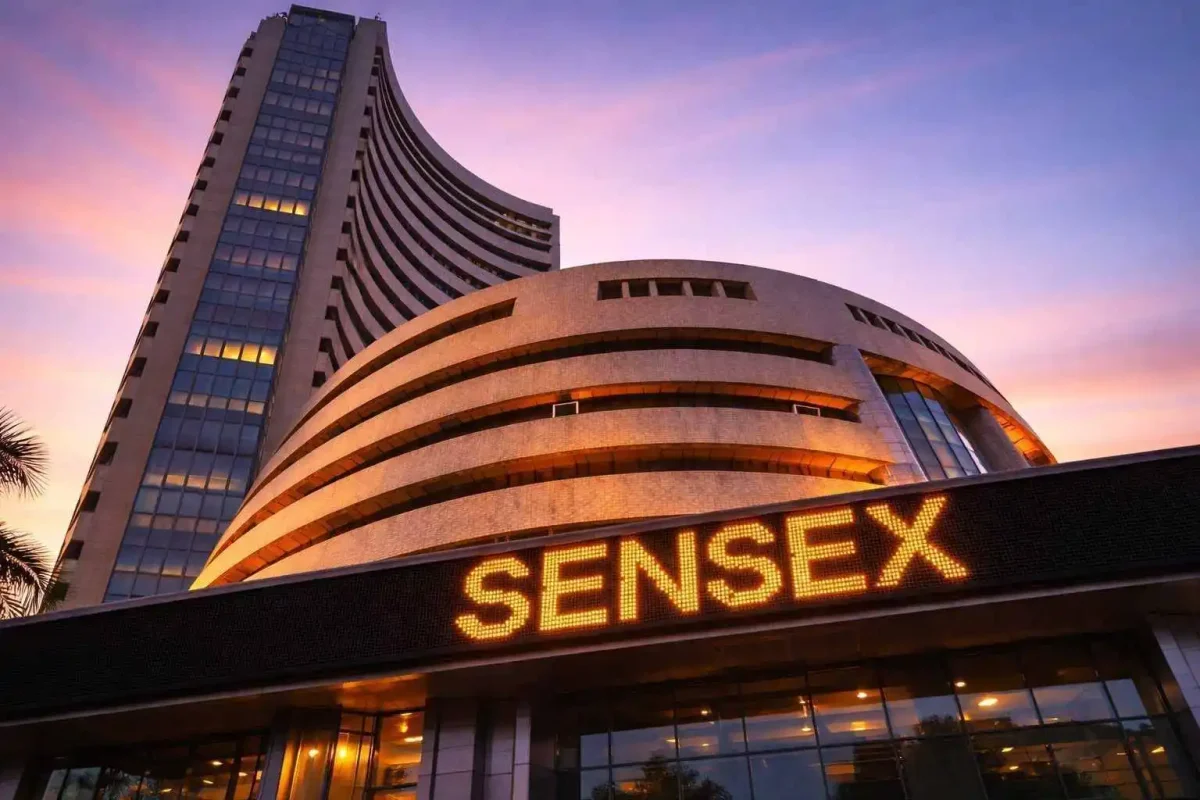
Indian equity markets suffered a severe downturn on Monday, with the benchmark Sensex and Nifty 50 indices both declining approximately 2.2% by early afternoon trading. The selloff pushed both gauges to their lowest levels in nearly eleven months, officially marking a correction as losses from recent peaks exceeded 10%.
Oil Shock Rattles Import-Dependent Economy
The primary catalyst for the market turmoil was a dramatic surge in global crude oil prices, with Brent futures climbing to $119.50 per barrel. As a nation that imports over 80% of its crude requirements, India faces intensified pressure on its current account deficit, inflation outlook, and economic growth prospects. The shockwave immediately reverberated through currency markets, driving the Indian rupee to a historic low of 92.33 against the U.S. dollar.
"The tremors are not limited to stocks alone," noted Sudeep Shah of SBI Securities, highlighting the broad-based financial stress. The yield on India's 10-year government bond rose to near 6.76%, reflecting heightened investor anxiety.
Foreign Exodus and Domestic Support
Capital flow data revealed a stark divergence in investor behavior. Provisional figures from the National Stock Exchange showed foreign portfolio investors withdrew a substantial 218.32 billion rupees from Indian equities last week. In contrast, domestic institutional investors provided a counterbalance by purchasing 327.87 billion rupees worth of shares.
VK Vijayakumar, Chief Investment Strategist at Geojit Financial Services, characterized Brent crude above $100 as "bad news for the Indian economy and markets." He suggested foreign investors are likely to remain on the sidelines until geopolitical tensions driving oil prices show signs of abatement.
Sectoral Carnage: Banks and Aviation Hit Hard
Selling pressure was widespread but particularly acute in sensitive sectors. Shares of state-run banks collapsed 5.5% collectively. Private banking giants HDFC Bank and ICICI Bank each dropped 3.3%. The aviation sector, directly exposed to higher fuel costs, was hammered, with InterGlobe Aviation, the operator of IndiGo, plunging roughly 7.1% as investors priced in elevated operating expenses and potential softening of international travel demand.
Oil marketing companies also faced intense selling. Indian Oil Corporation fell 4.6%, Hindustan Petroleum declined 4.9%, and Bharat Petroleum retreated 5.4%. The selloff followed downgrades by UBS, which moved Indian Oil and BPCL to "neutral" and HPCL to "sell," citing the companies' vulnerability due to selling significantly more refined fuel than they produce.
Regional Contagion and Central Bank Action
The market stress was not confined to India. Asian equities broadly retreated, with Japan's Nikkei 225 index tumbling 7% and South Korea's KOSPI sinking 6%, triggering a temporary trading halt via circuit breakers. A broader Asian market index fell 4.6%, underscoring how the oil price shock is destabilizing import-reliant economies across the region.
The Reserve Bank of India stepped in to stabilize the rupee, intervening in the currency market twice—once before the open and again after trading commenced. Kanika Pasricha, Chief Economic Adviser at Union Bank of India, pointed to existing policy buffers helping to moderate volatility in interest and exchange rates. However, market participants cautioned that RBI intervention would only cushion the decline, not reverse it, as long as oil prices remain elevated.
Inflation Watch and Macro Uncertainty
Investor attention now turns to upcoming inflation data. India's retail inflation figures for February are due on Thursday, following the release of U.S. Consumer Price Index data the day before. The key question is whether persistent oil price pressures will force central banks to maintain a restrictive monetary policy stance for longer.
"With no clear definition of what winning looks like, it is hard to forecast whether this will be a multi-week or multi-month conflict," said Helima Croft of RBC Capital Markets, referring to the geopolitical situation fueling the oil rally. This uncertainty continues to cloud the outlook for financial markets, leaving traders braced for further volatility.