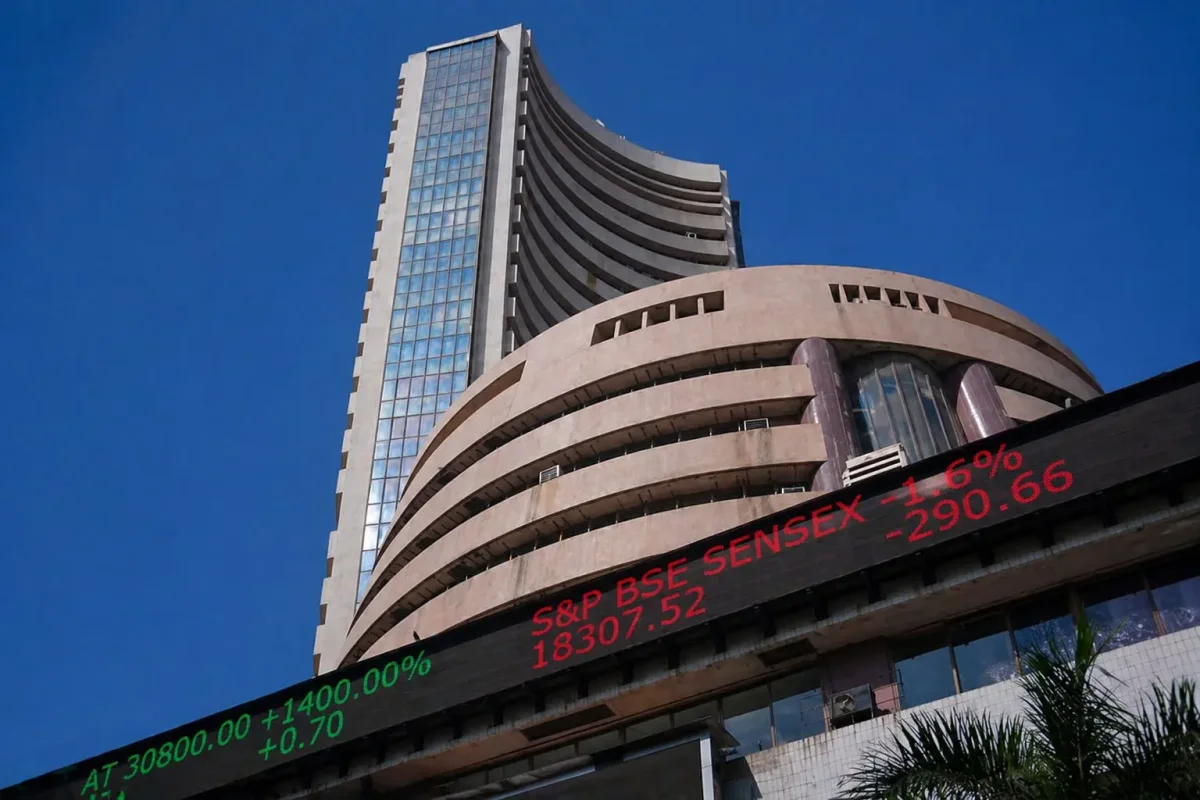
Indian stock markets moved lower on Tuesday afternoon, with the benchmark Sensex dropping 358.72 points (0.46%) to 76,944.91 and the Nifty 50 declining 86 points (0.36%) to 24,006.70 by 2 p.m. IST. The downturn was primarily driven by losses in state-run banks, which faced headwinds from the Reserve Bank of India's finalized expected credit-loss (ECL) framework.
Bank Stocks Under Pressure
The Nifty PSU Bank index slipped nearly 2% as investors reacted to the RBI's decision to implement new provisioning rules starting April 1, 2027. The central bank rejected appeals for an extension, leading to declines in shares of Canara Bank, Union Bank of India, and other state-run lenders by as much as 2.5%. The ECL framework requires banks to set aside reserves for anticipated loan losses before they materialize, potentially increasing short-term provisioning costs.
Energy and Metal Stocks Offer Some Support
On the positive side, Coal India shares rallied after reporting a 12% jump in consolidated profit after tax to 109.08 billion rupees, with revenue up 6% to 464.90 billion rupees. Jefferies and Motilal Oswal reiterated their 'buy' calls on the stock, while Morgan Stanley and HSBC maintained hold recommendations. Oil and Natural Gas Corporation (ONGC) and Oil India also gained, supported by firm crude oil prices hovering around $109 per barrel. The Nifty Energy index climbed 0.88%, and the Nifty Metal index added 0.38%, helping to cushion the broader market decline.
Market Breadth and Technical Levels
Market breadth remained negative, with 1,741 stocks advancing against 2,060 declining. Technical analysts highlighted key support for the Nifty at 23,900–24,000, with resistance clustered at 24,200–24,300, where selling pressure could intensify. The rupee traded in a volatile range of 93.75 to 94.50 against the U.S. dollar, with currency swings adding to market uncertainty.
Outlook and Risks
HSBC recently trimmed its view on Indian stocks to 'underweight,' warning that Brent crude above $100 per barrel spells trouble for inflation and growth in India, the world's third-largest oil importer. The bank estimates that a 20% jump in crude oil prices could shave 1.5 percentage points off projected 2026 earnings growth. Foreign investor appetite remains a key factor, with the Federal Reserve's upcoming decision seen as a major global catalyst. If oil prices do not ease and foreign investment continues to lag, banks could face fresh provisioning concerns, potentially triggering wider questions about earnings.
