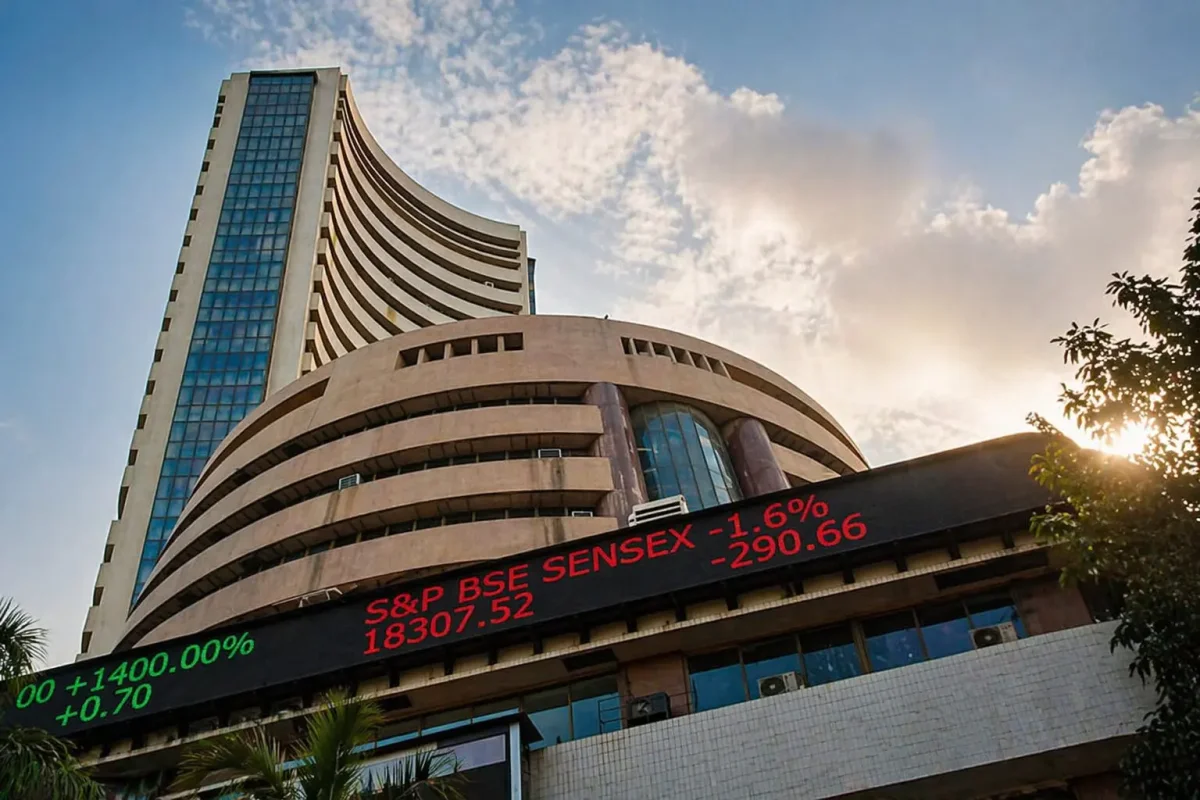
Indian equity markets experienced a severe downturn on Friday, with the BSE Sensex plunging over 1,000 points and the Nifty 50 breaching the 24,000 mark to trade below 23,900. The sell-off was broad-based, affecting nearly all sectors as oil prices climbed and technology stocks continued to weaken.
Market Performance
The Nifty 50 fell 0.66% to 24,013.75 in early trade, while the BSE Sensex dropped 0.76% to 77,074.63. Notably, all 16 key sectoral indices were trading in negative territory, reflecting widespread investor pessimism. This marks the third consecutive day of losses for both indexes, threatening to snap a two-week winning streak.
Oil Prices and Geopolitical Tensions
Brent crude oil surged to around $106 per barrel, intensifying concerns over India's import costs and inflation. The rise in oil prices is largely attributed to escalating tensions in the Middle East, particularly regarding the Strait of Hormuz, a critical chokepoint for global oil shipments. India, being a major oil importer, is highly sensitive to such price movements, which can pressure corporate margins and the rupee.
Downgrades by Global Banks
J.P. Morgan downgraded Indian equities from 'overweight' to 'neutral', citing high valuations and earnings risks stemming from energy shocks related to the Iran conflict. The bank also lowered its Nifty 50 year-end target by 10% to 27,000 and trimmed FY2027 earnings forecasts across energy, consumer, auto, and financial sectors.
Similarly, HSBC cut its rating on India to 'underweight' from 'neutral'. Herald van der Linde, HSBC's head of Asia-Pacific equity strategy, noted that India now appears 'less attractive than its North East Asian peers' given the current macroeconomic environment, and expects further earnings downgrades.
Technology Sector Weakness
The technology sector was a major drag on the markets. Infosys (INFY) provided a disappointing fiscal 2027 constant-currency revenue growth guidance of 1.5% to 3.5%, below the analyst consensus of 2% to 4%. Tata Consultancy Services (TCS) reported its first annual revenue decline in over two decades, and HCLTech also flagged soft growth for the year.
The Nifty IT index fell nearly 3%, with stocks like Tech Mahindra, Mphasis, Coforge, and LTIMindtree all declining. The selling pressure extended beyond large-caps to mid-cap and small-cap stocks as well.
Currency Concerns
The Indian rupee's real effective exchange rate (REER) has dropped to its weakest level in over a decade, dragged down by rising crude oil prices and sustained foreign portfolio outflows. Chief Economic Adviser V. Anantha Nageswaran described the current valuation as an 'attractive entry point' for long-term investors, according to Bloomberg News.
Outlook and Risks
While a potential de-escalation in U.S.-Iran tensions could lead to lower oil prices and stabilize risk appetite, continued disruptions in the Strait of Hormuz could keep oil elevated, further pressuring the rupee and foreign inflows. Vishnu Varathan, Mizuho's head of macro strategy for Asia-Pacific, cautioned that 'de-escalation in violence, oil prices and volatility isn't likely to be linear.'