Indian stock markets experienced a dramatic intraday turnaround on Thursday, with benchmark indices erasing steep morning losses to finish in positive territory. The recovery was fueled by aggressive currency intervention from the Reserve Bank of India, which propelled the rupee to its strongest single-day performance in over a decade.
Volatile Session Sees Dramatic Reversal
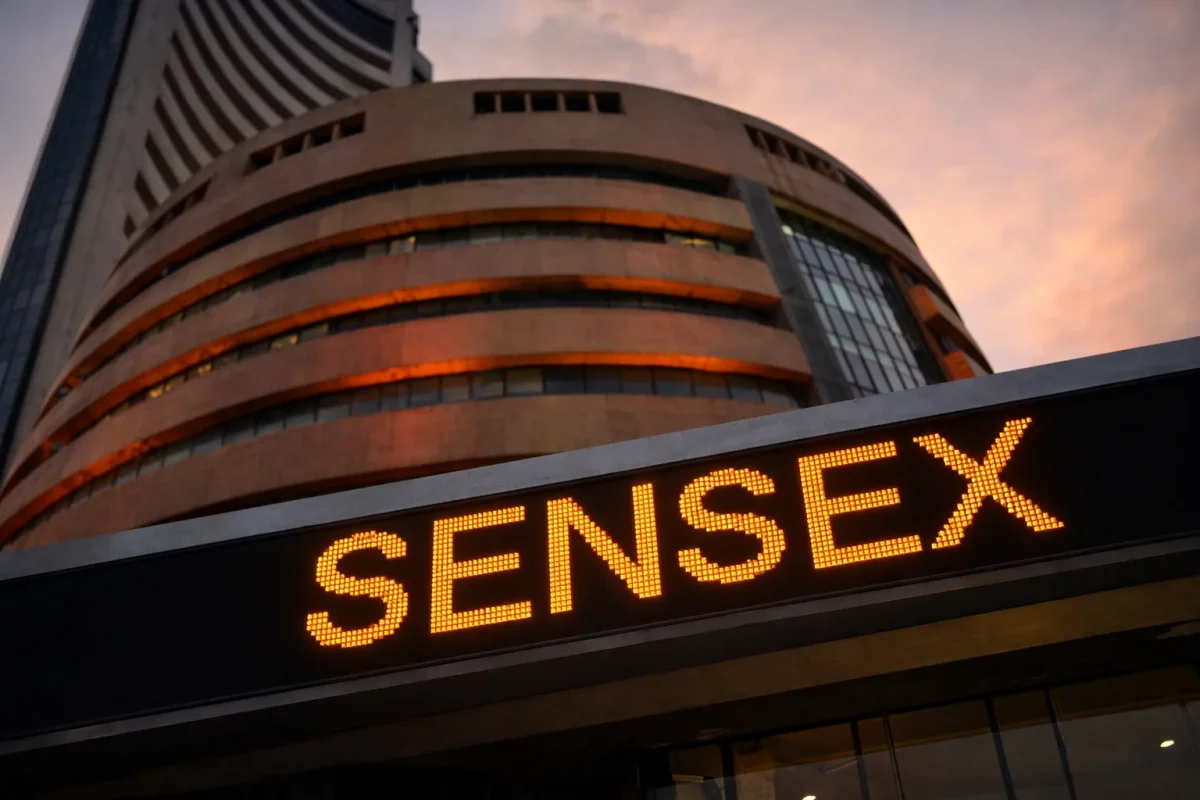
The S&P BSE Sensex concluded the session at 73,319.55, a gain of 0.25%, while the NSE Nifty 50 index settled at 22,713.10, up 0.15%. This positive close belied a turbulent trading day where both indices had plunged more than 2% during morning trade. Despite the rebound, both benchmarks registered their sixth consecutive weekly decline in a holiday-shortened trading week.
Market sentiment had turned sharply negative before the opening bell, with the GIFT Nifty futures contract—a key indicator for offshore traders—signaling a 410-point drop. By mid-morning, exchange data indicated that the combined market capitalization of Sensex constituents had shed over ₹10 lakh crore (approximately $120 billion). All 16 major sectoral indices traded in negative territory during the initial selloff.
Banking Sector Under Pressure
Financial stocks bore the brunt of the early decline. The Nifty Bank index touched its lowest level since April 2025. Major lenders including HDFC Bank and ICICI Bank fell 1.4% each in early trading, while State Bank of India dropped 2.9%. The pressure followed analysis from Jefferies warning that new regulatory measures from the central bank could expose lenders to potential losses between ₹40 billion and ₹50 billion on currency positions.
The RBI's regulatory action targeted the rupee basis trade, an arbitrage strategy that exploits pricing discrepancies between onshore rupee forward contracts and offshore non-deliverable forwards (NDFs). These instruments are commonly used for currency hedging and speculation. Reports indicated that banks had accumulated $30 billion to $40 billion in such exposure since the onset of the Iran conflict. The Clearing Corporation of India further tightened conditions by imposing a 20% volatility margin on dollar-rupee forward trades.
Rupee Soars on Central Bank Action
The regulatory squeeze produced immediate effects on the currency market. The Indian rupee surged to 92.8350 against the U.S. dollar from the previous day's record low of 95.21. It ultimately settled at 93.10, marking a 1.8% appreciation—the largest daily gain since 2013. "The RBI appears determined to enforce new regulations aimed at controlling INR weakness," noted Michael Wan, senior currency analyst at MUFG.
However, analysts cautioned that the relief might be temporary. "This kind of intervention doesn't fundamentally alter the broader outlook for the rupee, which remains weak," said Kunal Kurani of Mecklai Financial. Technical analysts noted that a decisive break below 22,200 on the Nifty could revive bearish momentum.
Geopolitical and Economic Headwinds Persist
Oil prices remained a primary concern for investors, with Brent crude hovering near $109 per barrel. The elevated energy costs pose significant challenges for India's import-dependent economy, exacerbating worries about inflation, corporate margins, and economic growth. These concerns were amplified by renewed geopolitical tensions after U.S. President Donald Trump indicated Washington would maintain military pressure on Iran without specifying an endpoint.
"Markets are reacting to the absence of any clear mention of ceasefire or diplomatic engagement in the recent U.S. statements," observed Phillip Nova analyst Priyanka Sachdeva, who added that crude prices could test new highs if maritime security risks escalate in the region.
The economic strain is already manifesting in real activity data. India's HSBC Manufacturing Purchasing Managers' Index (PMI), a private survey of factory activity, declined to 53.9 in March from 56.9 in February. "Disruptions linked to the conflict in the Middle East are reverberating through the global economy and weighing on Indian manufacturers," explained HSBC chief India economist Pranjul Bhandari.
Sector Performance Mixed
Market movements revealed stark sectoral divergences. Pharmaceutical stocks declined 3.4% following a Bloomberg report suggesting the U.S. administration might target drugmakers that haven't agreed to lower American prices. Conversely, defense stocks advanced, led by a 4.2% surge in Bharat Electronics after India approved military purchases worth $25 billion.
Market participants attributed part of the intraday rebound to short covering ahead of the long weekend. Indian financial markets are closed on Friday for Good Friday, leaving traders to monitor developments in oil markets and Gulf tensions before reopening next week.