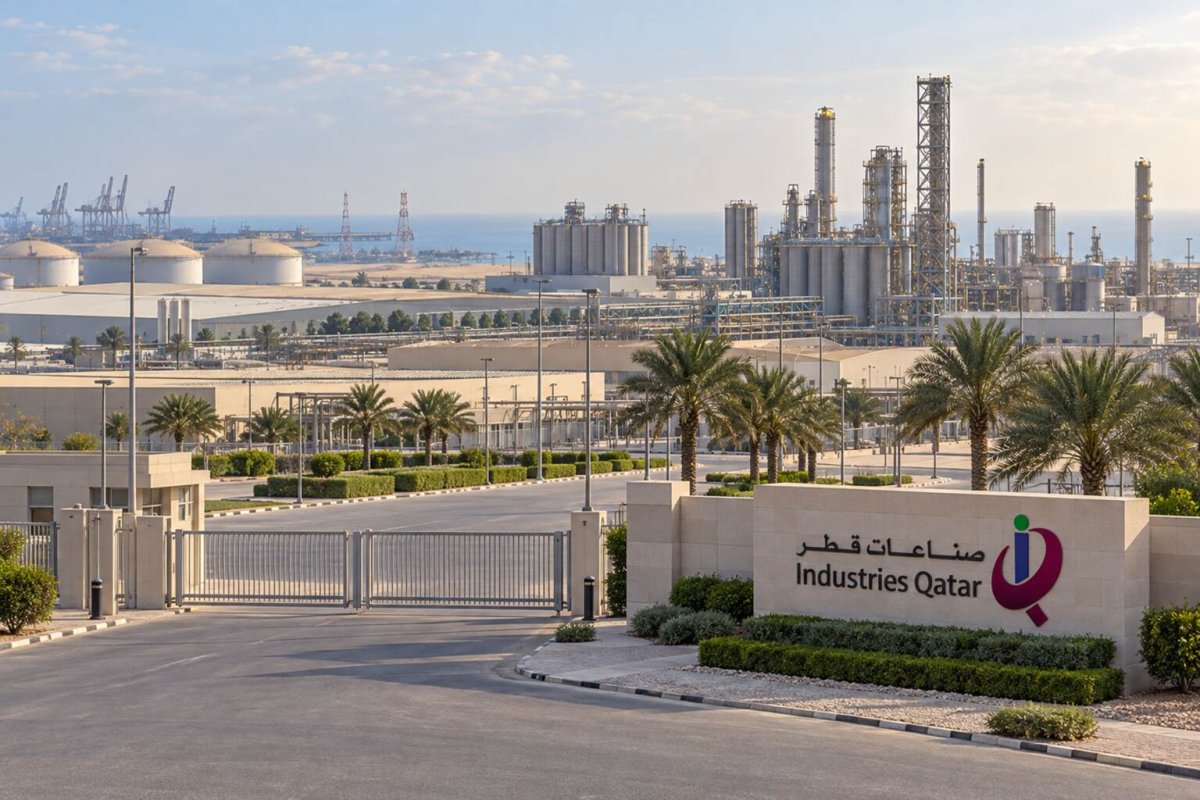
Doha, September 20, 2026 - Industries Qatar Q.P.S.C. (QSE:IQCD) saw its shares decline 3.7% in Sunday trading, as renewed geopolitical concerns weighed on Gulf equity markets. The drop brought the stock to an implied price of approximately QAR9.99, down from Thursday's close of QAR10.37. This reversal erased about 83% of the gains recorded in Thursday's session, according to calculations by TS2.
The decline comes on the heels of a sharp rally on Thursday, when IQCD shares jumped 4.69% on exceptional trading volume. That surge, however, proved short-lived as regional security concerns re-emerged. Reuters reported that the Qatari benchmark index slipped 0.9% following news of attacks targeting Saudi Arabia. Saudi authorities confirmed that a missile fired at Riyadh was intercepted, with no casualties reported, according to the Associated Press.
Sunday's selloff was not confined to Industries Qatar. The Saudi benchmark index fell 0.5% intraday, with Saudi Aramco (TADAWUL:2222) down 0.6% and Saudi National Bank (TADAWUL:1180) off 0.5%. These moves reflect a broader risk-off sentiment across the Gulf region, as investors reassess the potential impact of security disruptions on economic activity.
Operational Challenges Persist
Beyond the regional backdrop, Industries Qatar is grappling with significant operational headwinds. The company's first-half results, released in August, revealed a 46% drop in sales volume to 2.823 million tonnes from 5.180 million tonnes in the same period last year. While average selling prices rose 24% to QAR per tonne, the volume decline more than offset the price gains, leading to a 32% fall in proportionate revenue to QAR5.9 billion and a 52% slide in proportionate EBITDA to QAR1.4 billion.
The impact on profitability has been severe. Profit attributable to owners plunged 89% to QAR215.6 million from QAR1.955 billion in the first half of 2025. The second quarter was particularly challenging, with the company reporting a proportionate net loss of QAR0.5 billion, compared with a QAR0.7 billion profit in the first quarter.
Production Utilization at Multi-Year Lows
Production utilization rates have deteriorated markedly. First-half utilization fell to 62% from 91% a year earlier, and the second quarter alone saw utilization drop to just 48%. These figures underscore the severity of the disruptions caused by conflict-related shipping issues, which have hampered the company's ability to move products to market.
Despite the operational strain, Industries Qatar maintains a robust balance sheet. As of June 30, 2026, the company held QAR8.6 billion in cash and bank balances, with equity funding 88% of assets and no long-term borrowings. This financial resilience provides a cushion against continued volatility in the region.
Analyst Sentiment and Outlook
Analyst recommendations for Industries Qatar remain cautiously optimistic. According to a consensus poll compiled by Investing.com and MarketScreener, the stock has 6 Buy ratings, 5 Hold ratings, and 1 Sell rating from 12 analysts. The mean consensus target price is QAR12.06, implying roughly 20.7% upside from Sunday's implied price. The high target stands at QAR15.00, suggesting 50.2% potential upside, while the low target of QAR7.90 points to about 20.9% downside.
Thursday's rally, which saw IQCD trade 10.48 million shares—nearly six times the average of the preceding four sessions—adds a layer of complexity to the current price action. The sharp reversal on Sunday highlights the fragile nature of investor sentiment in the face of geopolitical uncertainty.
Looking ahead, the key metric to watch will be third-quarter production utilization, which will be compared against the second quarter's 48% level. As of Sunday afternoon, Industries Qatar had not yet announced the date for its third-quarter results. The company's ability to recover from these disruptions will depend on the resolution of regional conflicts and the restoration of normal shipping routes.
In the near term, renewed attacks or extended shipping curbs could further constrain output, while a de-escalation in tensions could quickly remove the regional discount currently embedded in the stock price. Investors will be closely monitoring both geopolitical developments and operational metrics in the coming weeks.
