Intel Corporation's stock showed tentative signs of stabilization in premarket activity Friday, rising 1.02% to $45.71 by 7:00 a.m. EDT. This modest uptick followed a severe downturn on Thursday, where shares plummeted 5.69% to close at $45.25. That decline snapped a three-day winning streak and left the semiconductor giant's stock trading 17.12% below its recent peak of $54.60, reached on January 22. Notably, Intel's losses have recently outpaced those of other major chipmakers, including Nvidia, Broadcom, and Qualcomm.
Broad Market Turmoil and Inflation Fears
The pressure on Intel was part of a wider market retreat. U.S. equity indices tumbled Thursday as geopolitical tensions rattled investors. Iranian strikes on two commercial tankers sent crude oil prices racing toward the $100 per barrel threshold, reigniting concerns about persistent inflationary pressures. This development arrives just ahead of the Federal Reserve's scheduled policy meeting on March 17, complicating the central bank's calculus. Market strategists expressed caution, with Carson Group's Ryan Detrick noting a "sell first, ask questions later" mentality had taken hold. Monica Guerra, Head of U.S. Policy at Morgan Stanley Wealth Management, warned that stubbornly high energy costs could compel the Fed to maintain elevated interest rates for a longer duration.
Legal Challenge Over Government Deal
Compounding Intel's challenges is a fresh legal battle initiated by shareholders. A lawsuit filed this week in Delaware takes direct aim at a 2025 agreement between Intel and the U.S. government. The deal would grant the government a stake of nearly 10% in the company. The plaintiffs have labeled the arrangement an "unlawful contract," alleging it provides Washington with approximately $11 billion worth of stock without delivering commensurate value in return. Intel has not publicly commented on the litigation, according to reports.
Product Launch Fails to Offset Sell-Off
The market downturn occurred despite recent positive product news from Intel. Just one day before the slide, the company unveiled its new Core Ultra 200S Plus desktop processors. These chips are scheduled to hit retail shelves on March 26, with suggested starting prices set at $299 and $199. Robert Hallock, Vice President of Client Computing, heralded the launch as "the first steps in a new era of enthusiast performance." However, the announcement was insufficient to shield the stock from the broader risk-off sentiment sweeping through markets.
The Crucial Turnaround Narrative
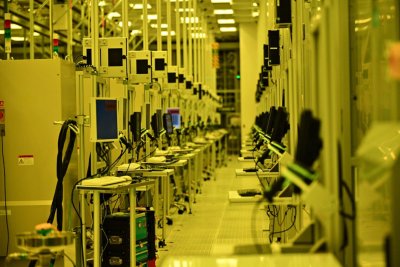
Intel's long-term investment story continues to hinge on the success of its ambitious turnaround plan, spearheaded by CEO Lip-Bu Tan. A central pillar of this strategy is restoring the competitiveness and relevance of Intel's internal manufacturing capabilities, known as Integrated Device Manufacturing (IDM) 2.0. Last week, CFO David Zinsner indicated that Tan is evaluating whether to open Intel's advanced 18A chip fabrication process to external clients, as production yields have begun to improve. However, significant hurdles remain. Reports indicate that only a small fraction of chips produced on the 18A node have so far met customer quality standards. Yield, the industry term for the ratio of usable chips produced, remains a critical watchpoint. Financially, the company reported 2025 revenue of $52.85 billion but still recorded a net loss of $267 million for the year.
Outlook and Lingering Risks
While Friday's premarket bounce offers a brief respite, bulls are not yet in the clear. The persistence of elevated oil prices threatens to keep bond yields high, which could continue to exert downward pressure on growth-oriented chip stocks and the broader market. Furthermore, specific execution risks loom for Intel. Any disappointment in the ramp-up of 18A process yields or a weaker-than-expected customer pipeline could stall the nascent turnaround narrative and erase more of the stock's significant 88.15% year-over-year gains. The company now navigates a complex landscape of new product cycles, a contentious governance dispute, and a macroeconomic environment that has shown diminishing patience for long-term stories still in development.