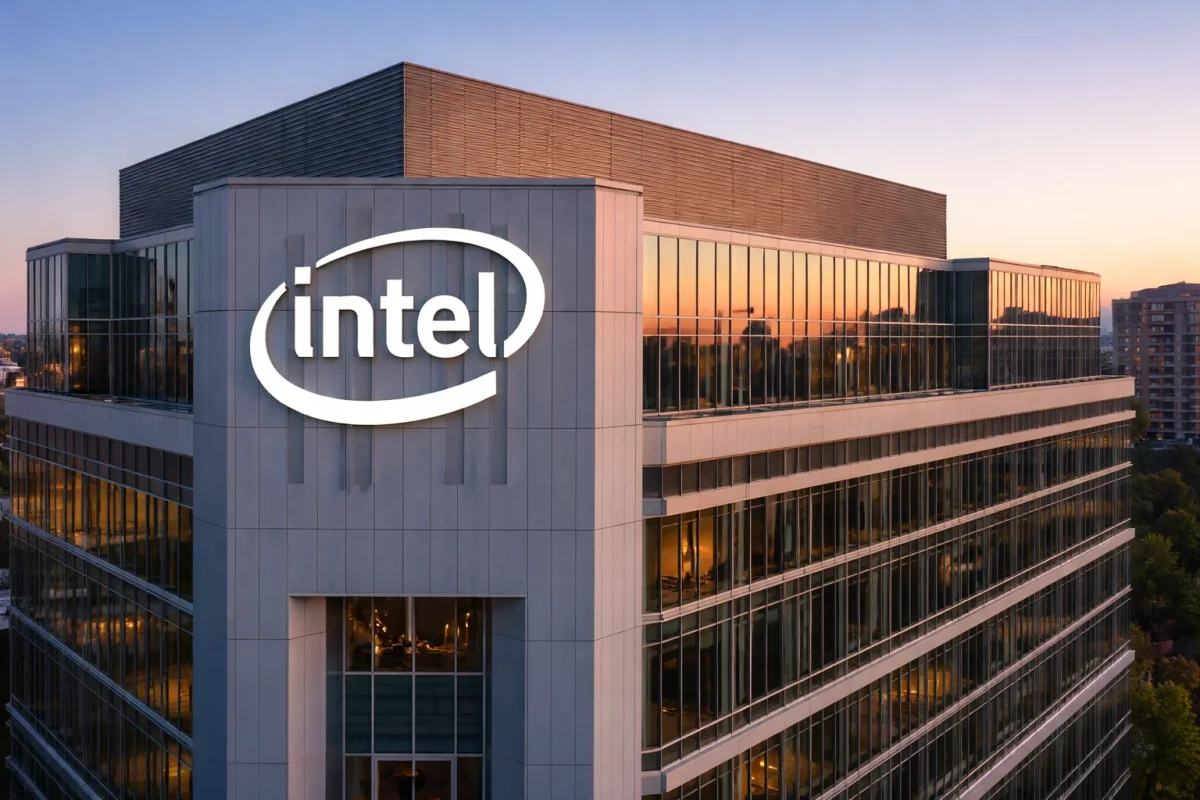
Intel Corporation has finalized a significant transaction to reclaim complete ownership of its Fab 34 semiconductor manufacturing plant in Leixlip, Ireland. The chipmaker spent $14.2 billion to repurchase the 49% stake held by investment firm Apollo Global Management, according to a recent regulatory filing. This strategic buyback was financed using a combination of available cash and a $6.5 billion bridge loan, which the company intends to refinance in the near term.
Strategic Timing and Financial Implications
The transaction arrives at a pivotal moment for Intel, as the company under CEO Lip-Bu Tan seeks to demonstrate progress in its multi-faceted turnaround plan. Having focused initially on cost reductions and balance sheet repair, Intel is now shifting emphasis toward tighter operational control of its manufacturing assets and expanding its footprint in artificial intelligence. The company is scheduled to release its first-quarter financial results on April 23, providing investors with a critical update on its financial health and strategic direction.
When announcing the buyback last week, Intel Chief Financial Officer David Zinsner described the original joint venture structure with Apollo as "the right structure at the right time." He noted that Intel now possesses a "stronger balance sheet" and "improved financial discipline" and projected that the repurchase would enhance per-share earnings and support the company's credit profile starting in 2027.
Fab 34's Role and Broader Manufacturing Context
Fab 34 is a crucial production asset for Intel, manufacturing Core Ultra and Xeon 6 processors using the company's current-generation fabrication technology. Apollo initially acquired its minority stake for $11.2 billion in 2024, a deal that provided Intel with substantial capital while allowing it to maintain spending on its expansive factory construction projects in both Europe and the United States.
The backdrop for Intel's manufacturing push remains intensely competitive. Rival Nvidia continues to dominate the market for AI accelerator chips and is making inroads into the central processing unit (CPU) segment. Meanwhile, Advanced Micro Devices (AMD) persists as Intel's primary competitor in the market for standard server processors. Concurrently, Intel is working to prove the competitiveness of its next-generation 18A chipmaking process to attract external manufacturing customers.
Recent AI Partnerships and Product Developments
In a flurry of activity this week, Intel has announced several initiatives aimed at strengthening its position in the AI sector. The company revealed it will join the Terafab chip project spearheaded by Elon Musk, involving collaboration with SpaceX and Tesla. CEO Lip-Bu Tan characterized the plan as a "step change" in the construction of chip logic, memory, and packaging. Analyst Gil Luria of D.A. Davidson labeled the partnership an "important step," and Intel's stock price rose more than 2% following the news.
Additionally, Intel and AI specialist SambaNova Systems introduced a new design on Wednesday that integrates Xeon 6 CPUs—general-purpose server chips—with graphics processors and SambaNova's proprietary processors for AI agent workloads. The collaboration targets the inference phase, where trained AI models answer queries and execute tasks. Kevork Kechichian, head of Intel's data-center group, emphasized that the Xeon platform remains a "mature, proven foundation" for such inference work.
Challenges and Market Scrutiny
Despite the positive strategic moves, Intel faces clear hurdles. The Fab 34 repurchase is partially dependent on the bridge loan that still requires refinancing, exposing the company to potential shifts in debt-market conditions. Intel itself has cautioned that changes in semiconductor demand could alter the expected financial benefits of the transaction.
Furthermore, the company's advanced 18A manufacturing process has faced yield challenges. A report in March indicated that only a small percentage of chips produced on the 18A line initially met customer quality standards, though Intel has stated that production yields are improving on a monthly basis.
Looking Ahead to Earnings
All eyes are now on Intel's upcoming earnings report, scheduled for after the market closes on April 23, followed by a conference call at 2 p.m. Pacific Time. This disclosure will offer investors a clearer assessment of whether regaining full control of Fab 34 and the recent series of AI-focused deals are translating into tangible business momentum. The results will serve as a key test for Intel's evolving strategy in a rapidly shifting semiconductor landscape.