Indian equity markets faced significant downward pressure during Thursday's trading session, surrendering a portion of the robust gains achieved just a day earlier. The sell-off was primarily driven by a resurgence in global crude oil prices and heightened uncertainty surrounding diplomatic efforts in the Middle East, prompting investors to adopt a more defensive posture.
Benchmarks Under Pressure
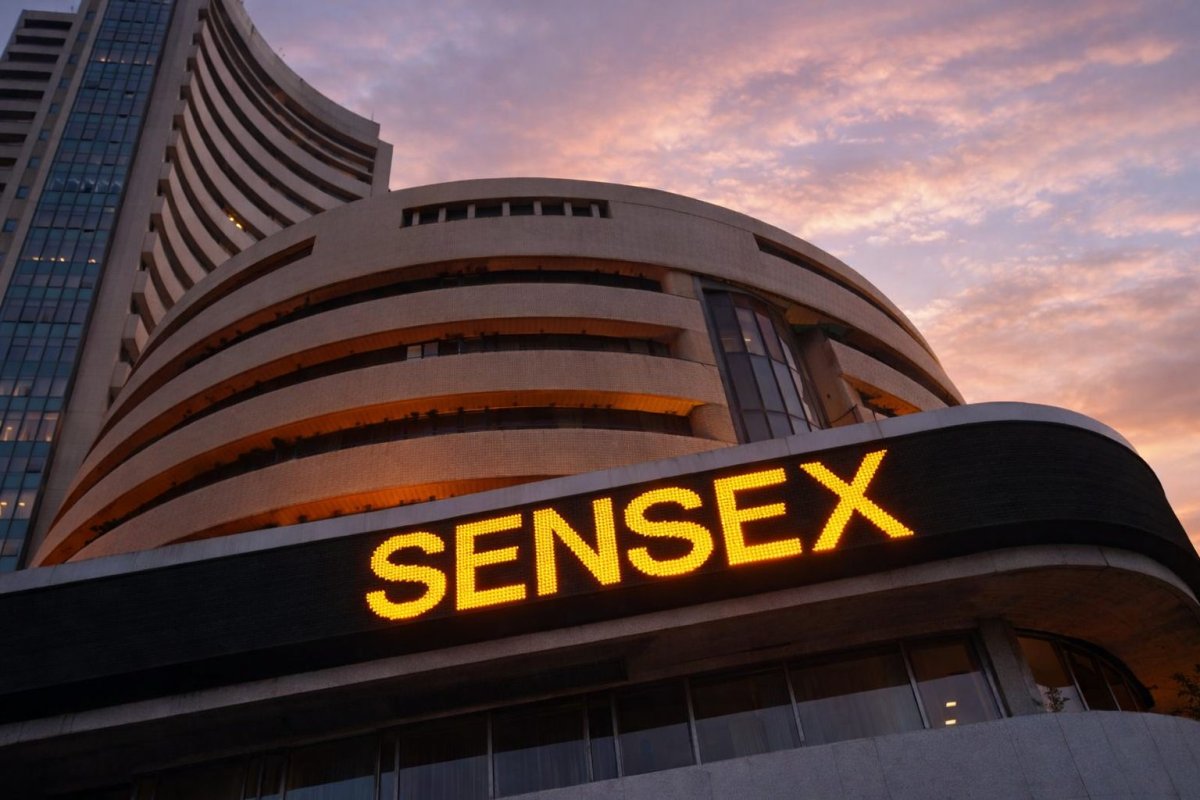
The S&P BSE Sensex, a key barometer of Indian market performance, closed the day at 76,631.65, marking a substantial decline of 931.25 points, or 1.20%. The broader Nifty 50 index followed suit, ending at 23,775.10 after losing 222.25 points, equivalent to a 0.93% drop. This reversal highlights the market's acute sensitivity to external macroeconomic and geopolitical shocks.
Oil Price Spike Weighs on Sentiment
The rebound in oil prices presents a direct challenge to India's economic stability, given the nation imports approximately 90% of its crude requirements. Elevated energy costs are a known catalyst for inflationary pressures, exert strain on the Indian rupee, and complicate the Reserve Bank of India's dual mandate of managing inflation and fostering growth. Analysts note that a sustained 10% increase above an $85-per-barrel baseline could potentially elevate inflation by 50 basis points while simultaneously shaving 15 basis points off economic growth.
Geopolitical developments further dampened the mood. Israeli military actions in Lebanon and a severe disruption to shipping traffic through the critical Strait of Hormuz exacerbated supply concerns. Data indicated only six vessels transited the strait in a 24-hour period, a stark contrast to the pre-crisis daily average of around 140 ships, tightening global oil supply logistics.
Sectoral Performance Diverges
The selling was notably concentrated in the banking sector. The Nifty Financial Services index retreated 1.4%, erasing a significant part of its previous session's 5.5% surge. Heavyweights HDFC Bank and ICICI Bank fell 2.3% and 2.1%, respectively. Overall, ten out of sixteen major sectoral indices ended the session in negative territory.
In contrast, broader market indices demonstrated relative strength. Mid-cap and small-cap segments managed to eke out modest gains, closing slightly higher. The metals sector also outperformed, with the Nifty Metal index climbing 1.3% as companies like Hindalco advanced. The information technology sector provided some stability; Tata Consultancy Services (TCS) rose 1.2% ahead of its quarterly results, which later surpassed revenue and profit expectations.
Expert Commentary and Market Dynamics
Market participants attributed the decline to profit-taking after a sharp rally that saw the Sensex gain over 5,600 points in the first five sessions of April. Siddhartha Khemka of Motilal Oswal Financial Services described the session as the market "taking a breather" following Wednesday's surge.
However, caution prevails. Siddharth Vora of PL Capital warned that "relief rallies are likely to recur in a market increasingly hostage to headlines," with the ongoing Middle East conflict continuing to dampen sentiment. Vinod Nair of Geojit Financial Services highlighted the risk of earnings downgrades for fiscal year 2027 if crude prices remain elevated.
Foreign institutional investors extended their selling streak for a 26th consecutive session, offloading domestic equities worth nearly 28.12 billion rupees on Wednesday. The Indian rupee mirrored the weak sentiment, depreciating 0.1% to close at 92.6575 against the US dollar.
Global Context and Outlook
The risk-off sentiment was not confined to India. Major Asian markets, including Japan's Nikkei (down 0.7%) and South Korea's Kospi (down 1.6%), also traded lower. European equities opened in the red, with the STOXX 600 index dipping 0.2%.
All eyes are now on scheduled talks between Iranian officials and a U.S. delegation led by Vice President JD Vance. Market observers suggest that a diplomatic breakthrough leading to softer Brent crude prices and a normalization of shipping traffic could help Indian equities stabilize. In the absence of progress, however, the twin burdens of expensive fuel and a weakening currency are expected to continue weighing on stock performance, with traders remaining vigilant to every update from the volatile region.