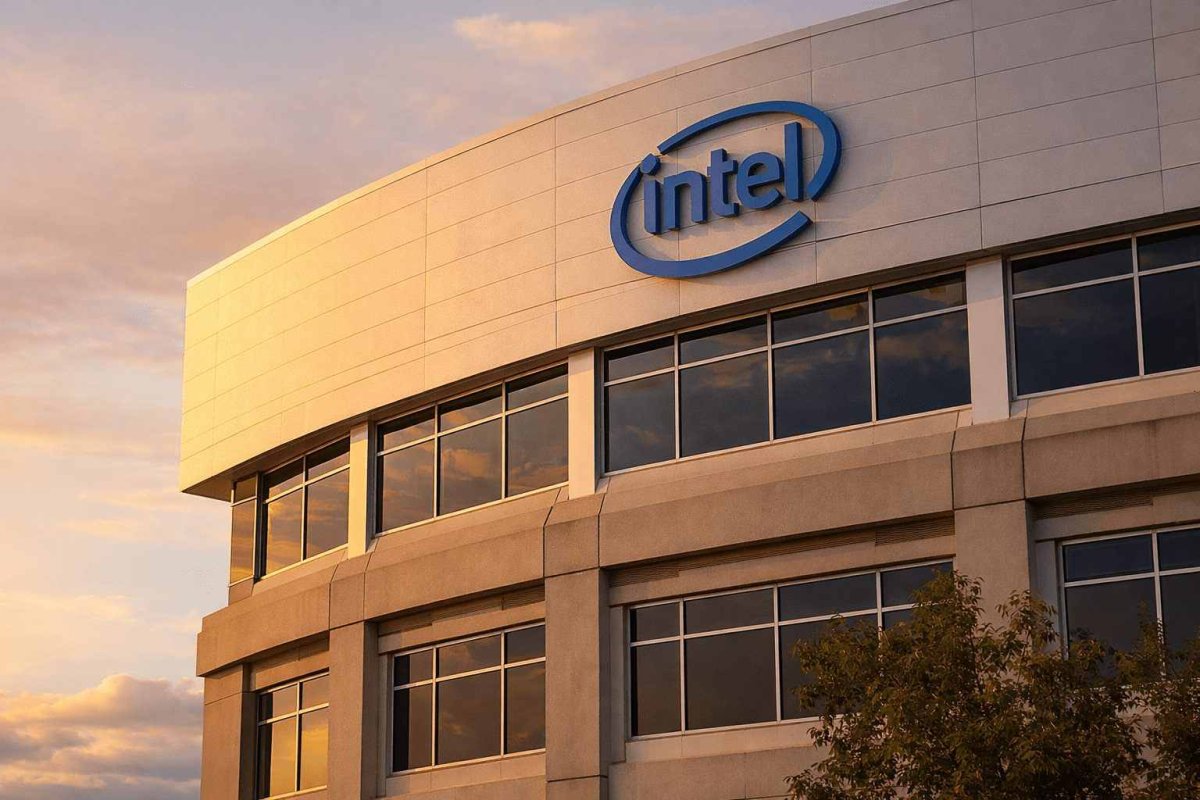
A federal appeals court has reinstated a major patent infringement case against Intel Corporation, delivering a fresh legal challenge for the semiconductor giant. The U.S. Court of Appeals for the Federal Circuit overturned a 2024 district court ruling that had favored Intel, sending the dispute with VLSI Technology back for a new jury trial. This litigation has previously resulted in substantial awards against Intel, totaling approximately $3.15 billion from separate jury verdicts.
Market Reaction and Financial Context
News of the revived case contributed to a 2.1% decline in Intel's share price, closing at $63.81. Despite this dip, the stock has experienced a remarkable rally, gaining roughly 44% throughout April—its strongest monthly performance since 1987. The company is scheduled to release its first-quarter financial results on April 23, placing the legal development squarely within a sensitive reporting period.
Strategic Pivot Towards AI and Inference
Intel's market momentum is partly attributed to a strategic refocusing on artificial intelligence, specifically the inference phase where AI models process queries. Last week, Intel and Google announced an expanded collaboration centering on Xeon processors and custom Infrastructure Processing Units (IPUs), designed to offload tasks from central CPUs. CEO Lip-Bu Tan emphasized the industry's shift towards "balanced systems," moving beyond a sole focus on accelerator chips for AI training.
This pivot is reinvigorating interest in traditional CPU manufacturers. While Nvidia maintains dominance in chips for training large AI models, the growing deployment of AI agents for complex, multi-step jobs is altering the competitive landscape. Analyst Ben Bajarin of Creative Strategies notes this type of workload is increasingly running on the CPU.
Foundry Challenges and Manufacturing Consolidation
Intel's strategic wins, including a recent role in Elon Musk's Terafab initiative with Tesla and SpaceX—hailed by D.A. Davidson's Gil Luria as an "important step"—are juxtaposed against severe financial strain in its contract manufacturing business. Intel Foundry reported a staggering operating loss of $10.32 billion for the 2025 fiscal year.
Concurrently, the company is consolidating its manufacturing footprint. An April 8 SEC filing revealed Intel completed a $14.2 billion acquisition of Apollo-managed funds' 49% stake in the Fab 34 joint venture in Ireland. The deal was financed through cash and a $6.5 billion bridge loan that Intel plans to refinance. CFO David Zinsner recently pointed to a "stronger balance sheet" and "improved financial discipline."
Competitive Pressures and Analyst Sentiment
The broader competitive environment remains intense. Advanced Micro Devices (AMD) continues to gain share in Intel's core server business, while Taiwan Semiconductor Manufacturing Company (TSMC) retains its lead in advanced AI chip manufacturing. Internally, management has shown caution; Zinsner noted in March that Tan was reevaluating how widely to offer Intel's advanced 18A manufacturing process to external clients.
Despite April's stock surge, analyst consensus remains cautious. Barron's highlighted that 34 out of 50 analysts maintain a Hold rating on Intel shares. The upcoming earnings report carries heightened significance, as investors weigh the company's AI transition, foundry turnaround efforts, and now, a reinstated multi-billion dollar legal threat.