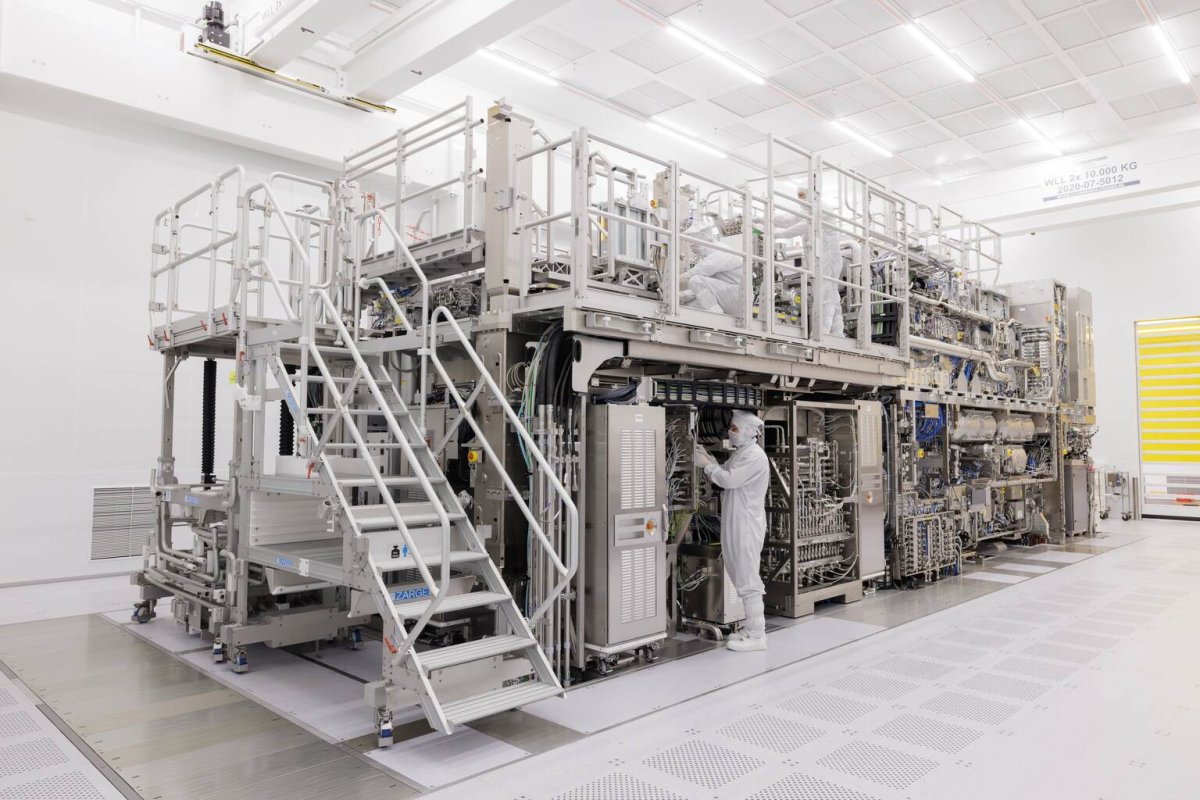
Intel's stock rebounded to $102.94 on September 11, a 2.61% gain, after dipping below $101 the previous day. The bounce, however, was on lighter-than-usual volume—86.7 million shares versus a three-month average of 111.4 million—suggesting a recovery in confidence rather than a rush of new buyers. The catalyst: Intel and ASML announced that more than one million wafers have now been processed through High-NA EUV lithography systems, with Intel confirming that overlay, throughput, and tool availability are meeting expectations.
The milestone is significant, but it's important to parse what it actually means. The one-million-wafer figure includes wafers used in tool certification, testing, R&D, and volume production. High-NA is only being used on selected layers for a subset of Core Ultra Series 3 chips (code-named Panther Lake). It is not a disclosure that Intel has shipped one million finished product wafers to external foundry customers. The number is a manufacturing achievement, not an order book.
Still, the update answers two genuine execution questions. First, High-NA is now operating in high-volume manufacturing, not just in a lab. Second, Intel has demonstrated a practical path to using current 6-inch photomasks through floor planning or stitching, giving customers access to High-NA before a larger mask standard is ready. This was reinforced by ASML's July announcement that Intel had dual-qualified selected 18A layers on both High-NA and conventional EUV, with matching yields for Panther Lake products already in the supply chain. That reduces the risk that Intel's early adoption is merely an expensive science project.
But technical readiness and foundry economics are vastly different things. Intel Foundry reported $5.765 billion in Q2 segment revenue, yet substantially all of it still supports Intel's own product groups. External foundry and assembly revenue was just $293 million—about 5% of the segment total—according to Intel's Q2 10-Q. Much of that increase came from Altera becoming an external customer after being deconsolidated. The segment also lost $2.089 billion from operations in Q2, though that was a major improvement from a $3.168 billion loss a year earlier, narrowing the operating-loss rate to 36% from 72%.
The trade-off embedded in High-NA is clear: more precise patterning can reduce the need for complex multiple exposures on the tightest layers, but leading-edge tools, masks, and fab conversions demand heavy capital before utilization is high enough to pay back the investment. Intel disclosed that a greater mix of higher-cost 18A wafers reduced product profit by $340 million in Q2, substantially offsetting better revenue and lower costs on older Intel 3 and Intel 4 nodes. A machine that meets technical targets is necessary, but a machine filled with profitable customer work is what creates shareholder value.
Looking ahead, Intel has committed to completing development of Intel 14A, the node after 18A, and says it is meeting performance and design milestones that allow potential large customers to evaluate it. Crucially, the pace and scale of manufacturing expansion will depend on committed 14A demand from both Intel's own road map and external design wins. High-NA lowers one barrier to those wins: prospective customers can now see real production, comparable layer performance, and a practical path using the current mask format. The strongest bullish case is that this technical credibility converts into a named, high-volume external customer before Intel has to build too far ahead of demand.
The counterargument is valuation and mix. Friday's close valued Intel at roughly $544 billion. The company's product businesses generated $4.817 billion of operating income in Q2, so the stock is not a pure foundry bet. Still, investors are assigning substantial value to a turnaround whose external foundry revenue remains small and whose newest internal wafers are costly. The next decisive evidence will not be another wafer-throughput headline. Watch for a significant external 14A design win, committed capacity, a rising external-revenue share, and further narrowing of the foundry loss without another product-cost penalty. One million wafers shows that Intel can operate High-NA. Those four measures will show whether it can monetize the lead.