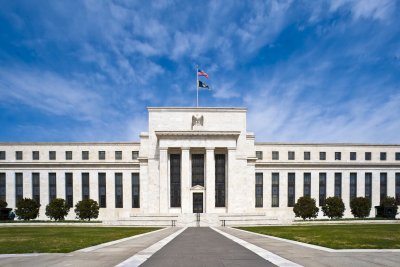
The Federal Reserve held its benchmark interest rate steady at 3.50%–3.75% this week, even as March inflation rose 3.5% year-over-year on the Fed's preferred metric. That leaves U.S. savers facing a tough choice: stick with barely-yielding bank accounts or shift funds while short-term rates remain elevated.
Holding cash provides a safety net for job loss, unexpected expenses, or market downturns. But with inflation eating away at purchasing power, parking money in low-yield accounts is no longer neutral—it's a losing proposition. The national savings rate stands at just 0.38%, according to FDIC data as of April 20, while interest checking accounts yield a mere 0.07% and money-market deposit accounts offer 0.57%. Against inflation above 3%, these returns leave savers in negative real territory.
High-Yield Alternatives
Online banks and credit unions offer far more attractive rates. Bankrate's May survey shows Vio Bank at 4.03% APY, LendingClub and Bread Savings both at 4.00%, and Axos Bank leading at 4.21%. On a $10,000 deposit, the difference between 0.38% and 4.00% amounts to roughly $362 more per year before taxes—not a fortune, but hardly trivial.
Some institutions push rates even higher, though often with strings attached. Varo Bank, for instance, offers 5.00% APY on balances up to $5,000 for qualifying customers, per Bankrate. This gap between traditional brick-and-mortar banks and digital rivals underscores a shift in the deposit landscape.
Cash-Equivalent Options
Investors continue to favor cash-type holdings. Money-market fund assets hit $7.63 trillion for the week ending April 29, according to the Investment Company Institute, even as yields have eased from last year's peaks. Short-term Treasury bills also remain competitive: 3-month bills yielded 3.59% and 6-month bills 3.58% as of April 30, per the Fed's H.15 update.
Series I savings bonds, which reset on May 1, now offer a composite rate of 4.26% for the first six months, including a 0.90% fixed component. While designed to hedge inflation, I bonds come with liquidity constraints: no redemptions in the first year, and a three-month interest penalty if sold before five years.
Expert Perspectives
Greg McBride, CFA, of Bankrate notes that savers are in a “unique environment” where savings rates still outpace inflation, but warns these higher rates may not persist. Meanwhile, Sung Won Sohn, finance professor at Loyola Marymount University, told Reuters that “the road ahead is more dangerous,” citing persistent inflation and consumer stress. Lydia Boussour, senior economist at EY-Parthenon, added that supply shocks continue to push prices higher.
However, high-yield savings rates are not locked in—they will fall if the Fed cuts rates or banks tighten margins. Certificates of deposit lock in a rate but tie up funds until maturity. Money-market funds, while liquid, are not FDIC-insured and carry a slight risk of loss, as noted in an SEC investor bulletin. Bank deposits, by contrast, are insured up to $250,000 per depositor per institution.
The real mistake this May? Parking excess cash in accounts where banks capture most of the yield. The challenge is no longer whether to hold cash, but where to park it for the best return.