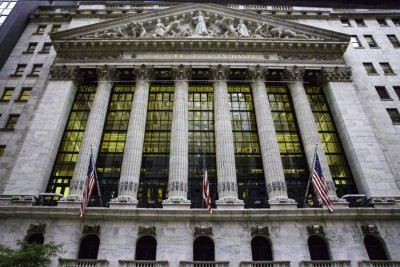
Wall Street treaded water on Monday as a sharp jump in manufacturing input prices and surging crude oil revived inflation anxieties, setting a cautious tone ahead of a pivotal week for labor market data. The S&P 500 ended the session virtually unchanged, caught between strength in mega-cap technology and steep declines in travel-related shares.
Market Movers: Tech Offsets Oil-Driven Travel Slump
The Dow Jones Industrial Average slipped 96.59 points, or 0.20%, while the Nasdaq Composite managed a 0.22% gain. The S&P 500 edged lower by a marginal 0.05%. The market's fear gauge, the CBOE Volatility Index (VIX), settled at 21.31.
Leadership came from the technology sector, with NVIDIA (NVDA) advancing 2.8% and Microsoft (MSFT) rising 1.7%. "At times when there is nervousness, people will go to the leaders in the market," noted Joe Saluzzi, co-head of equity trading at Themis Trading. This strength was necessary to counter a sell-off in airlines and cruise lines, which were hammered by a spike in energy costs. Delta Air Lines (DAL) and United Airlines (UAL) each fell more than 2.5%, while cruise operators Carnival (CCL) and Norwegian Cruise Line also tumbled.
ISM Data Highlights Surging Input Costs
The Institute for Supply Management's February manufacturing Purchasing Managers' Index (PMI) registered 52.4, a slight dip from January's 52.6 but still above the 50 threshold indicating expansion. The more concerning figure was the Prices Paid index, which skyrocketed to 70.5 from 59.0 the prior month. This marks the highest reading for input prices since October 2022, underscoring persistent cost pressures within supply chains.
The report cited ongoing concerns about tariffs and added a new layer of uncertainty following geopolitical events over the weekend that sent energy markets soaring. This price surge directly challenges the narrative of steadily easing inflation that has supported markets in recent months.
Oil Volatility and Geopolitical Tensions
Brent crude futures surged 7.6% to settle at $78.64 a barrel, after earlier spiking as high as $82.37. U.S. West Texas Intermediate crude jumped over 12% at one point before closing up 5.77% at $70.89. The dramatic move followed escalating tensions in the Middle East, forcing a recalibration of energy supply risks.
"Markets are acknowledging the seriousness of the conflict, but are also signalling that, for now, this is a geopolitical shock, not a systemic crisis," said Priyanka Sachdeva, senior analyst at Phillip Nova. The dollar index advanced 0.59% to 98.65, reflecting a flight to safety and higher rate expectations.
Treasury Yields and Sector Rotation
U.S. Treasury yields experienced significant swings as investors balanced safe-haven demand against fears that higher energy costs could delay Federal Reserve rate cuts. The benchmark 10-year yield initially dropped to an 11-month low of 3.926% before rebounding to trade near 3.970%.
The energy sector ETF Energy Select Sector SPDR Fund (XLE) benefited from the crude rally. In other corporate news, shares of AES Corporation (AES) plunged after the company agreed to a $33.4 billion buyout by a consortium including BlackRock's Global Infrastructure Partners.
The Week Ahead: All Eyes on the Labor Market
Monday's ISM data served as a prelude to a critical sequence of employment reports. Attention now turns to Wednesday's ADP National Employment Report and the ISM Services PMI. Weekly jobless claims follow on Thursday, culminating in the official U.S. jobs report for February on Friday morning.
Analysts warn that a strong payrolls number or faster wage growth, combined with the ISM's price surge, could severely challenge market expectations for a Fed policy pivot in the coming months. "It all comes down to whether oil's rally holds and starts to seep into wider inflation numbers," one market observer noted. The March Consumer Price Index report, due on March 11, will provide the next major inflation checkpoint.
For now, investors remain in a holding pattern, parsing every data point for clues on whether the disinflation trend remains intact or if stubborn price pressures will force a recalibration of monetary policy expectations. The interplay between geopolitical energy shocks and domestic economic strength will define market direction in the near term.