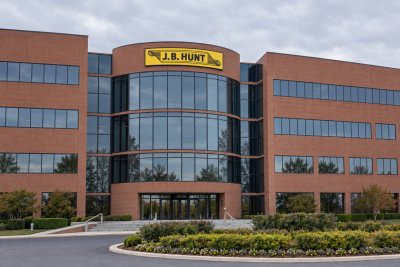
J.B. Hunt Transport Services (NASDAQ: JBHT) reported a second-quarter operating profit gain of $62.2 million year-over-year, with its intermodal segment contributing $55.1 million—or approximately 89% of the total increase. The company's shares surged 6.9% in after-hours trading to $295.20, as both revenue and earnings per share surpassed analyst expectations.
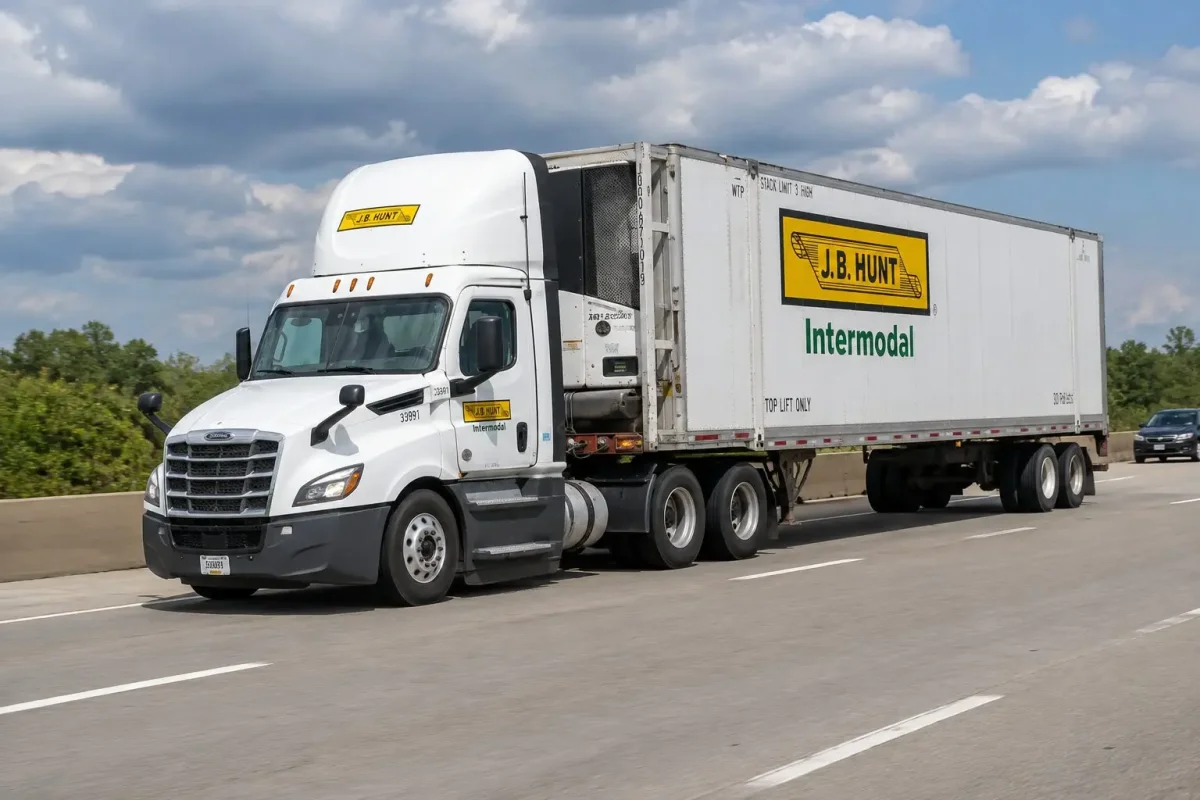
The intermodal division, which combines rail and truck services, moved 10% more loads compared to the same period last year, even as the average number of tractors decreased by 3% and containers and trailers declined by 1% at quarter-end. This efficiency gain underscores J.B. Hunt's strategy of boosting volume and operational efficiency rather than relying solely on fuel surcharges.
Revenue per load in intermodal rose 1% excluding fuel, with loads on the eastern network jumping 16% and transcontinental lanes seeing a 5% increase. Total revenue climbed 19% to $3.50 billion, while earnings per share jumped 45% to $1.91, ahead of the FactSet consensus estimate of $3.26 billion in revenue and $1.74 in EPS. Operating income was up 32% year-over-year.
Segment profitability was not evenly distributed. Intermodal delivered 50% of segment sales but generated 58% of operating income, accounting for the bulk of the profit increase. Dedicated and brokerage segments also contributed, while final mile and truckload segments posted declines. Operating margin for intermodal improved to 8.6% from 6.7% a year ago.
President and CEO Shelley Simpson attributed the results to disciplined execution and a focus on capital returns. The company highlighted improvements such as fewer empty-container moves, lower storage costs, better productivity at local rail-terminal trucking, and structural cost reductions. However, tight truck market conditions impacted other segments: truckload revenue rose 35% but swung to a $1.3 million loss due to higher outside-carrier costs, and Integrated Capacity Solutions saw gross margin shrink to 12.5% from 15.5%.
Cash flow metrics also improved. Operating cash flow for the first half fell 10% to $723.3 million, but net capital spending declined 64% to $144.9 million, pushing implied free cash flow up to $578.3 million from $407.2 million. Debt was reduced to $1.15 billion from $1.72 billion a year ago, and J.B. Hunt repurchased $98 million of stock during the quarter.
Shares closed at $295.20 in after-hours trading, 2.7% above the 12-month analyst target of $287.40, leaving limited upside if fleet utilization or revenue per load declines. The coming quarter will test whether intermodal gains can persist amid ongoing truck capacity constraints.