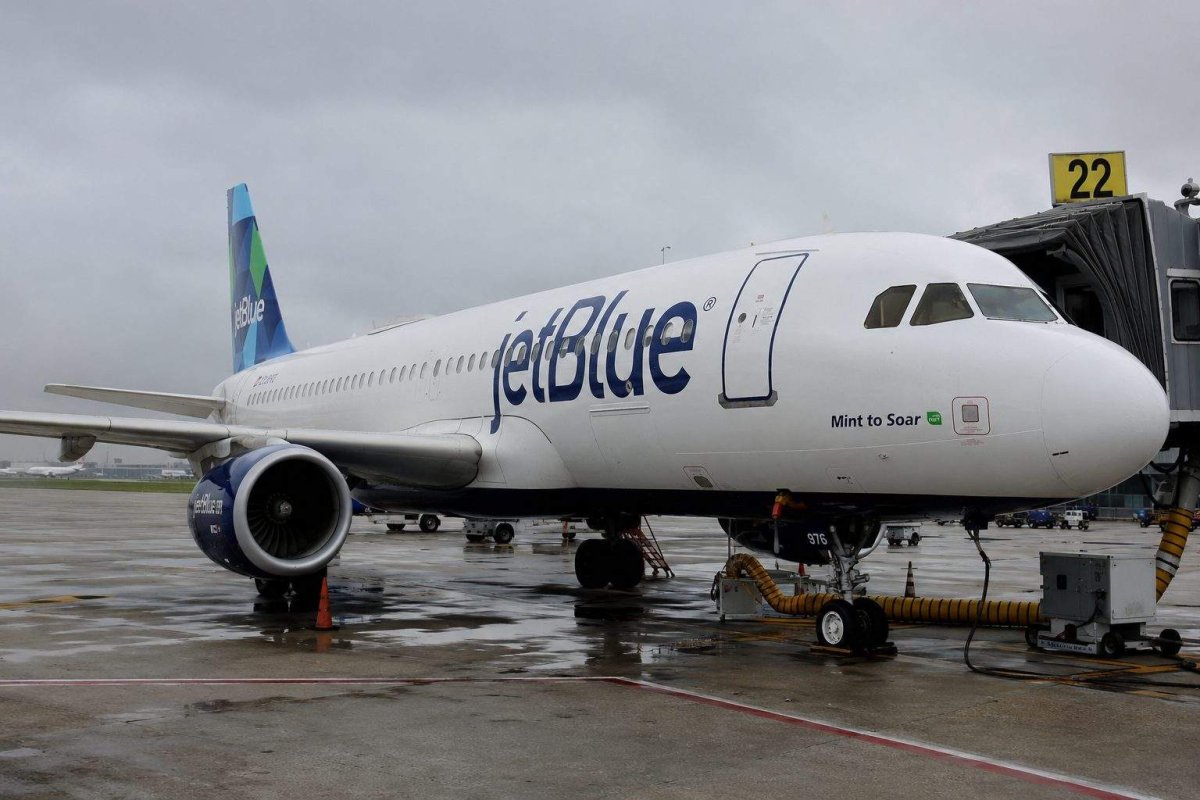
A JetBlue Airways (NASDAQ: JBLU) flight arriving from Las Vegas reported a drone strike above the cockpit while approaching New York’s John F. Kennedy International Airport at approximately 3,000 feet on Monday morning. The aircraft, an Airbus A321, landed safely at Terminal 5 around 7:15 a.m. EDT. No injuries or damage were reported, and the plane was later cleared for its next flight to Los Angeles after a thorough inspection.
The incident marks the second drone-related event involving a New York-area airline in less than a week. On Friday, a United Airlines (NASDAQ: UAL) flight from Key West to Newark reported a drone passing about 100 feet below the aircraft during its approach. That flight, a Boeing 737 carrying 106 passengers and five crew members, landed without incident. The Federal Aviation Administration (FAA) is investigating both occurrences.
These back-to-back incidents highlight a growing safety risk for airlines operating in the congested airspace around New York, especially with the 2026 World Cup underway. The FAA has imposed temporary flight restrictions (TFRs) up to 3,000 feet within three nautical miles of stadiums hosting matches, including MetLife Stadium in East Rutherford, which will host games on June 30, July 5, and the final on July 19. The JetBlue drone strike occurred at the same altitude as these restrictions, raising questions about compliance and enforcement.
The financial impact on carriers has been modest so far. JetBlue shares closed at $5.63, down 6.1%, while United slipped 0.7% to $135.19. These moves are not directly linked to the drone reports, but the operational disruption—such as grounding aircraft for inspections—could strain capacity during the peak summer travel season. ABC7 New York reported that the JetBlue plane was inspected and cleared for service, but the potential for more frequent checks looms.
Industry experts warn that even small drones pose significant risks. ABC aviation analyst John Nance noted that a single drone could strike an engine or cockpit, while Scott Shtofman of the Association for Uncrewed Vehicle Systems International told the Associated Press that a five-pound drone can reach 3,000 feet, despite regulations limiting drones to 400 feet near uncontrolled airports. The FAA logs over 100 drone sightings near airports each month, and since the World Cup began, federal agencies have seized more than 500 drones across 11 U.S. host cities, according to Reuters.
FAA Administrator Bryan Bedford stated in May that the agency would take “swift action” against drone operators violating airspace rules, including confiscation, federal criminal charges, and fines up to $100,000. The New York-New Jersey region remains a focal point, with additional restrictions around Sports Illustrated Stadium in Harrison, Louis Armstrong Stadium in Flushing, and Rockefeller Center.
For investors, the key takeaway is the operational risk: more mandatory checks, increased police presence near airports, and the potential for a confirmed strike to sideline an aircraft when summer capacity is already tight. While no direct financial losses have been reported, the cumulative effect of repeated incidents could pressure airline margins and prompt stricter regulatory measures.