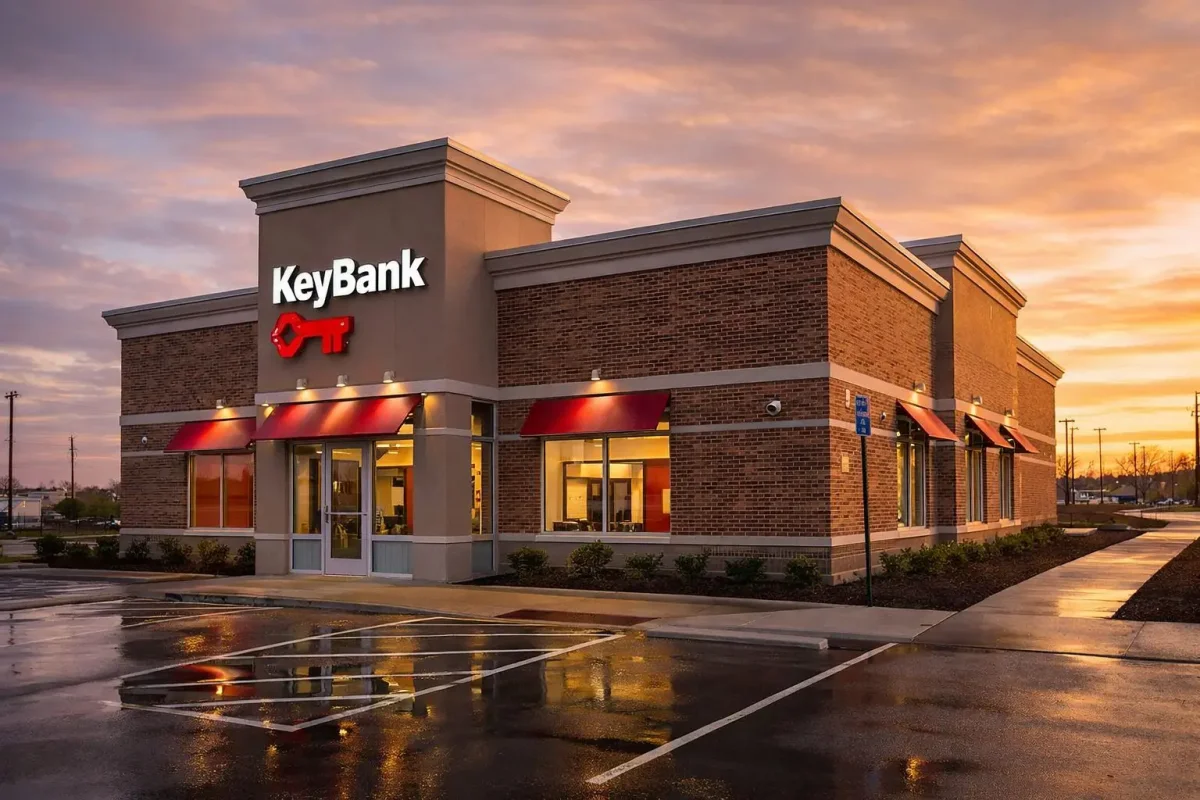
Security protocols at KeyBank are receiving heightened attention in Ohio this week following two distinct incidents. Law enforcement officials arrested an individual in connection with a robbery at a KeyBank location in Miami Township. Separately, the financial institution highlighted a case where its Positive Pay system successfully intercepted a fraudulent check attempt targeting a business customer for nearly $5,000. These events unfold just ahead of parent company KeyCorp's scheduled release of first-quarter financial results on April 16.
Persistent Check Fraud in a Digital Age
Despite the rise of digital payments, paper checks remain a significant vector for fraud. Data from a 2025 survey by the Association for Financial Professionals, cited by Federal Reserve Financial Services, indicates that 63% of responding organizations faced attempted or actual check fraud in 2024. Remarkably, 91% of companies continued to use checks. Federal banking regulators, including the Fed, FDIC, and OCC, have been evaluating new anti-fraud rules, with industry feedback still under review as of last December.
Details of the Ohio Incidents
According to Miami Township police, officers responded to the KeyBank branch on Miamisburg Centerville Road on the afternoon of March 30. The suspect, identified in local reports as 62-year-old John Butler, allegedly presented a note to a teller demanding money. In an unrelated event promoted on March 31, a case study detailed how restaurant owner Carol Abbot avoided a loss of approximately $5,000 after KeyBank's Positive Pay system flagged an altered check before funds were released.
Positive Pay is a fraud-detection service that compares checks presented for payment against a list of checks previously authorized and issued by the client. This allows banks to identify counterfeit or materially altered items. Similar services are offered by other regional banks like Huntington, Fifth Third, and PNC, underscoring that robust fraud controls have become a fundamental expectation in commercial banking rather than an optional premium.
Industry Emphasis on Layered Security
Banking executives are stressing the critical nature of multi-faceted security measures. During a December webinar, KeyBank Executive Vice President Brandon Nowac described layered controls as "table stakes" for the industry. Frank McKenna, Chief Fraud Strategist at Point Predictive, advised companies to "verify before you trust" and highlighted continuous employee training as a key defense against evolving scams.
In a separate survey conducted by KeyBank, Senior Product Leader Matt Swope acknowledged fraud as an "ongoing challenge" and recommended that businesses conduct an annual review of their controls with their banking partner. The same survey found that 93% of middle-market firms had utilized paper checks at some point in the preceding year.
Broader Fraud Landscape and Market Context
The challenge extends beyond individual banks. The FBI reported close to 860,000 complaints related to internet crime in 2024, with associated losses soaring to over $16 billion—a 33% increase from the prior year. Concurrently, federal banking regulators noted a staggering 271% surge in reported losses from non-card payment fraud between 2020 and 2024.
For investors, the immediate focus is on KeyCorp's upcoming earnings. The company's stock opened at $20.34 on Thursday, representing a gain of 26.5 cents from the previous session's close. It remains unclear if the recent Ohio events signal a wider trend in fraud targeting the bank. KeyCorp has not provided investors with any updated details on first-quarter fraud or security expenses since its last earnings report on January 20. The next insight into these figures will come with the April 16 earnings release.