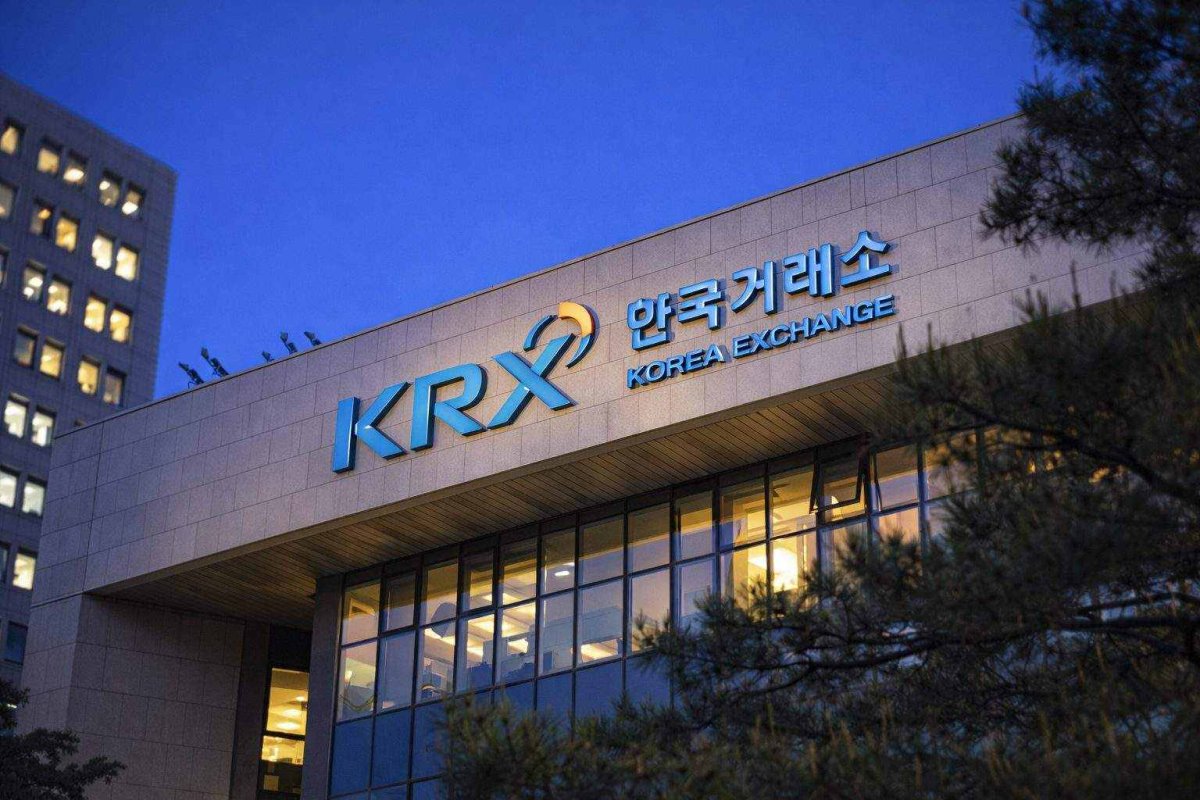
The South Korean equity market braces for a condensed trading week, navigating a stark contrast between robust export data and intense foreign investor selling pressure. The benchmark KOSPI index closed Friday's session at 6,244.13, marking a 1% decline. This downturn coincided with historic activity, as overseas investors offloaded a record 7.14 trillion won (approximately $5.3 billion) worth of shares in a single day, according to data from the Korea Exchange.
Export Engine Fires on All Cylinders
Providing a fundamental counterweight to the market's retreat, South Korea's trade ministry reported a powerful 29% year-on-year surge in exports for February. The driving force was the semiconductor sector, where shipments skyrocketed by an astonishing 160.9%. This marks the third consecutive month that chip exports have exceeded the $20 billion threshold, underscoring the sector's critical role in the national economy. The data significantly surpassed analyst expectations, offering a solid macroeconomic pillar for the export-reliant nation.
Market Mechanics and Investor Rotation
The session's record-high turnover of 53.88 trillion won highlights the frenetic pace of trading. While foreign institutions led the sell-off, domestic retail investors provided a partial cushion, purchasing a net 6.31 trillion won worth of shares. Analysts interpret the foreign exodus primarily as profit-taking following substantial gains earlier in the year, particularly in sectors like semiconductors and automakers. From February 2 through last Thursday, overseas funds sold a net 13.4 trillion won in KOSPI stocks.
"This appears to reflect profit-taking after sharp gains earlier this year," noted Han Ji-young, an analyst at Kiwoom Securities. Other strategists, like Lee Kyung-min of Daishin Securities, viewed the movement more as a sector rotation rather than a wholesale exit from the Korean market. The currency market also plays a key role in future flows. Kim Hak-kyun of Shinyoung Securities Research Center suggested, "If the won shifts to strength, foreign net buying could emerge," pointing to historical correlations between exchange rate reversals and capital inflows.
Global Headwinds and Domestic Catalysts
International markets exerted pressure, with a 3.5% drop in NVIDIA Corp. (NVDA) shares on Friday dragging down global chip sentiment amid concerns over AI-related valuations. Concurrently, rising oil prices, fueled by geopolitical tensions, threaten to complicate inflation forecasts and potentially delay anticipated interest rate cuts—a scenario that typically weighs on growth stocks with high valuations.
On the domestic corporate front, Hyundai Motor Group captured attention by announcing a major 9 trillion won investment agreement with the government. The plan focuses on establishing a large-scale AI data center equipped with 50,000 GPUs and a new robotics manufacturing facility, signaling a significant push into future mobility and automation technologies.
Data-Dense Week Ahead
With Monday observed as a substitute holiday for Independence Movement Day, the trading week loses a session, compressing the event calendar. Market participants will swiftly turn their focus to a flurry of economic indicators. The S&P Global manufacturing Purchasing Managers' Index (PMI) for South Korea is due on March 3, followed by January industrial production figures and crucial February inflation data later in the week.
The international spotlight will also fall on the United States, with the Labor Department's February non-farm payrolls report scheduled for release on March 6. These datasets will be pivotal in shaping expectations for global monetary policy and risk appetite.
The central question for the KOSPI is whether the record foreign selling represents a temporary month-end rebalancing or the beginning of a more sustained retreat. The market's near-term trajectory will likely hinge on the resilience of chip stocks in the face of global tech volatility and the upcoming inflation readings, which will influence the Bank of Korea's policy path. The interplay between strong export fundamentals and shifting capital flows sets the stage for a volatile holiday week.