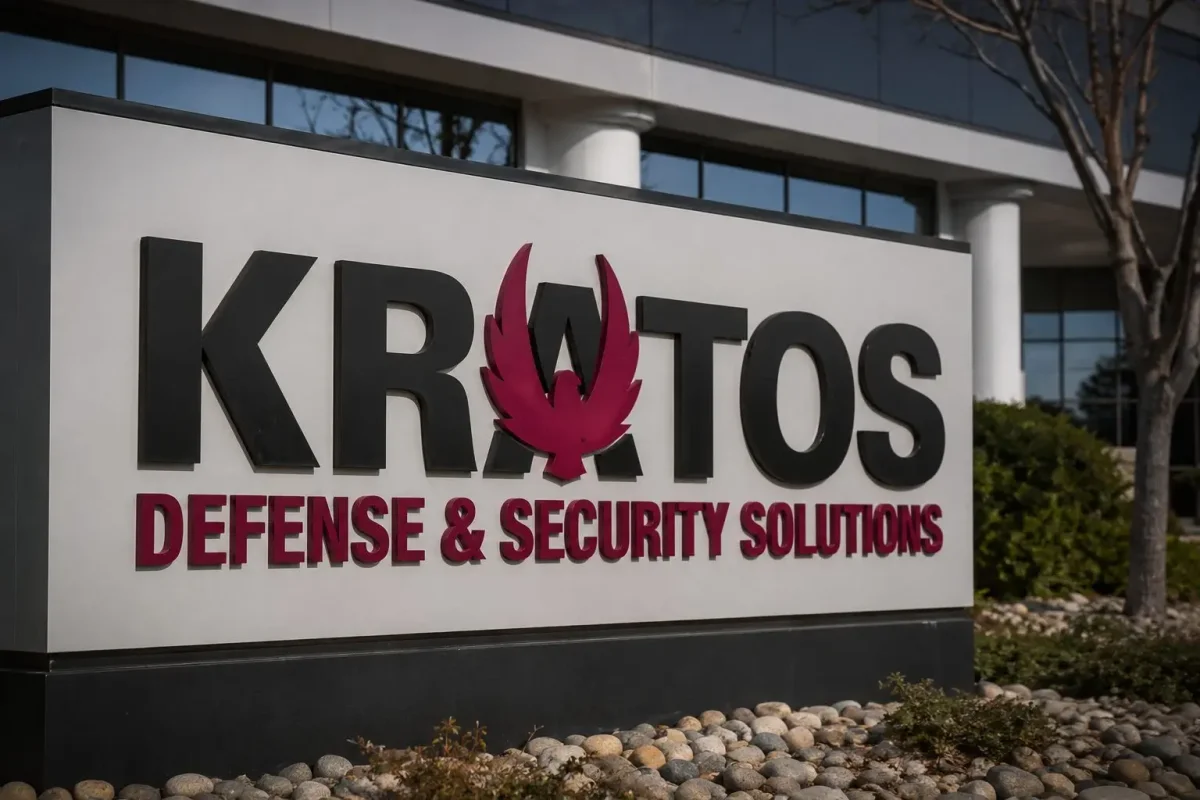
Kratos Defense & Security Solutions (NASDAQ:KTOS) saw its stock climb 4.6% late in the morning session on Tuesday, joining a broader rally in drone-related equities. However, the shares traded below the opening price and well off the session high of $51.45, settling at $49.13. The move came after AeroVironment (NASDAQ:AVAV) reported strong fiscal fourth-quarter results, which lifted sentiment across the drone space.
Backlog Composition Shifts
While the market often classifies Kratos as a drone play, the company’s own data tells a different story. In the first quarter, Unmanned Systems contributed $82.6 million, or 22.3% of total revenue. The backlog for that segment stood at $375.4 million, representing 18.7% of the total $2.01 billion backlog. This is a notable decline from prior periods, signaling a strategic pivot toward other defense areas. Government Solutions, which includes hypersonics, rocket technology, propulsion, satellite ground systems, and microwave electronics, accounted for $288.4 million in revenue (77.7%) and $1.635 billion in backlog (81.3%).
Guidance and Strategic Investments
Kratos provided its 2026 revenue guidance in the range of $1.70 billion to $1.76 billion, with adjusted EBITDA between $170 million and $176 million. The company expects to use free cash flow in the range of $85 million to $105 million, reflecting heavy capital expenditures of $155 million to $165 million. CEO Eric DeMarco noted that “the Department’s demand signals are real,” and the firm is investing to expand manufacturing capacity, including plans to build about 40 Valkyrie jets annually by late 2027. Additionally, Kratos aims to boost production of its Spartan turbojet engine to 3,000 units next year, driven by increasing demand for low-cost propulsion systems as missile stockpiles are replenished.
Market Context and Valuation
The stock has fallen approximately 42% from the $84 price set in a February equity offering, raising concerns about cash management and backlog conversion. Despite the recent uptick, Kratos trades at about 289 times trailing earnings, leaving little room for execution missteps. Sell-side analysts remain bullish, with a consensus Buy rating and an average price target of $90.76, including a JPMorgan target of $82. The company’s market cap stands at $8.81 billion, compared to AeroVironment’s $7.99 billion, implying a forward revenue multiple of roughly 5.1 times versus AeroVironment’s 4.0 times, suggesting investors are pricing in future growth.
Upcoming Catalysts
Kratos is scheduled to report second-quarter earnings on July 30, with consensus revenue estimates of $410.61 million. The broader defense sector, as measured by the SPDR S&P Aerospace & Defense ETF (NYSEARCA:XAR), rose 1.5% on the day, while the S&P 500 (SPY) gained 0.6%. The rally was led by AeroVironment, which saw its shares jump 15.5% after reporting fiscal Q4 revenue of $641.6 million, a 133% increase year-over-year. CEO Wahid Nawabi highlighted strong demand for both lethal and non-lethal drones, as well as counter-UAS and space technologies.