During a presentation at the Morgan Stanley Technology, Media & Telecom Conference, Lam Research Corporation's Chief Financial Officer, Doug Bettinger, provided a bullish outlook for the semiconductor equipment sector. He projected that worldwide wafer-fab equipment (WFE) expenditures are on track to climb to approximately $135 billion by 2026. This marks a significant increase from the estimated $110 billion spent in 2025.
Key Growth Drivers: AI, HBM, and Advanced Packaging
Bettinger identified several critical factors propelling this anticipated growth. High-bandwidth memory (HBM), a specialized form of DRAM essential for feeding data to artificial intelligence processors, represents a major demand source. Alongside this, advanced packaging techniques—such as stacking multiple chips to boost performance—are becoming increasingly vital. Lam Research holds a dominant position in a key step of this process called Through-Silicon Via (TSV) creation, which it estimates constitutes nearly the entire market.
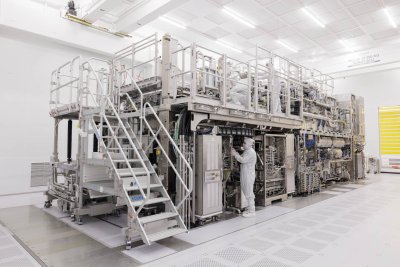
The CFO characterized the current industry environment as "clean room constrained," indicating that physical infrastructure limitations are currently capping the pace of expansion, even as demand signals remain exceptionally strong. He suggested that 2027 is also shaping up to be a robust year for the sector.
Market Context and Investor Sentiment
These comments arrive as market participants assess whether the artificial intelligence investment cycle is transitioning from a short-term ordering surge to a phase of sustained, multi-year capital expenditure in manufacturing capacity. For equipment suppliers like Lam, business cycles are often dictated by such practical bottlenecks as much as by corporate budgeting decisions.
Reflecting this positive sentiment, shares of Lam Research advanced roughly 2.3% in midday trading following the remarks. The stock's movement is closely tied to the broader semiconductor equipment group, which reacts to shifts in the outlook for AI server deployments and memory chip investment.
Geographic Revenue Mix and Competitive Landscape
Bettinger also addressed the company's geographic exposure, noting that China accounted for 35% of Lam's total revenue in the most recent quarter. He described the current wafer fab equipment market in China as relatively "flat-ish" for the current year. He acknowledged that domestic Chinese competitors are making gains with customers that are off-limits to U.S. equipment manufacturers due to export controls.
This exposure introduces notable risks. The potential for stricter controls on tool exports to China, or a slower-than-expected rebound in memory demand, could delay order timelines and pressure profitability, even if long-term spending plans remain intact.
Company Strategy and Outlook
For years, Lam has strategically diversified its business beyond its core strength in NAND flash memory equipment. The company has expanded its share in the foundry and logic segments while growing its revenue from services and upgrades to its large installed base of tools. This diversified approach is designed to provide stability should spending on memory chips decelerate in the future.
In late January, Lam provided its revenue outlook for the quarter ending in March, forecasting sales of $5.7 billion, plus or minus $300 million. Chief Executive Officer Tim Archer highlighted the company's broad portfolio as a key enabler, helping customers transition to more complex three-dimensional devices and sophisticated packaging solutions.
The fundamental test for Lam and its peers, such as Applied Materials, is whether chipmakers' actual equipment orders will align with their ambitious public statements about capacity expansion. Bettinger's emphasis on cleanroom shortages underscores a separate, physical bottleneck—the challenge isn't merely demand, but the speed at which new fabrication space can be built and outfitted with tools.