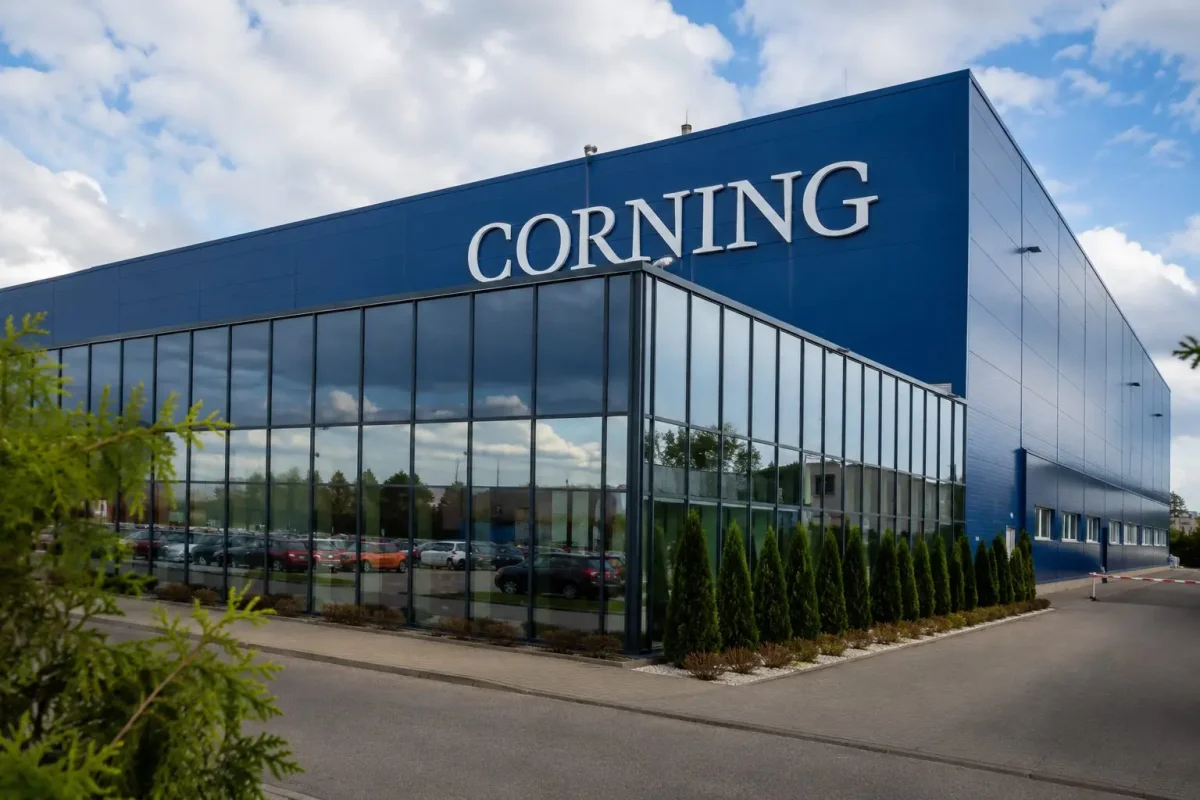
Corning Incorporated (NYSE: GLW) experienced a significant rally on Tuesday, with shares climbing 13.4% to $200.40 on exceptionally heavy trading volume. The stock hit an intraday high of $201.88 before settling, erasing the previous day's losses and capturing the attention of the broader market.
The surge was triggered by comments from Nvidia CEO Jensen Huang at the Computex conference in Taipei, where he highlighted the limitations of traditional copper-based interconnects in AI data centers and underscored the critical need for optical links. Fiber-based connections, which transmit data using light, are increasingly seen as essential for the massive data throughput required by large-scale GPU clusters. This shift in focus from pure chip plays to broader infrastructure components has broadened the AI investment theme.
Corning has positioned itself at the center of this trend through strategic partnerships. In early May, the company announced an agreement with Nvidia to dramatically expand its U.S. optical-connectivity production capacity by tenfold, boost domestic fiber output by over 50%, and establish three new manufacturing facilities in North Carolina and Texas, creating more than 3,000 jobs. Nvidia has provided a multi-billion-dollar prepayment to support these expansions, with the possibility of an equity investment of up to $3.2 billion, as confirmed by Corning CEO Wendell Weeks on CNBC.
Additionally, Corning's collaboration with Meta Platforms adds another layer of demand. In January, the two companies signed a multiyear agreement valued at up to $6 billion for fiber and connectivity supplies for U.S. data centers. This deal further solidifies Corning's role as a key supplier in the AI infrastructure buildout, moving beyond its traditional markets.
The company's fundamentals also support the bullish narrative. First-quarter core sales rose 18% year-over-year to $4.35 billion, with core earnings per share increasing 30% to $0.70. The Optical Communications segment was a standout, posting a 36% sales jump to $1.85 billion. Management has guided for second-quarter core sales of approximately $4.6 billion.
The broader market response was muted, with the S&P 500 edging up 0.13% and the Nasdaq adding just 0.03%, underscoring the stock-specific nature of the move. Mike Dickson of Horizon Investments noted "massive dispersion" across AI infrastructure stocks, as investors selectively rotate into hardware plays. Other optical networking companies also benefited: Marvell Technology surged 32.6% after Huang suggested it could become a "trillion-dollar company," while Coherent gained 17.6% and Lumentum rose 13.7%.
Despite the optimism, risks remain for Corning. The company still has significant exposure to consumer electronics and display markets, where weak replacement cycles and slower spending are pressuring demand. A $30 million hit from a solar-wafer maintenance shutdown in the second quarter also looms. Furthermore, the success of the Nvidia-driven expansion depends on execution, factory ramp-up efficiency, and supply chain stability.
Investors will now focus on second-quarter guidance, the pace of the Nvidia-related plant expansions, and whether optical order momentum can sustain beyond Tuesday's trading frenzy. Corning's ability to convert AI buzz into tangible revenue growth while maintaining margins will be the key test in the coming months.