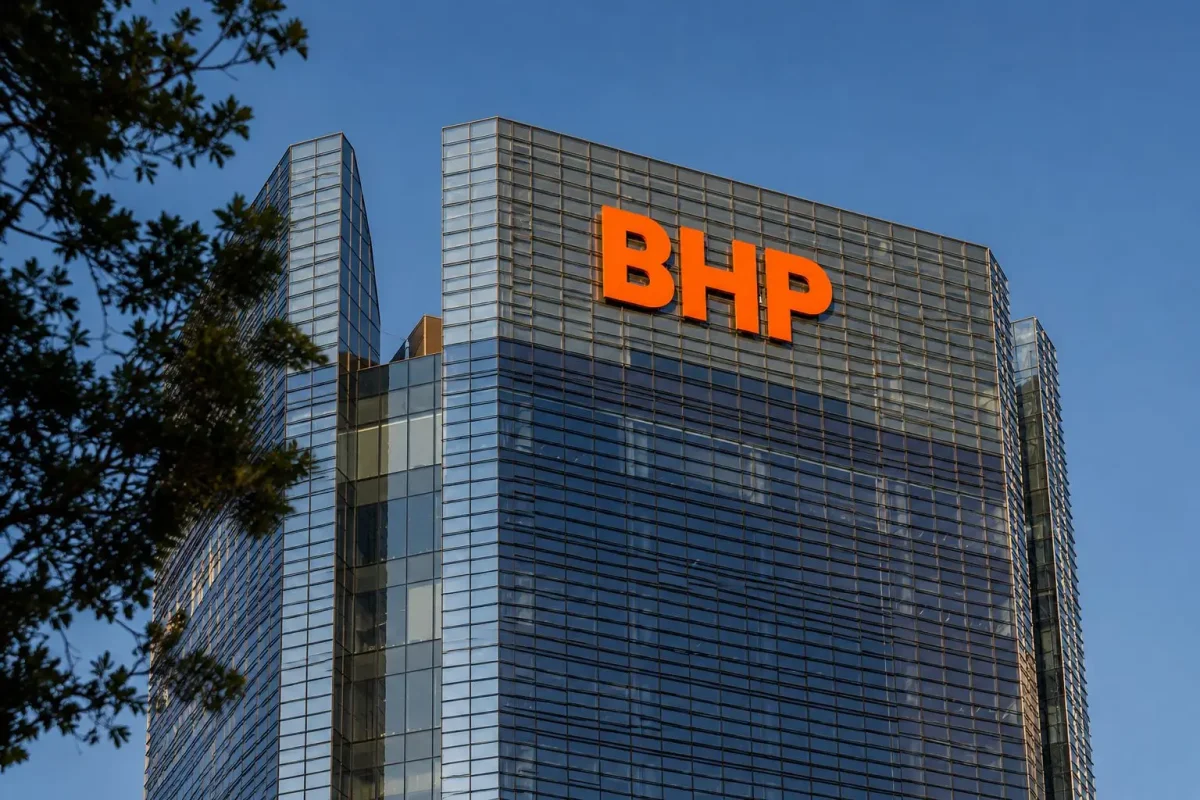
BHP Group Ltd (ASX: BHP) closed Friday at A$57.54, down 2.71%, as a sharply lower copper production outlook overshadowed record iron ore output and largely in-line quarterly results. The broader S&P/ASX 200 fell 0.50% on the day.
Copper Guidance Disappoints
BHP’s fiscal year 2027 copper production guidance midpoint of 1,725 kilotonnes represents an 11.7% decline from the 1,952.8 kilotonnes achieved in FY26. The company attributed the projected drop primarily to its Escondida operation in Chile, which accounts for roughly 92.7% of the 227,800-tonne decrease. Escondida’s guidance midpoint stands at 1,050 kilotonnes, down 16.7% from FY26 actual output of 1,261.2 kilotonnes.
The copper segment has become increasingly critical to BHP’s earnings, having contributed 51% of group underlying EBITDA in the first half of FY26—the first time it has represented a majority share. The lower volume guidance heightens the company’s sensitivity to copper price movements.
Iron Ore Provides Stability
In contrast to copper, BHP’s iron ore division posted a record 264.7 million tonnes for FY26, with realised prices rising 3% to US$84.56 per wet tonne. However, the FY27 guidance midpoint of 266 million tonnes represents only a modest 0.5% increase. Chief Executive Brandon Craig noted that cost control was particularly strong across operations.
BHP expects FY26 unit costs for its copper operations to come in at the low end of its previous guidance range.
Quarterly Results in Line
June quarter production figures were broadly as expected. Copper output of 491,900 tonnes was close to the Visible Alpha consensus estimate of 492,700 tonnes. Western Australia Iron Ore (WAIO) production of 74.8 million tonnes was just below the 75.1 million tonnes forecast.
Financial Outlook and Impairment
Based on preliminary estimates, BHP projects net debt of approximately US$9 billion as of June 30. The company also indicated an anticipated impairment of roughly US$2.3 billion related to its Jansen potash project. These figures are subject to final confirmation.
Port Hedland Labour Talks Resume
Negotiations with high-voltage electricians at Port Hedland are set to resume on Tuesday, July 21, with the Fair Work Commission in attendance. The workers approved industrial stoppages of up to 24 hours by a 97.5% margin. The port handles approximately US$80 million worth of BHP iron ore daily, adding operational risk.
Market Reaction and Risks
BHP shares declined nearly 5% over Thursday and Friday combined, compared to a 0.1% easing in the ASX 200 for the week. The magnitude of the move reflected investor concern over the copper production reset, rather than minor quarterly shortfalls. Key risks include a sharper-than-expected decline in Escondida ore grades, escalation of labour action, and softer metals prices. Additionally, a conveyor malfunction at Carrapateena could disrupt output for up to eight weeks.
BHP’s next major milestone is August 18, when the company will confirm its debt estimate and Jansen impairment as part of its full-year results announcement.