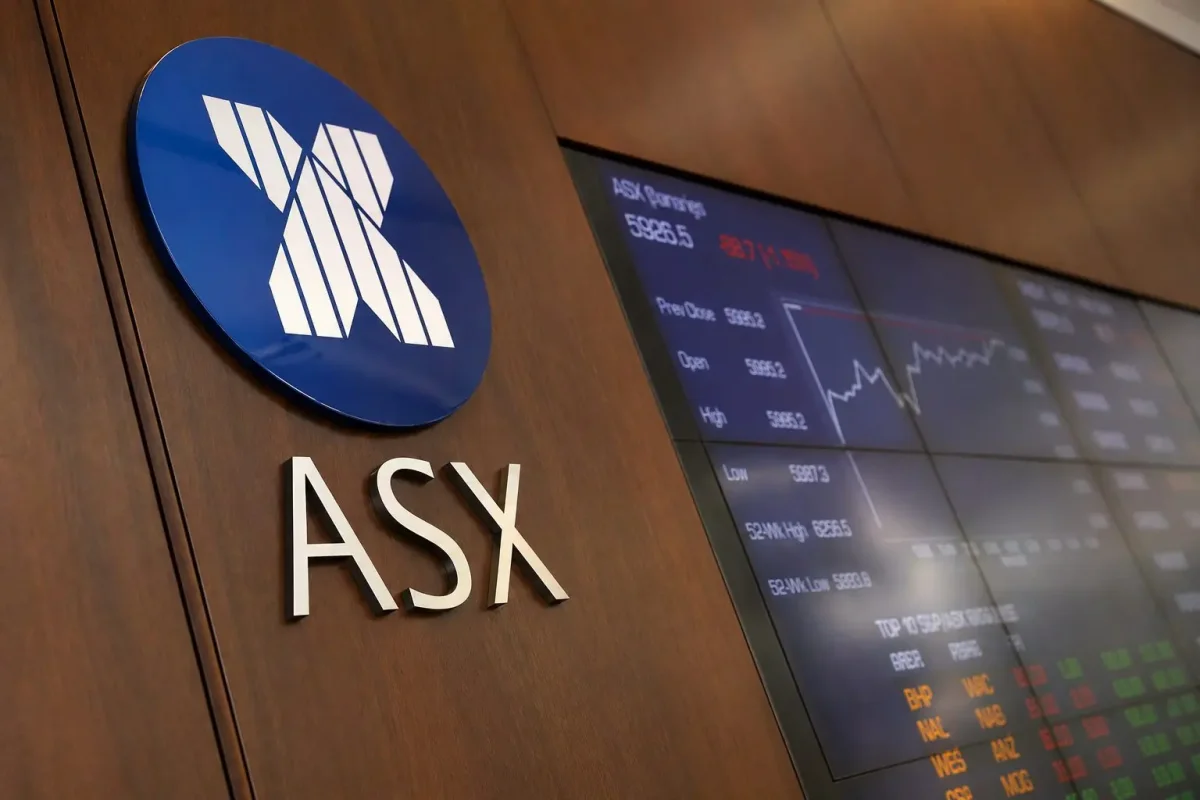
The Australian share market is poised for a cautious start on Friday, with SPI futures signaling a 0.2% decline as cash market trading commences. The initial direction remains tentative, reflecting mixed signals from global markets and domestic sector dynamics.
Global Cues and Local Composition
Overnight, U.S. technology shares delivered a sharp jolt, with the Nasdaq Composite sliding 1.47% and the Philadelphia Semiconductor Index tumbling 4.3%. The broader S&P 500 also retreated, shedding 0.51%. However, the impact on Australian equities is expected to be muted, given the distinct composition of the local benchmark. Technology stocks account for only about 2% of the S&P/ASX 200, compared to over 20% for chipmakers in the S&P 500. In contrast, financials and materials together represent close to 59% of the Australian index.
Thursday's Session Recap
On Thursday, the S&P/ASX 200 closed virtually flat, edging down 0.4 points to 8,840.7. Eight of the eleven sectors managed gains, but the overall performance masked significant divergence beneath the surface. Among ASX 300 stocks, 165 advanced while 108 declined.
Preliminary estimates indicate that financial stocks offset approximately 72% of the losses in the materials sector. The materials segment, which carries a 25.6% weight in the index, fell 1.58%, shaving roughly 35.8 index points. Meanwhile, financials, with a 33.3% weighting, gained 0.88%, contributing about 25.9 points. Additional sectors added nearly 9.5 index points, resulting in the flat finish.
BHP in Focus
BHP Group (ASX: BHP) was a notable drag, losing 2.34% to close at A$59.14. The mining giant reported a 3% decline in copper production for fiscal 2026, totaling 1.953 million tonnes, and guided for FY27 output between 1.65 and 1.80 million tonnes, citing reduced grades at its Escondida mine in Chile.
“The impact on the market following BHP’s production report has become widespread,” noted Michael McCarthy, strategist at Moomoo, in comments to AAP. The company also faces renewed disruption risk after 97.5% of high-voltage staff voted in favor of strike action. On Thursday, an eight-hour walkout occurred at Port Hedland, which handles approximately A$80 million in BHP iron ore shipments daily.
Banking Sector Provides Support
Banks were the primary source of support on Thursday. Commonwealth Bank of Australia (ASX: CBA) climbed 1.84% to A$173.13, while National Australia Bank (ASX: NAB) gained 1.25%. AMP (ASX: AMP) surged 9.8% after forecasting first-half underlying profit in the range of A$170–180 million.
Paul Nolte, strategist at Murphy & Sylvest, commented on the divergence between U.S. and Australian markets: “The performance is purely a result of how heavily weighted the chips are in the S&P 500. Sydney approaches the calculation differently.”
Key Events Ahead
The domestic economic calendar features the June labour-force report, due on Thursday at 11:30 AEST. Unemployment stood at 4.4% in May. The Reserve Bank of Australia is next scheduled to meet on August 10–11.
Risks to watch include a potential surge in oil prices, which could lift inflation and prompt higher rate expectations. Softer metals prices may further pressure miners, while extended strikes could intensify concerns around BHP.
Markets are expected to open cautiously on Friday, with the day's trajectory likely to depend on the performance of banking stocks and BHP. Exposure to chip stocks remains minimal, insulating the local market from the worst of the Nasdaq's decline.