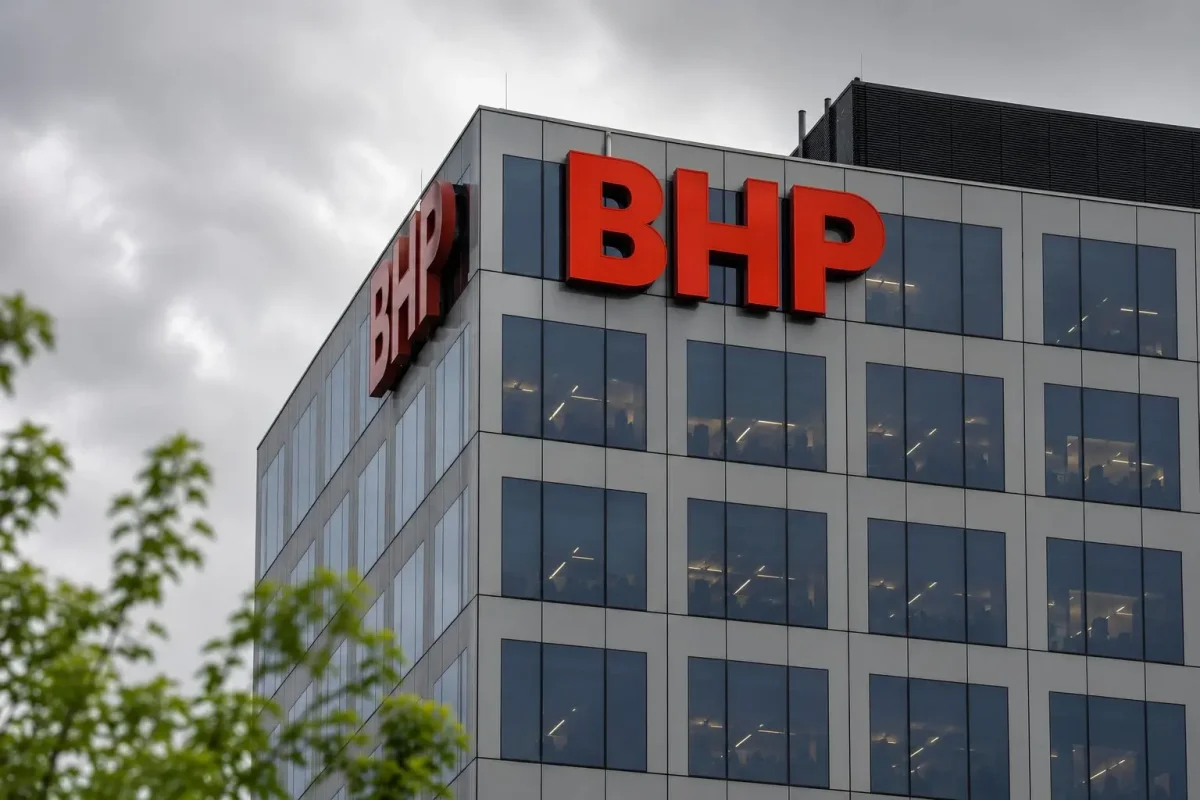
BHP Group (ASX:BHP) has signaled a significant reliance on sustained copper prices near current levels as it grapples with a projected 12% decline in output for fiscal 2027. The mining giant, in its production update on Thursday, indicated that it would need an average copper price of approximately US$6.50 per pound to compensate for the anticipated volume shortfall. This target is just a hair below the US$6.53 per pound realized in the June quarter of fiscal 2026.
The US$6.50 threshold represents a 13.2% premium over BHP's average realized copper price of US$5.74 per pound for the full fiscal year 2026. Copper has become an increasingly vital profit center for the company, accounting for 51% of group underlying EBITDA in the first half and generating a record US$8.0 billion in revenue.
Production Outlook and Grade Decline
BHP reported total copper production of 1.9528 million tonnes for fiscal 2026, a 3% year-on-year decline. For fiscal 2027, the company has set guidance in a range of 1.65 million to 1.80 million tonnes, with a midpoint of 1.725 million tonnes. This implies a reduction of 227,800 tonnes from the 2026 total. The bulk of this decline, approximately 93%, is attributed to the Escondida mine in Chile, where concentrator feed grades are expected to fall from 0.90% to about 0.70%. Despite record mining and concentrator throughput, the miner stated these efforts were insufficient to offset the grade deterioration.
CEO Brandon Craig highlighted cost control as a key strength, noting that all assets are expected to operate within unit cost guidance. BHP anticipates that Escondida, Spence, and Copper South Australia will end fiscal 2026 at the low end of their cost ranges, providing a buffer if copper prices soften. In contrast, iron ore output reached a record 264.7 million tonnes in FY2026, with guidance pointing to a midpoint of 266 million tonnes for FY2027.
Price Sensitivity and Open Positions
The copper price calculation is based on production rather than sales and excludes factors such as product mix, shipment timing, treatment charges, and future price adjustments. BHP noted that as of June 30, it had 429,000 tonnes of copper sales still unsettled, marked at a weighted average price of US$6.07 per pound. These final prices will be locked in during fiscal 2027. For every 10-cent swing in the copper price from this level, the gross value of these open positions changes by approximately US$95 million, before tax and other adjustments. This open position represents about 22% of expected FY2026 copper output.
Financial Position and Operational Risks
BHP's preliminary net debt stood at around US$9 billion on June 30, down sharply from US$14.686 billion at the end of December, and below its target range of US$10 billion to US$20 billion. The improvement was driven by roughly US$4.3 billion in proceeds from the Antamina silver-streaming deal, partially offset by an expected US$2.3 billion impairment at Jansen and about US$5 billion in capital and exploration spending in the second half. Final accounts are due in August.
The company also faces a planned work stoppage at Port Hedland on Thursday, with several hundred employees set to walk off for eight hours. The port handles about US$80 million of iron ore for BHP daily. BHP has contingency plans in place, and talks are scheduled to resume on July 21. Meanwhile, a conveyor issue at the Carrapateena mine could keep that operation offline for up to eight weeks.
Rio Tinto (ASX:RIO), a competitor in both iron ore and copper, has maintained its 2026 copper target of 800,000 to 870,000 tonnes, with first-half output up 1% at 442,000 tonnes. BHP's near-term outlook is more bearish, with double-digit volume cuts expected.
The copper price test cuts both ways: if prices stay near the provisional Q4 level, they could offset some lost volume, but a fall back to the FY2026 average would fully expose the gap. The company's August 18 results will provide the first full picture of whether lower debt and tight cost controls are sufficient to navigate the coming year.