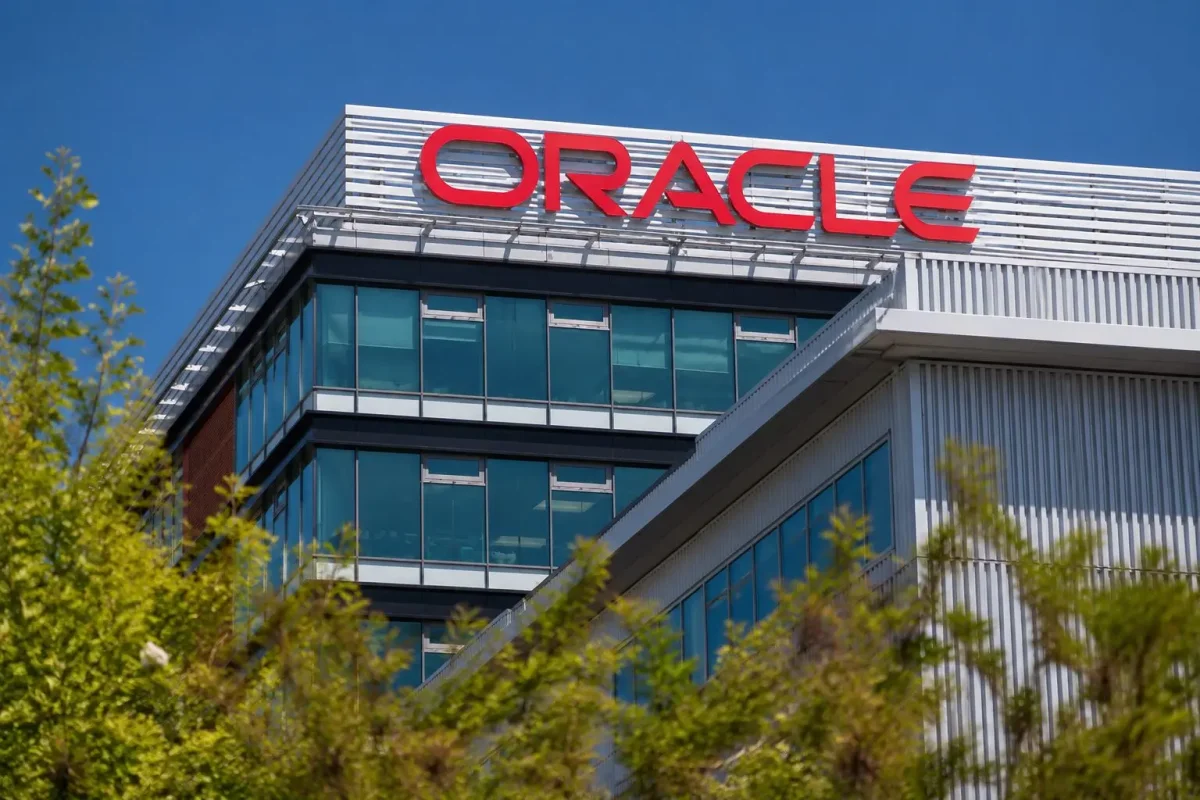
Oracle Corporation (NYSE:ORCL) faces a critical market test as its massive AI-driven order book struggles to convert into cash fast enough to offset the debt and equity needed for data center construction. The stock closed Friday at $140.64, down 2.48%, reflecting investor skepticism about the company's ability to balance its ambitious AI infrastructure build with its balance sheet.
Credit Rating Downgrade
S&P Global Ratings (NYSE:SPGI) cut Oracle's credit rating one notch to BBB-, the lowest investment-grade rating, while maintaining a stable outlook. The agency cited the AI infrastructure build as weakening Oracle's business risk profile. S&P now estimates fiscal 2027 capital spending between $90 billion and $95 billion, up from its previous $60 billion forecast, and projects a free operating cash flow deficit of nearly $42 billion.
Order Book vs. Cash Reality
Oracle's remaining performance obligations (RPO) reached $638 billion, representing 9.5 times its fiscal 2026 annual revenue of $67.4 billion. However, the company reported negative free cash flow of $23.7 billion in fiscal 2026, as data center construction consumed cash faster than contracts turned into revenue. CEO Clay Magouyrk noted that Oracle signed $67 billion in AI infrastructure contracts in the latest quarter, with prepaid or customer-supplied hardware totaling $75 billion, which reduces hardware costs but does not eliminate construction and delivery risks.
Funding Equation
Oracle plans approximately $40 billion in debt and equity financing for fiscal 2027, about 95% of S&P's projected cash deficit. While the company has customer prepayments and other cash sources, the near one-for-one scale suggests that additional bookings alone may not lift the stock. The key question is whether each dollar of contracted demand requires less outside capital.
Market Context
In the week ended July 10, Oracle gained just 0.26%, underperforming the S&P 500's 1.23% and the Nasdaq Composite's 1.74% gains. On Friday, Oracle fell while the information-technology sector rose 1.65%, indicating company-specific selling rather than a broad AI retreat. The stock's 2.48% drop included a $0.50 quarterly dividend, meaning the economic loss was about 2.14%.
Regulatory Developments
On Monday, July 13, UK regulators will begin direct oversight of Oracle, Microsoft (NASDAQ:MSFT), Amazon (NASDAQ:AMZN), and Alphabet's Google (NASDAQ:GOOGL) as critical suppliers to the financial sector. This requires resilience tests and incident reports, underscoring the four clouds' central role, though added compliance costs are unlikely to settle Oracle's funding debate.
Upcoming Catalysts
The first major test is macro: U.S. consumer price data arrives Tuesday, July 14, followed by producer prices Wednesday and retail sales Thursday, while Federal Reserve Chair Kevin Warsh testifies before Congress. Michael Reynolds, vice president of investment strategy at Glenmede, noted markets face "a number of crosscurrents." Anthony Saglimbene, chief market strategist at Ameriprise Financial (NYSE:AMP), warned that hotter inflation could "push odds of a rate increase higher by year end," which would raise borrowing costs for a BBB- borrower with a heavy financing plan.
Outlook
The risk case could worsen quickly if data center delivery slips or customer take-up slows, delaying revenue while interest and construction costs persist. The upside depends on meeting the first-quarter growth guide of 27%-29% revenue growth and narrowing the cash deficit faster than S&P expects. Until Oracle proves its cash conversion ability, the $638 billion order book and BBB- rating will pull the shares in opposite directions.