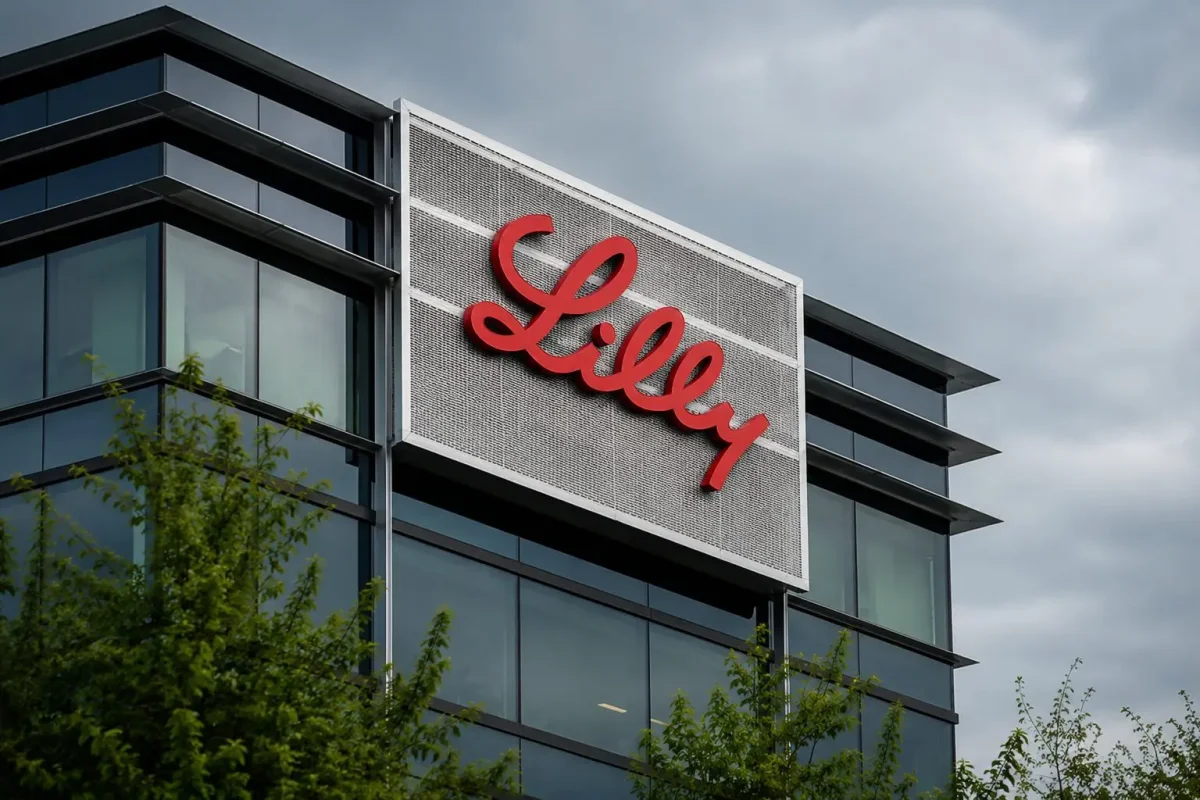
U.S. markets were closed Friday for Independence Day, but the final trading session of the week saw Eli Lilly and Company (NYSE:LLY) climb 1.86% to close at $1,213.91 on Thursday, July 2. The stock is now less than 2% below its 52-week high of $1,238.00, set on June 29, as it heads into the holiday-shortened period near record levels.
However, Lilly's gain was not the standout move in the healthcare sector. The Health Care Select Sector SPDR Fund (NYSEARCA:XLV) rose 2.65% on the day, outpacing the S&P 500, which edged down 0.11%. While Lilly is XLV's largest holding at 16.34% of the fund's weight, other major pharmaceutical names delivered a larger boost to the ETF's performance.
Johnson & Johnson (NYSE:JNJ) added approximately 0.38 percentage point to XLV's return with a 3.54% gain, while AbbVie Inc. (NYSE:ABBV) contributed about 0.31 point after rising 3.99%. By comparison, Lilly's contribution was roughly 0.28 point. The top 10 holdings collectively added about 1.65 points to XLV's 2.65% advance, underscoring a broad-based rally rather than a single-stock-driven move.
GLP-1 Franchise Remains Central
The core narrative for Lilly continues to revolve around its GLP-1 portfolio. Mounjaro generated $8.66 billion in revenue last quarter, and Zepbound added $4.16 billion. Combined, these two drugs accounted for approximately 65% of Lilly's total quarterly revenue of $19.80 billion, according to the company's latest financial report.
Last week, Lilly announced an access initiative that could reshape the Medicare landscape for obesity drugs. Under the Medicare GLP-1 Bridge program, eligible Part D patients may pay $50 per month for Foundayo or Zepbound. Coverage begins July 1 and extends through December 31, 2027. Ilya Yuffa, Eli Lilly executive vice president and head of Lilly USA and Global Customer Capabilities, noted that about 20 million Medicare patients may meet clinical criteria for obesity medicines.
Generic Tirzepatide Filings Loom
On the risk front, new developments emerged this week. The U.S. Food and Drug Administration has agreed to review two generic tirzepatide GLP-1 applications from Sandoz Group AG (SWX:SDZ), according to a Reuters report on Monday. Additionally, Hybio Pharmaceutical Co Ltd (SHE:300199) announced on Tuesday that the FDA will also review two of its experimental generic tirzepatide filings. Both reports highlight that Lilly's U.S. tirzepatide patent extends until 2036, but the generic applications introduce uncertainty around the timeline for potential competition.
Lilly also pared back its involvement in an older China cancer drug. Innovent Biologics Inc. (HKG:1801) will take over sole commercialization of Verzenios in mainland China, while Lilly retains responsibility for manufacturing, supply, and development. Jefferies analyst Cui Cui described the deal as a late-lifecycle management move from Lilly's perspective, allowing Innovent to leverage its local commercial strength.
Market Implications
With Lilly commanding such a large weight in XLV, the stock can significantly influence the ETF's performance. However, last week's trading showed that money flowed into other healthcare names as well. For Lilly, this dynamic cuts both ways: a rising tide in healthcare benefits the stock, but headwinds from weight-loss drug pricing, payer coverage, and generic competition remain key concerns.
As markets reopen Monday, all eyes will be on how Lilly's Medicare access program and the generic tirzepatide applications unfold. The stock's near-record level suggests strong investor confidence in the GLP-1 franchise, but the broader healthcare rally indicates that the sector's momentum is not solely dependent on Lilly's performance.