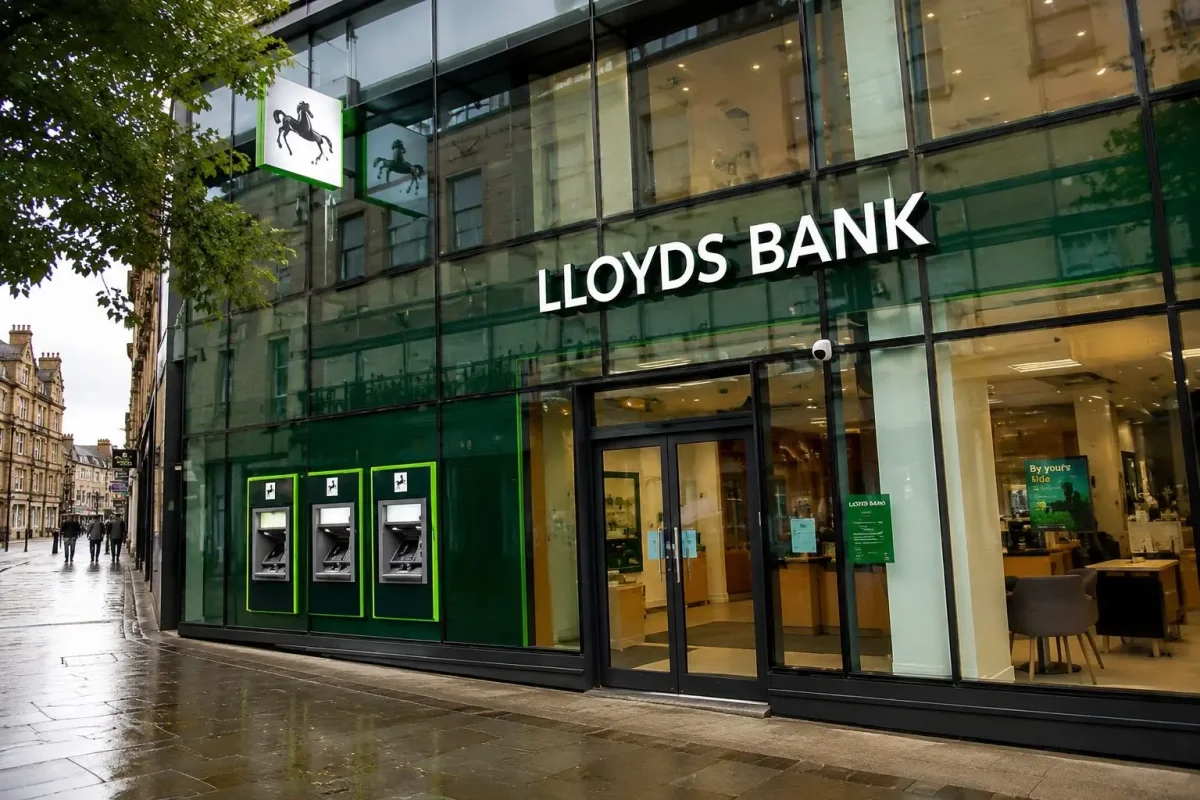
Lloyds Banking Group shares edged higher on Wednesday, closing at 105.3p after a 1.68% gain, as a broader rally in UK domestic banks helped offset lingering concerns about interest rate margins. The stock outperformed the FTSE 100, which rose just 0.14% on the day.
UK inflation held steady at 2.8% in May, slightly below economists' forecasts of 3.0%, according to Reuters data. The reading reinforced expectations that the Bank of England will maintain a cautious stance at its upcoming rate decision on Thursday, with Bank Rate currently at 3.75%.
NatWest and Barclays also advanced, with Barclays receiving an additional boost from a Bank of America price-target increase of 30p to 600p. Interactive Investor reported NatWest shares rose to 635.8p and Lloyds to 105.6p as an improved demand outlook partially offset the potential loss of margin-enhancing rate hikes.
For Lloyds, the balance is particularly delicate. As a UK-focused lender with a loan book heavily weighted toward mortgages—which account for 66% of its portfolio, according to AJ Bell—the bank is highly sensitive to changes in interest rates. A less aggressive Bank of England could support household demand and credit quality, but fewer rate increases may also limit net interest income, the difference between what the bank earns on loans and pays on deposits.
Despite the positive inflation data, risks remain. Services inflation, a key metric watched by the Bank of England for domestic wage and cost pressures, rose to 3.7% in May. Rob Wood, chief economist at Pantheon Macroeconomics, told Reuters that “a chunk of inflation is locked in the system now,” though he no longer expects a rate hike this year. KPMG chief economist Yael Selfin noted that the data strengthens the case for a continued cautious approach from the central bank.
Lloyds entered Wednesday's session with solid fundamentals. In its first-quarter results, the bank reported net income of £4.8 billion, up 9% year over year, operating costs of £2.5 billion, down 3%, and statutory profit after tax of £1.6 billion, a 37% increase. Chief Executive Charlie Nunn highlighted the group's sustained financial performance and reiterated 2026 guidance.
Looking ahead, the stock faces macro risks. If energy or services costs push inflation higher again, the Bank of England may need to keep policy tighter for longer, squeezing borrowers and the housing market. Conversely, if rates fall, Lloyds may face pressure on lending spreads unless loan growth and credit quality improve sufficiently to offset the impact.
Investors are now focused on the Bank of England's rate decision on Thursday and Lloyds' half-year results on July 30, when the company will provide further details on strategic progress. Until then, the shares are likely to trade more on UK rate expectations, mortgage affordability, and the performance of peers like Barclays and NatWest.