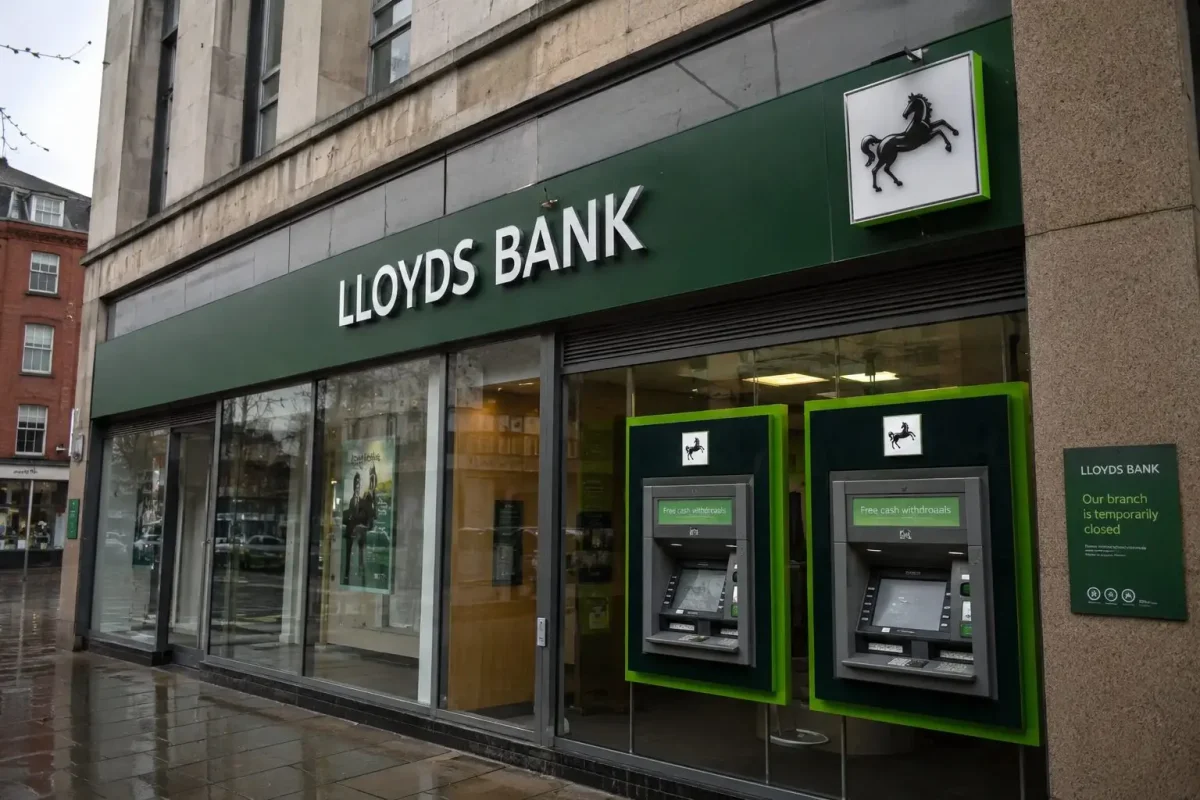
Lloyds Banking Group saw its shares decline on Thursday, opening lower in London as a new share buyback and a government-backed lending initiative failed to counterbalance a broader market downturn fueled by escalating geopolitical tensions in the Gulf region.
The stock traded near 101.4 pence, marking a 0.6% decrease from the previous close, though it remained just above the psychologically important £1 threshold. Intraday, the shares fluctuated between 101.15p and 101.75p, reflecting investor uncertainty as they weighed positive company-specific developments against deteriorating macroeconomic conditions.
Buyback and Green Loan Details
After Wednesday's market close, Lloyds repurchased 5 million ordinary shares through Goldman Sachs International at a volume-weighted average price of 101.8935p per share. These shares are slated for cancellation, part of a broader £1.75 billion buyback program announced in January.
Additionally, Lloyds unveiled a £500 million lending partnership with the National Wealth Fund aimed at helping UK universities improve energy efficiency and transition to low-carbon heating systems. The National Wealth Fund will provide up to £350 million in guarantees to back the loans. Lloyds estimates the initiative could upgrade up to 300 campus buildings and support around 4,000 jobs.
Amanda Murphy, Lloyds' head of business and commercial banking, described the deal as “unlocking targeted funding” for decarbonizing university estates. National Wealth Fund CEO Oliver Holbourn called universities “a significant national asset.”
Market Context and Sector Performance
The broader market turned negative on Thursday, reversing gains from the prior session. Oil prices surged nearly 4% as fighting in the Gulf escalated, with Brent crude and U.S. West Texas Intermediate both rallying sharply, according to Reuters. European equity futures also slipped, reflecting the risk-off sentiment.
On Wednesday, UK banks had enjoyed a positive session, with Barclays closing 0.60% higher, NatWest gaining 0.54%, and Lloyds rising 0.49%. The FTSE 100 added 0.13%. However, the tide turned as geopolitical concerns took center stage.
Financial Performance and Outlook
Lloyds reported first-quarter statutory pre-tax profit of £2.025 billion, up 33% year-over-year. Underlying net interest income rose 8% to £3.569 billion, reflecting the benefit of higher interest rates on the bank's lending and securities portfolio. CEO Charlie Nunn highlighted the group's “sustained strength in financial performance.”
For 2026, Lloyds reaffirmed its targets, including underlying net interest income exceeding £14.9 billion, a cost-income ratio below 50%, and a return on tangible equity above 16%. However, risks remain. A prolonged oil price shock could push UK inflation higher, straining borrowers and potentially increasing credit losses. Other uncertainties include motor finance redress costs and elevated credit costs.
Morningstar senior equity analyst Niklas Kammer noted that rising credit costs represent the key valuation risk for UK banks. He considers Lloyds shares “fairly valued” at his 97p fair value estimate.