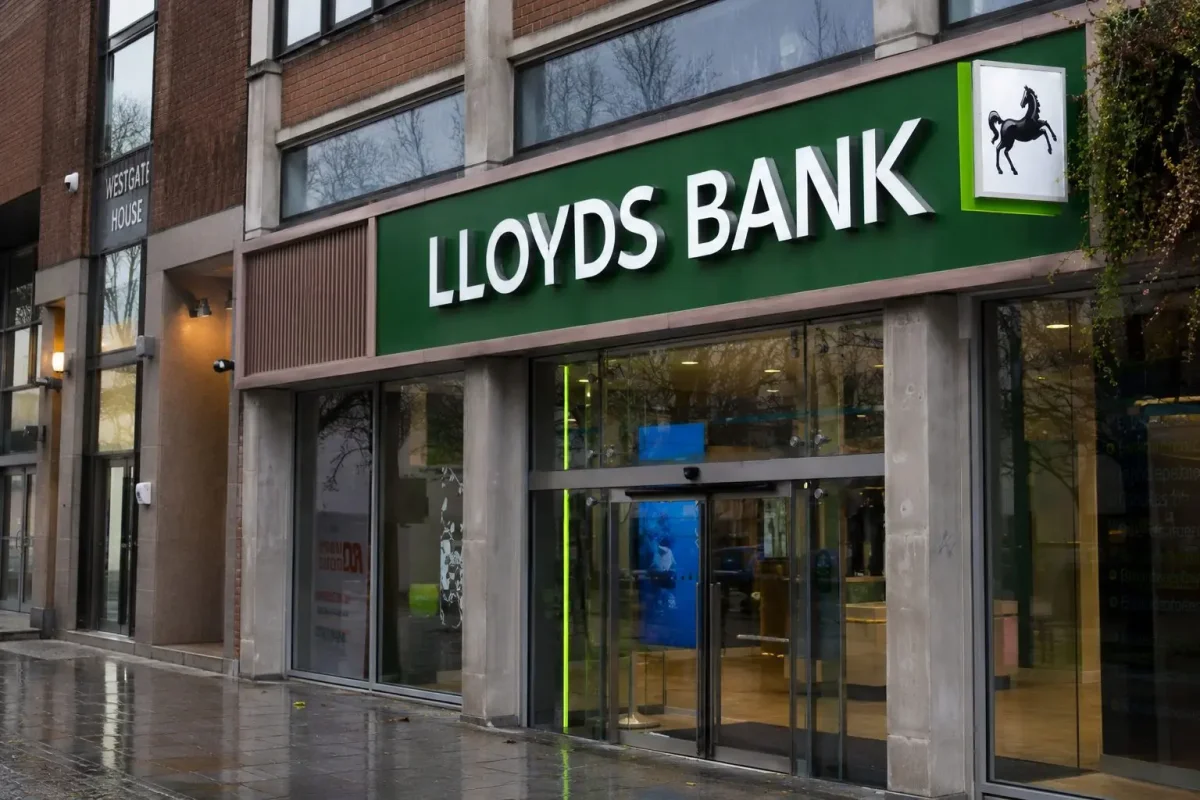
Lloyds Banking Group shares closed at 99.06p on Monday, a modest 0.1% decline, after briefly surpassing the 100p threshold during intraday trading. The stock fluctuated between 98.00p and 100.68p as investors weighed the implications of ongoing share buybacks, reductions in mortgage rates, and a relatively calm macroeconomic environment for UK lenders.
Market Context and Peer Performance
Lloyds is widely regarded as the most domestically focused listed bank in the UK, with its performance closely tied to consumer spending, housing market trends, and interest rate expectations. Movements in mortgage demand, savings product offerings, and Bank of England policy decisions typically have a more pronounced impact on Lloyds than on its more internationally diversified peers.
The broader market showed signs of stabilization after a volatile session. The FTSE 100 index ended nearly flat at 10,373.2, recovering earlier losses as oil prices retreated from their highs linked to geopolitical tensions between Israel and Iran. UK banking stocks as a group edged up 0.4%, according to Reuters data, with HSBC adding approximately 1%.
Among domestic peers, Barclays slipped 0.17% to 456.85p, while NatWest gained 0.91% to 599.20p, positioning Lloyds closer to Barclays in relative valuation.
Share Buyback and Capital Management
Lloyds announced on Monday that it had repurchased 10 million ordinary shares from Goldman Sachs International at a volume-weighted average price of 99.4114p. This buyback is part of the bank’s ongoing capital return program, and the shares will be subsequently cancelled. The use of volume-weighted average pricing ensures that larger trade volumes carry proportionally greater weight in the calculation.
Additionally, Lloyds confirmed that £750 million of 5.500% fixed-rate reset callable notes due 2033 are now listed on the London Stock Exchange’s Main Market. These callable notes provide the bank with the option to redeem them early at specified dates, depending on its funding requirements and prevailing market conditions.
Mortgage Rate Reductions and Competitive Pressures
Lloyds and its subsidiary Halifax have reduced selected mortgage rates by up to 0.10% for homemovers, first-time buyers, and remortgage customers, effective Monday. Amanda Bryden, head of mortgages at Lloyds, noted that rates had risen earlier due to global events but that the market is now experiencing a “period of calm” as borrowing costs ease.
While these cuts may stimulate lending volumes, they also underscore the intensifying competition in the UK mortgage market. Given Lloyds’ substantial mortgage portfolio, even modest rate adjustments can weigh on revenue as they flow through to new loans and refinancing activity.
Economic Outlook and Net Interest Income Forecast
Speaking at a Goldman Sachs financials conference last week, Lloyds Chief Financial Officer William Chalmers described the UK macro outlook as a “picture of stability” and characterized customer behavior as “pretty constructive.” He stated that the bank has not observed any deterioration in asset quality to date.
Chalmers outlined the bank’s base-case assumptions for 2026, which include no UK interest rate cuts, GDP growth of approximately 0.5%, and an unemployment peak near 5.6%. On this basis, Lloyds forecasts net interest income—the difference between earnings from loans and securities and the cost of deposits and funding—above £14.9 billion for 2026. The net interest margin for the first quarter was reported at 3.17%, and the structural hedge is expected to contribute over £7 billion this year.
Risks and Competitive Dynamics
Despite the relatively stable outlook, downside risks remain. A renewed surge in oil prices could reignite inflationary pressures and keep interest rates elevated. Intensified competition for deposits may force Lloyds to increase savings rates, while mortgage price cuts aimed at driving new lending could compress net interest margins if the battle for market share heats up. Chalmers acknowledged that competition in both loans and deposits remains a challenge.
Crude oil prices, while off their intraday highs, stayed elevated, according to Reuters, adding to the uncertainty.
Conclusion
Lloyds shares ended Monday just shy of the £1 mark, reflecting the balance between stronger capital returns and higher rate income on one side, and the pressures of a competitive UK mortgage and savings market on the other. The stock’s trajectory will likely depend on how these forces evolve in the coming months.