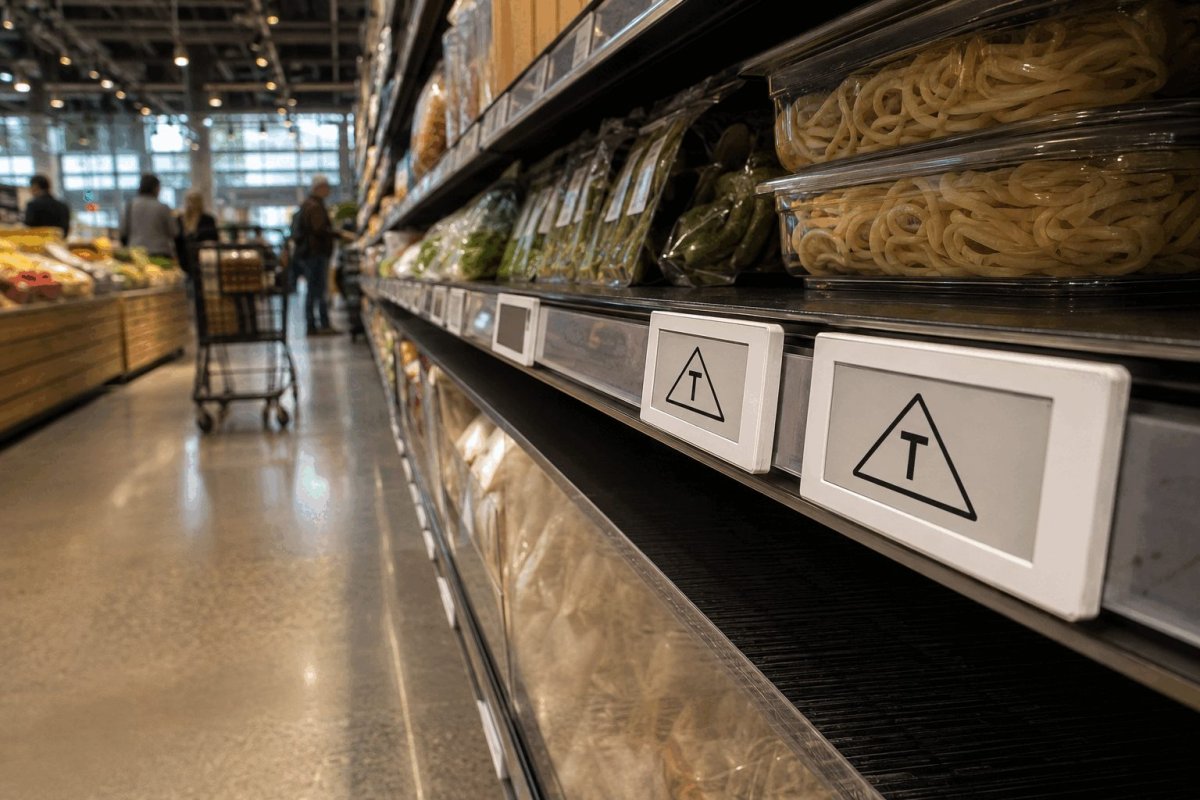
Loblaw Companies Limited (TSX:L) is reinstating its distinctive black-triangle “T” shelf tags to flag products whose prices are affected by tariffs, as trade tensions between Canada and the United States continue to ripple through the retail sector. The move, announced Wednesday, comes as the company seeks to maintain transparency with consumers while navigating a more complex import landscape.
Scope of the Labeling Initiative
CEO Per Bank said the labels will initially appear on a limited assortment of goods, with the program expected to expand as additional tariffs take effect. The company also plans to reintroduce country-of-origin labels on fresh produce, with Canadian items continuing to feature maple-leaf symbols. This marks the second time Loblaw has deployed the “T” marker; the first was last year when U.S. tariffs drove up prices on a range of imported goods.
“We are in a stronger position now,” Bank stated, citing the company’s increased reliance on domestic and non-U.S. suppliers, which has reduced its exposure to disrupted supply chains. However, Loblaw has not disclosed the proportion of sales or the cost base represented by the items being relabeled.
Financial Context and Margin Sensitivity
The development is significant because even minor fluctuations in merchandise costs can have outsized effects on a company of Loblaw’s scale. In its most recent quarter, the retailer reported retail revenue of C$15.046 billion and a retail gross margin of 32.2%. A 10-basis-point adjustment to that revenue base translates to approximately C$15.0 million in gross profit, equivalent to 1.25% of the quarter’s retail operating income. This sensitivity analysis underscores how tariff-related cost pressures could influence the bottom line, though it is not an estimate of actual tariff costs.
Market Reaction and Peer Performance
Investors appeared largely unfazed by the announcement. Loblaw’s shares traded at C$61.26 as of 12:34 EDT, up 0.01% on the day, within a session range of C$61.12 to C$61.70. The company’s market capitalization stood at C$70.82 billion, with a price-to-earnings ratio of 25.93. The muted response suggests that the market has yet to assign a definitive earnings impact to the labeling initiative.
Peer grocers also showed minimal movement: Metro Inc. (TSX:MRU) slipped 0.21%, while Loblaw’s parent company, George Weston Limited (TSX:WN), declined 0.27% at the same time.
Analyst Outlook
Broker sentiment remains cautiously optimistic. As of August 6, seven analysts had issued a “Moderate Buy” consensus, comprising four buy ratings, one strong buy, and two holds. Their average price target of C$71 implies potential upside of 15.9% from the current share price.
Operational Performance and Risks
Loblaw’s second-quarter results, released earlier this month, showed resilience. Food retail sales climbed 3.3% year-over-year, with same-store food sales up 1.6% and e-commerce food sales surging 19.3%. Total retail revenue rose 4.1% to C$15.046 billion, while gross margin expanded by 10 basis points to 32.2%. Operating income increased 2.9% to C$1.202 billion, and adjusted EBITDA grew 5.3% to C$1.841 billion. Retail free cash flow came in at C$856 million, up C$235 million from the prior year.
Despite these strong metrics, the company faces several headwinds. The tariff labeling program may not be broad enough to materially affect overall results, and ongoing trade measures could continue to push up procurement costs. Additionally, shifting to alternative suppliers might limit product selection or increase logistics expenses. On the upside, local sourcing and targeted price adjustments could offset a significant portion of the cost pressures.
Key Metrics to Watch
Investors should monitor Loblaw’s category coverage, supplier composition, and retail gross margin in the coming quarters. Any margin movement beyond the recent 10-basis-point quarterly shift would bring the financial impact of tariffs into sharper focus.