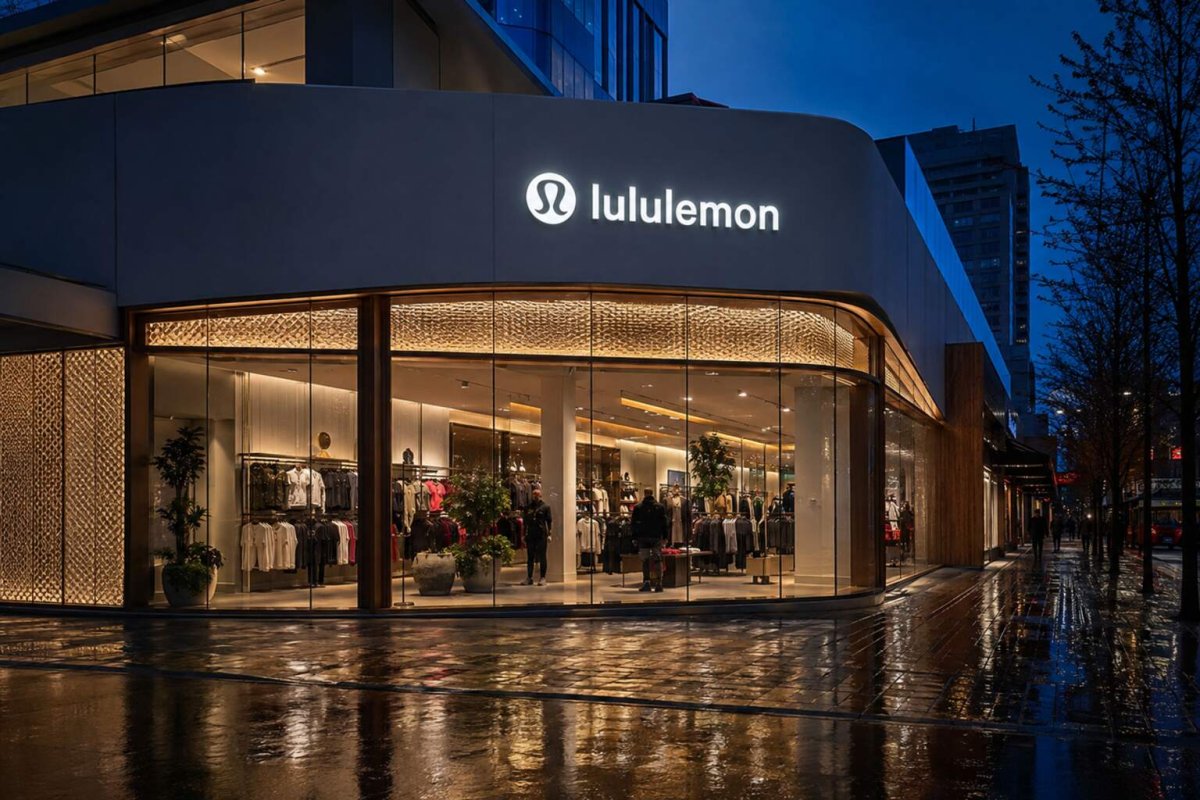
Lululemon Athletica Inc. (NASDAQ:LULU) experienced its steepest single-day decline in years on Friday, as investors digested a quarterly report that revealed underlying weakness beneath a superficially strong profit figure. The athletic apparel retailer's shares closed at $100.61, down 17.4% from the previous session, marking an eight-year low. The selloff, which came on 37.4 million shares traded—more than double Thursday's volume—erased approximately $2.5 billion in market value and wiped out gains from the prior seven sessions.
The catalyst for the market's reaction was the revelation that a $134.5 million tariff refund had artificially inflated the company's reported earnings. While the headline gross margin of 60.5% appeared to show a 200-basis-point improvement year-over-year, excluding the refund, the underlying gross margin was just 54.9%—a 360-basis-point decline from the 58.5% reported a year earlier. Similarly, reported diluted earnings per share (EPS) of $2.92 included $0.86 from the refund, meaning core EPS was only $2.06, a 33.5% drop from the $3.10 reported in the same quarter last year.
The distinction is critical for incoming Chief Executive Heidi O'Neill, who is set to take the helm on September 8. She inherits a company facing significant headwinds in its key North American market, where comparable sales fell 12% in the second quarter. Overall, comparable sales declined 9%, and Americas revenue dropped 8% year-over-year. International revenue, which grew 4%, provided some offset, but the core business is clearly contracting.
Guidance Misses Expectations
Looking ahead, Lululemon's third-quarter guidance fell well short of analyst expectations. The company projects revenue in the range of $2.29 billion to $2.32 billion and EPS between $0.93 and $0.98. The midpoints of these ranges are approximately 8.9% and 60.4% below prevailing consensus estimates, respectively. For the full fiscal year, revenue guidance now implies a 5% to 7% decline, a significant revision from earlier expectations.
The magnitude of the EPS miss is particularly concerning, as it suggests that the company's profitability is under pressure beyond just the one-time tariff benefit. The tariff refund, which was received under the International Emergency Economic Powers Act, is not expected to recur, and the company's guidance assumes no further refunds. This means that the year-over-year comparisons will become even more challenging in the coming quarters.
Analyst Reaction and Valuation
Wall Street responded swiftly to the disappointing results. At least 12 brokerages lowered their price targets on Lululemon stock, according to Reuters. Guggenheim analyst Simeon Siegel described the company as "a powerful brand but an overstretched one," highlighting the tension between its strong brand equity and the operational challenges it now faces.
The stock's forward earnings multiple has contracted to approximately 11.5 times, a significant discount to peers like Nike (NYSE:NKE), which trades at around 20.8 times, and Adidas (XETRA:ADS), at about 13.4 times. This valuation gap suggests that investors are pricing in a prolonged turnaround effort, with little margin for error. The company's expansion strategy—store square footage grew 11% in the quarter—adds to the risk, as it increases fixed costs and raises the bar for sales density and inventory management in a softening demand environment.
Financial Position and Risks
Despite the operational challenges, Lululemon maintains a solid balance sheet. The company repurchased 2.7 million shares for $330 million during the quarter and ended with approximately $1.4 billion in cash. This financial flexibility could support strategic initiatives or buffer against further downside.
Key risks to the outlook include the possibility that new product launches could revive demand in the Americas faster than expected, or that changes in tariff policies could alter cost structures. Conversely, a prolonged sales decline would pressure margins and make the store expansion a heavier burden on profitability.
What to Watch
For O'Neill, the immediate priority is clear: demonstrate that the brand can regain momentum in its home market. Investors will be closely watching the third-quarter results for evidence of improving product demand, especially as the tariff refund benefit fades from year-over-year comparisons. The upcoming quarterly report will serve as a critical test of whether the company can stabilize its core business and restore confidence in its growth trajectory.