Financial markets experienced a sharp spike in volatility on Friday, March 27, 2026, as geopolitical tensions in the Middle East sent shockwaves through global asset prices. The CBOE Volatility Index (VIX), widely regarded as Wall Street's fear gauge, jumped 8.1% to reach 29.65, following an 8.3% surge the previous session. At one point during the trading day, the index briefly touched the psychologically significant 30 level, reflecting heightened investor anxiety about near-term market direction.
Commodity Surge Compounds Equity Weakness
The spike in market uncertainty coincided with renewed strength in raw material prices, creating a challenging environment for both equity valuations and inflation expectations. The CRB Commodity Index, which tracks a basket of 19 commodity futures, registered a 1.5% gain on Thursday. Most notably, Brent crude oil futures climbed 2.5% to settle at $110.70 per barrel. This combination of rising volatility and increasing commodity costs presents a dual threat to financial markets, potentially pressuring corporate earnings while complicating the inflation outlook for central banks.
Geopolitical Flashpoint at Strait of Hormuz
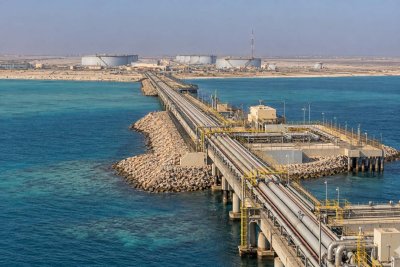
The market turmoil stems primarily from escalating tensions around the Strait of Hormuz, a critical maritime chokepoint through which approximately 20% of global oil shipments and significant liquefied natural gas volumes transit. The strategic importance of this waterway has kept traders on edge, with any disruption threatening to significantly tighten global energy supplies. This geopolitical risk premium has become increasingly embedded in oil prices as the situation develops.
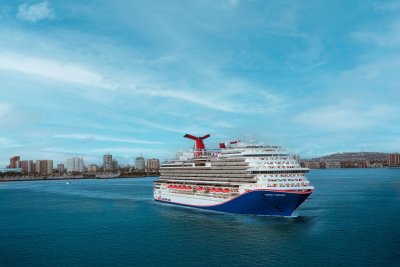
Equity markets reflected the nervous sentiment, with major indices closing firmly in negative territory. The Dow Jones Industrial Average declined 1.06%, while the S&P 500 dropped 0.94%. The technology-heavy Nasdaq Composite fell 1.27%, officially entering correction territory as it traded more than 10% below its record closing high from October. Sector performance highlighted the transmission mechanism of higher energy costs, with travel and consumer discretionary stocks bearing the brunt of selling pressure. Shares of American Airlines (AAL), United Airlines (UAL), and cruise operator Carnival Corporation (CCL) all faced notable declines as investors priced in the impact of rising jet fuel and operational expenses on profitability.
Safe Havens Fail to Provide Shelter
In a departure from typical risk-off behavior, traditional defensive assets offered little protection during this market downturn. "Very few risk-off assets remain effective in this environment," observed Rajeev De Mello, Chief Investment Officer at GAMA Asset Management. U.S. Treasury securities, the Japanese yen, and gold all failed to attract their usual safe-haven bids as volatility dominated trading patterns. This atypical market behavior suggests investors are grappling with a complex set of risks that defy conventional hedging strategies.
The search for protection has driven unprecedented activity in derivatives markets. Intercontinental Exchange (ICE), which operates the New York Stock Exchange, reported its largest-ever daily volume for futures and options contracts on March 3, immediately following initial airstrikes in the region. By March 25, total open interest across commodity markets reached record levels. ICE President Ben Jackson noted that clients were actively positioning for "supply risk" and "price volatility" across multiple asset classes and geographies.
Divergent Impacts Across Sectors
While most sectors faced headwinds, the energy complex benefited from the price surge. Major integrated oil companies including Chevron (CVX), ExxonMobil (XOM), and Shell (SHEL) are positioned for stronger first-quarter financial results, with Brent crude averaging approximately $97 per barrel during March—a substantial 33% increase from February levels. However, producers with significant operational exposure to the Middle East must carefully monitor escalating conflict risks that could disrupt production and logistics.
The market dynamics present a considerable challenge for monetary policymakers. Federal Reserve Governor Lisa Cook highlighted on Thursday that the conflict introduces upside risks to the inflation outlook. Interest rate futures now reflect a roughly 60% probability of a Federal Reserve rate hike this year, while expectations for policy easing have virtually evaporated. This represents a significant shift from earlier in the year when markets were pricing in multiple rate cuts.
Analysts Divided on Path Forward
Market analysts offer divergent views on how the situation might evolve. Barclays maintains a baseline expectation that shipping traffic through the Strait of Hormuz will normalize by early April, aligning with their 2026 Brent price forecast of $85 per barrel. However, the bank acknowledges a risk scenario where prolonged disruption could remove 13-14 million barrels per day from global supply, pushing prices into the $100-$110 range. In a more extreme assessment, Macquarie analysts have flagged the possibility of oil reaching $200 per barrel if the conflict extends into late June, though they consider this a lower-probability outcome.
Market strategists emphasize the oil market's current dominance over sentiment. "Oil prices are calling the shots for now," stated Peter Cardillo, Chief Market Economist at Spartan Capital Securities, referencing the period before diplomatic talks gain traction. Carson Group's Chief Market Strategist Ryan Detrick added that the conflict has significantly damaged investor confidence, with weakness continuing to ripple across trading tapes. As markets enter a new week, all eyes remain fixed on geopolitical developments and their implications for energy supplies, inflation trajectories, and central bank responses.